


July 9, 2025
Alexandra Croft’s Seapunk Design Rethinks Waste and Water
Challenging Traditional Water Infrastructure
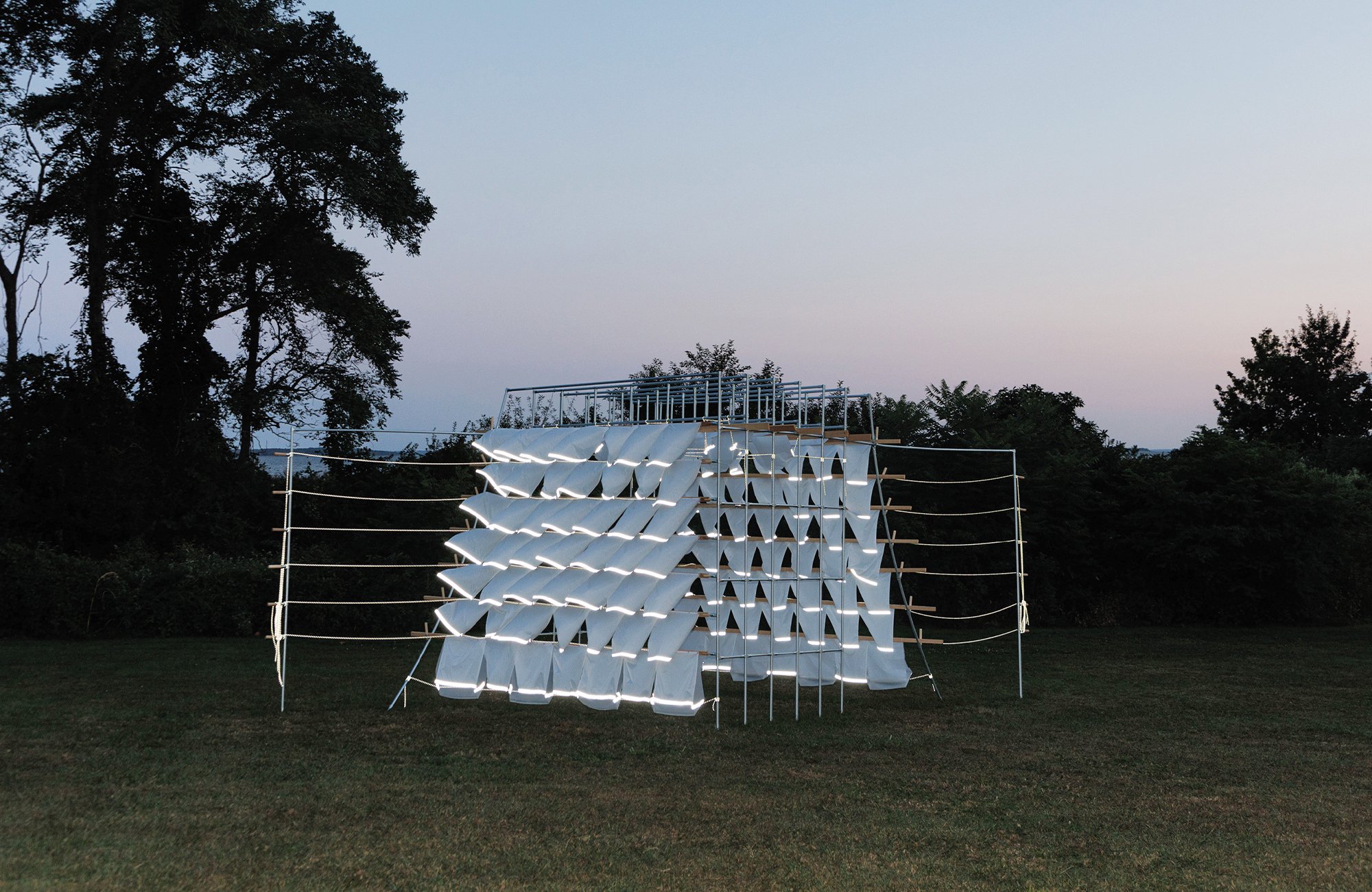
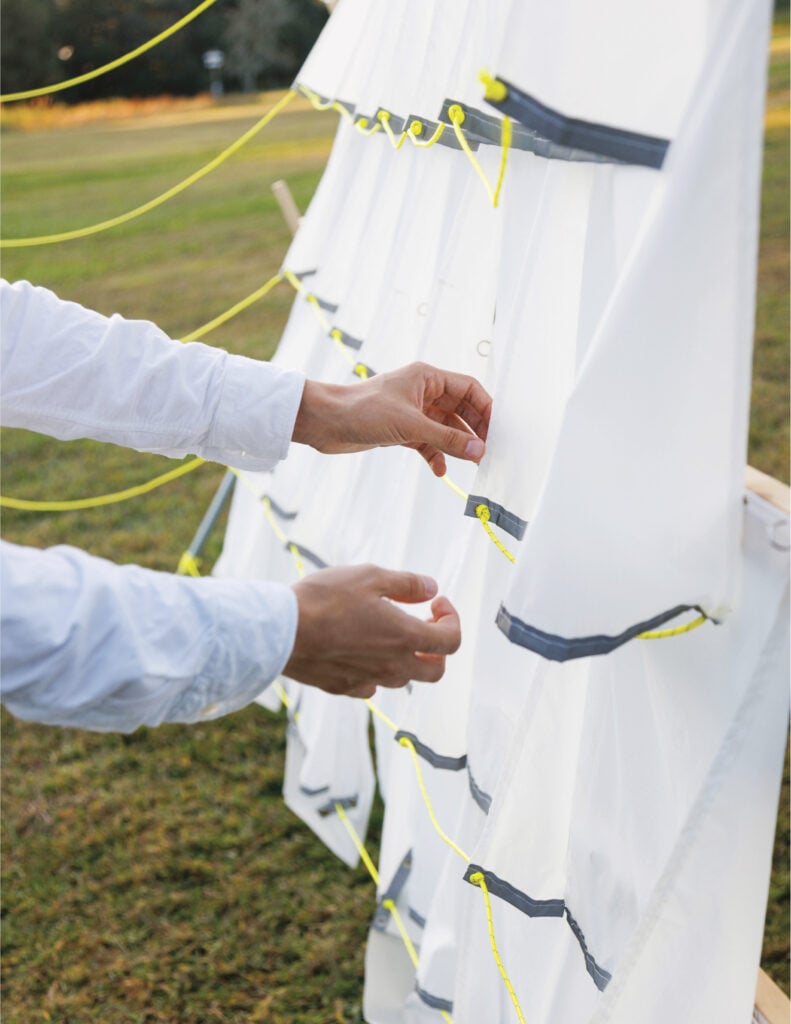
Croft’s “coast-to-coast” perspective manifests in projects that tackle waste systems, flood futures, water infrastructure and the need to imagine beyond the linear-progressive “crash” course of the Anthropocene. Her work as a graduate research assistant for Assistant Professor Debbie Chen on Intermediary Softness (2023–2024)—a gossamer fabric-shingle pavilion for holding rainwater on RISD’s own beachfront property—make the case for a softer “catch-and-release” response to the stubborn bureaucracy of many water infrastructure projects, which supports her interest in the scale. Alongside Good/Poor (2023), a sculptural installation that riffs on the American Framing pavilion at the 2021 Venice Architecture Biennale to challenge rigid binaries in wood construction, Alexandra’s work embraces a material sensitivity, exalting in the pleasures and possibilities of becoming fluid and open to adaptation.
Ecological Methods of Construction
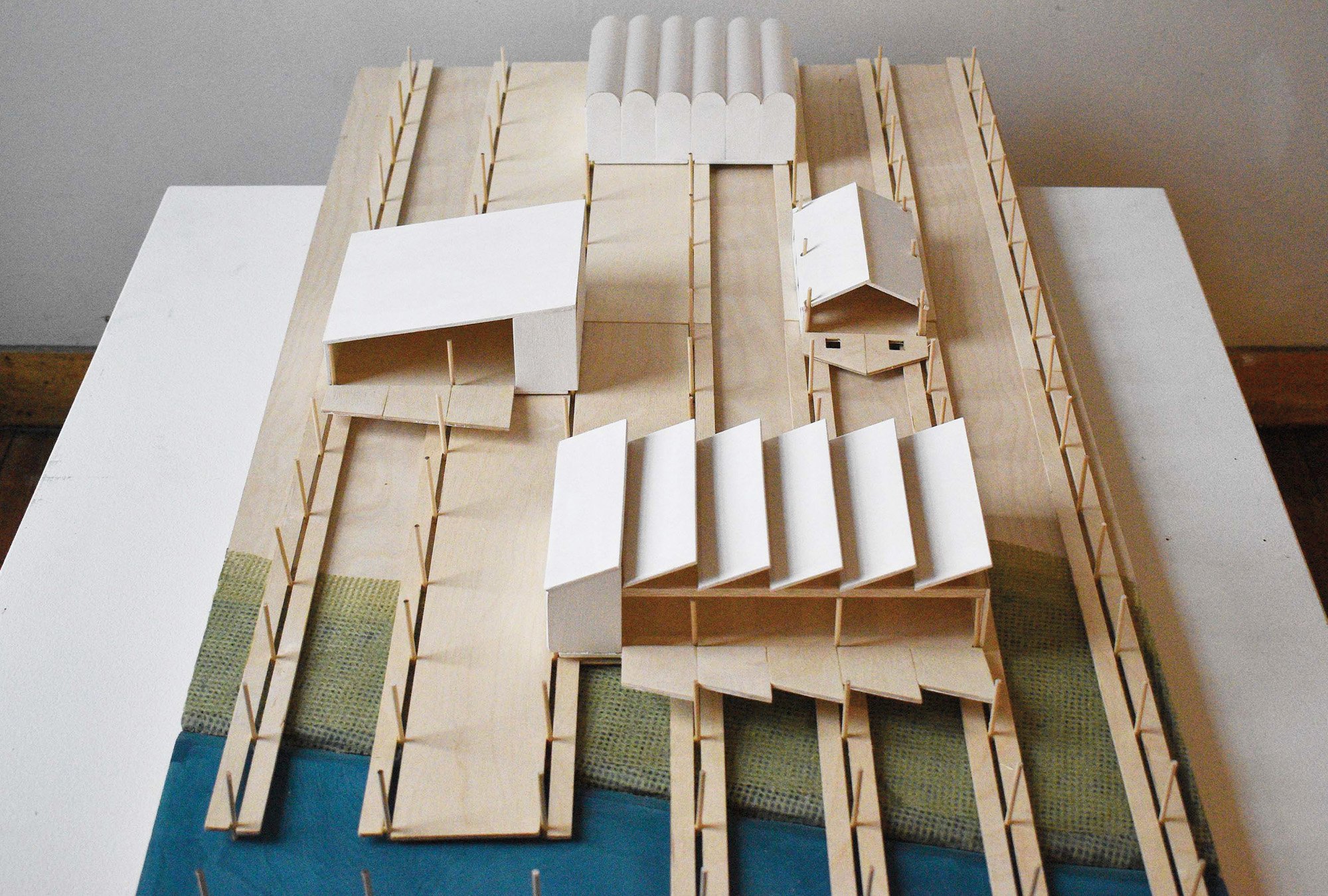
Meanwhile, Ground Unit (2024) and The Cloyster (2023) radiate outward to a system scale, embracing new social and ecological frameworks for surviving with—not against—the rising tides and resources panic brought on by anthropogenic climate change. Ground Unit digs into the urban noir of waste systems in Sunset Park, Brooklyn, offering a kind of pneumatic soil bank that breathes in contamination and breathes out remediation. The Cloyster, set along the ever-expanding salt marshes of New Bedford, Massachusetts’s Acushnet River, dabbles in a speculative seapunk living co-operative, rewiring notions of private property into a community land trust within the briny embrace of a changing planet.
After she graduates, infrastructural intrigue and watery persuasions may lead her on to a postgraduate summertime venture in Belgium, where she hopes to further deepen her study of carbon-conscious earthen construction between liquid and land. By embracing the choppy current of our environmental future, Croft’s practice will remain buoyant wherever it takes her—and us—next.
Would you like to comment on this article? Send your thoughts to: [email protected]
Latest

Viewpoints
What Is and Is Not Biophilic Design?
The creator of the concept of Biophilic Design explains effective strategies that keep us healthy by bring us closer to nature.

Products
5 Smart Designs That Boost Brain Function
Discover products that blend neuroscience and biophilic design to boost focus, reduce stress, and support brain health.