


September 18, 2025
The Architects Shaping NYC’s Public Life
W
hen Frederick Law Olmsted and Calvert Vaux designed Central Park in 1857, they weren’t just advocating for public health and urban equity—they were also leveraging a strategic understanding of how green space could drive land value, redevelopment, and, ultimately, displacement. This double legacy continues to shape the city, and architecture plays a part.
Today, some of the most prolific architecture studios in the city—Diller Scofidio + Renfro, Weiss/Manfredi, and Marvel—are reimagining the boundaries between buildings, landscape, and civic life, transforming infrastructural remnants and underutilized land into shared assets while navigating complex politics.
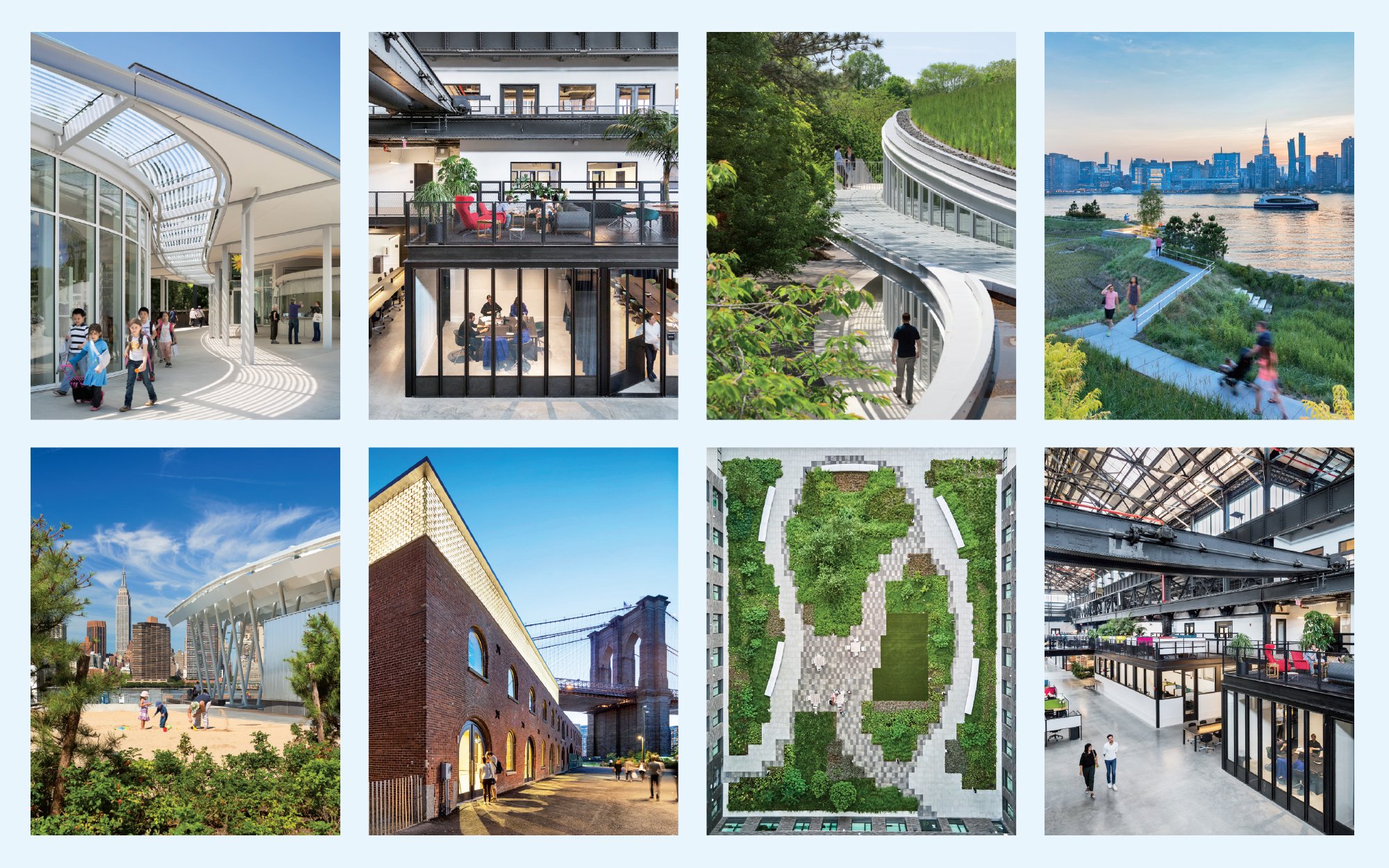
Projects like the High Line, Hunter’s Point South Waterfront Park, and Bronx Point Park demonstrate how adaptive reuse, resilience planning, and public-private partnerships are remaking parts of the city’s waterfronts and former industrial zones into new public realms.
This work builds on a century of evolving strategies: from 1960s POPS (privately owned public spaces) zoning to Open Streets, schoolyard conversions, and tactical urbanism. Diller Scofidio + Renfro’s design strategies at Lincoln Center and Weiss/Manfredi’s approach to resilient public parks design both reflect a desire to make civic spaces more inclusive for residents and financially beneficial to the myriad private and public partnerships that run the city’s public spaces.
Yet the challenge remains: How can architects design public spaces without accelerating exclusion or speculation? In a city shaped by activism and constraint, these firms are not just building spaces—they’re reframing what civic life can look like.
Senior editor Francisco Brown spoke with the architects about how their recent projects are shaping public spaces in NYC. These interviews have been edited for length and clarity.
ELIZABETH DILLER AND CHARLES RENFRO, DILLER SCOFIDIO + RENFRO
Francisco Brown: The work at Diller Scofidio + Renfro (DS+R) has not only produced some of the most visited and emblematic public and cultural spaces in New York, but you’ve rethought the boundaries between private and public spaces. When did that start for you?
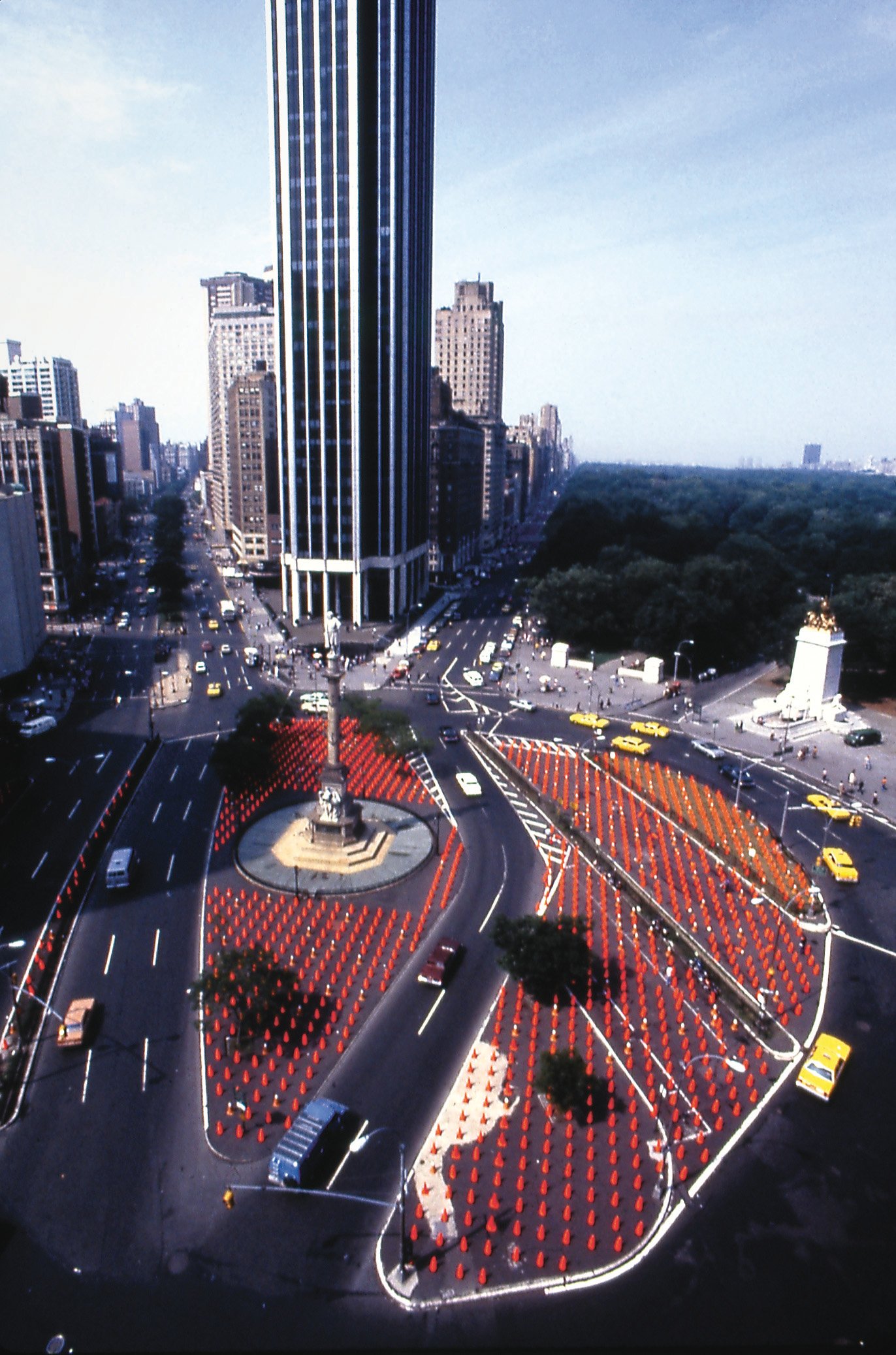
Liz Diller: I think it began when we started our practice in the 1980s, and we did Traffic, our first public installation, with street cones at Columbus Circle. It was a field of traffic cones, distributed to fuse the various “traffic islands” into one “smoother space.” It was one of the hardest areas to cross in New York City because of congestion, and we took interest not in the building, but the space of the vehicle and the problem of public crossing.
New York is such a real estate–oriented city, where every square inch is bought, sold, and traded. So, I think this impetus to think about public open space as part of the architectural project started there. There was this trajectory, familiarity, and comfort with working in public open spaces since the beginning.
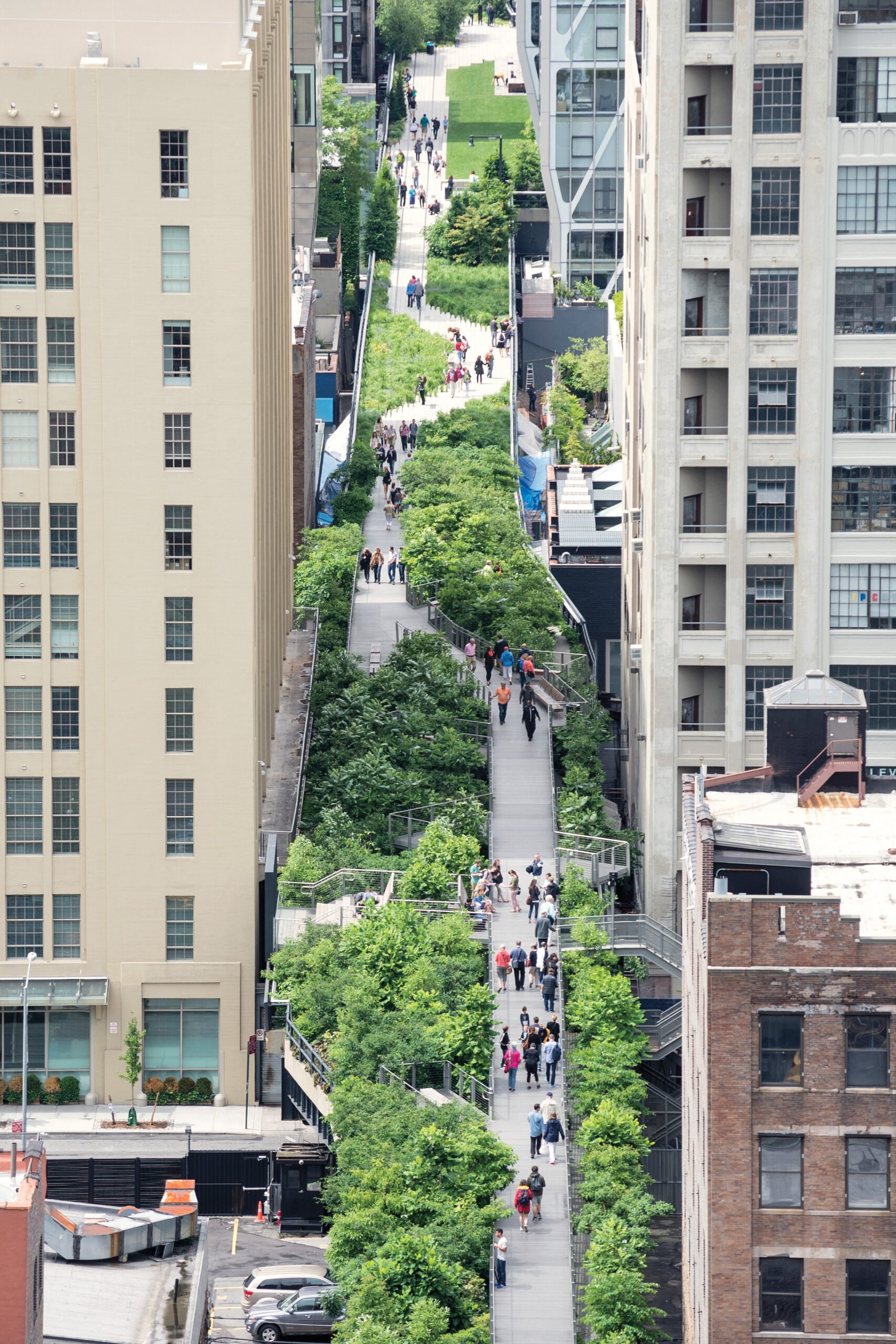
FB: Then you won the High Line and Lincoln Center projects, which made these public art ideas into full architecture projects…
LD: Those came one after the other. And they made us think about permanent work in public open spaces, which was a different mindset than we had before. These new projects were addressing a broader public, and they had to work for an extended period of time, not just a season. They were real investments.
When we did our Lincoln Center work, its existing spaces were not for public use. They were just places between buildings. It became a dominant theme to bring culture out of these institutions, which are effectively private institutions. You had to buy a ticket to get in, therefore making these outdoor spaces an extension of those institutions, which were truly public. It was about democratizing what was always there, but never used, and making it habitable.
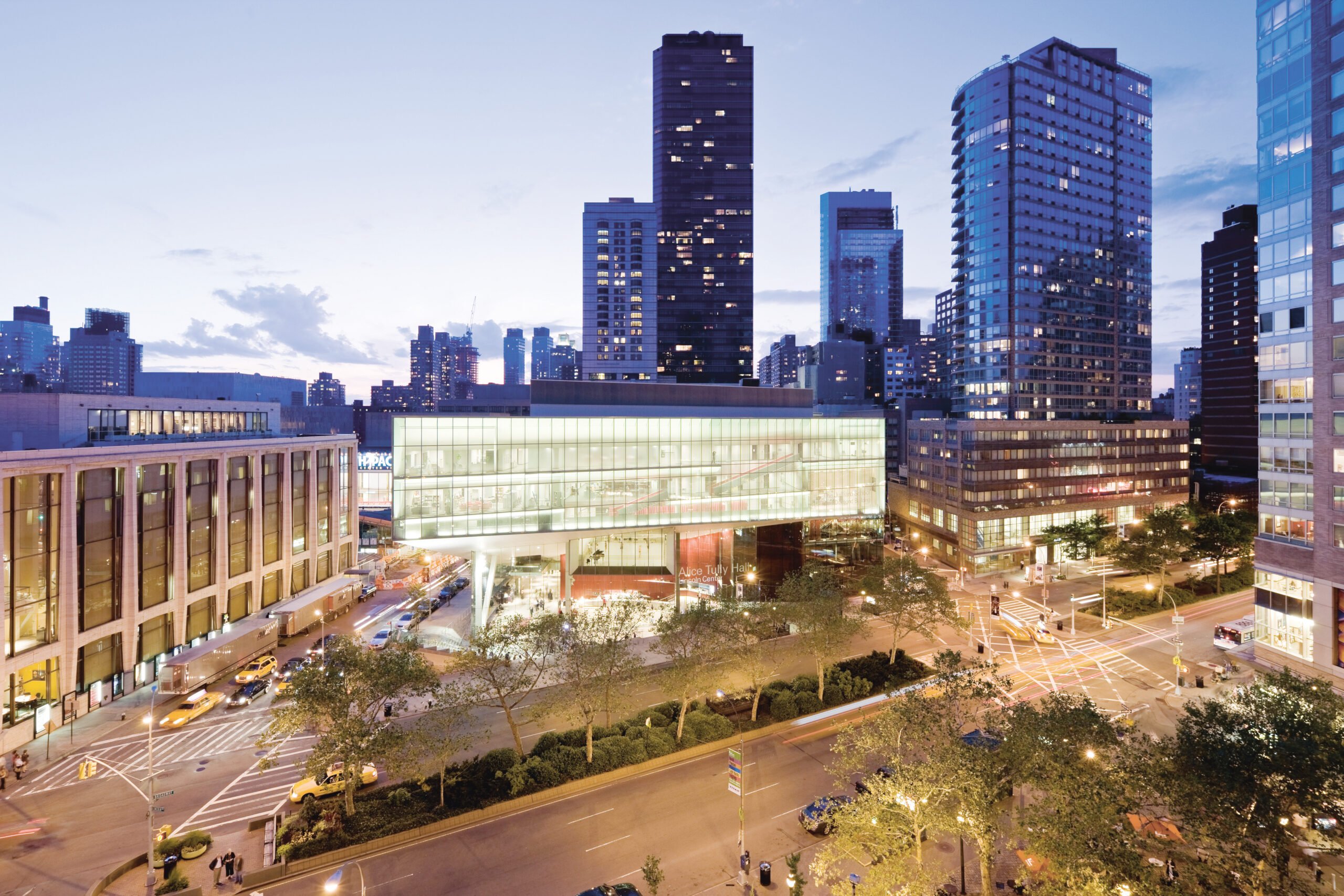
FB: The High Line and Lincoln Center projects were highly successful interventions in the city—but also had complicated, even unfortunate, consequences for some of the surrounding communities. What lessons were learned?
LD: The High Line grew eight blocks at a time like sausage links. And with each phase, it was increasingly popular. This project was a very big lesson that we learned over time: We should have anticipated more success and leaned on developers to add affordable housing and to put in more checks and balances so it wouldn’t be a runaway for the real estate market. But all in all, I’m very proud of it. And I wouldn’t have done anything differently on the design.
Charles Renfro: We wanted to make the park about New York City and the spaces and places it passed through. It was more a piece of infrastructure when it was a rail track, and now it’s become a bit of a theater experience. I think it’s more cinematic, even.
FB: Your work seems to connect design strategies, programming, and, yes, cinematic experiences. How do you deal with hybrid public-private clients?
LD: Public-private partnerships serve the public best when the private sector values public spaces. The Google [Pier 57] project is a great example, with the private part sandwiched between two public spaces. It would have been terrible if Google had just privatized the entire pier.
The city typically wants the parks and public spaces but doesn’t really fund them. Therefore, we have conservancies and trusts to raise money. The city doesn’t have enough money to do it all. It needs private investment. Good design and architects that are willing and able to cross the line on both sides to make it work for the client, and make it work for the public, are crucial.
FB: Another public-private example is Casa Belongó. What was key there?
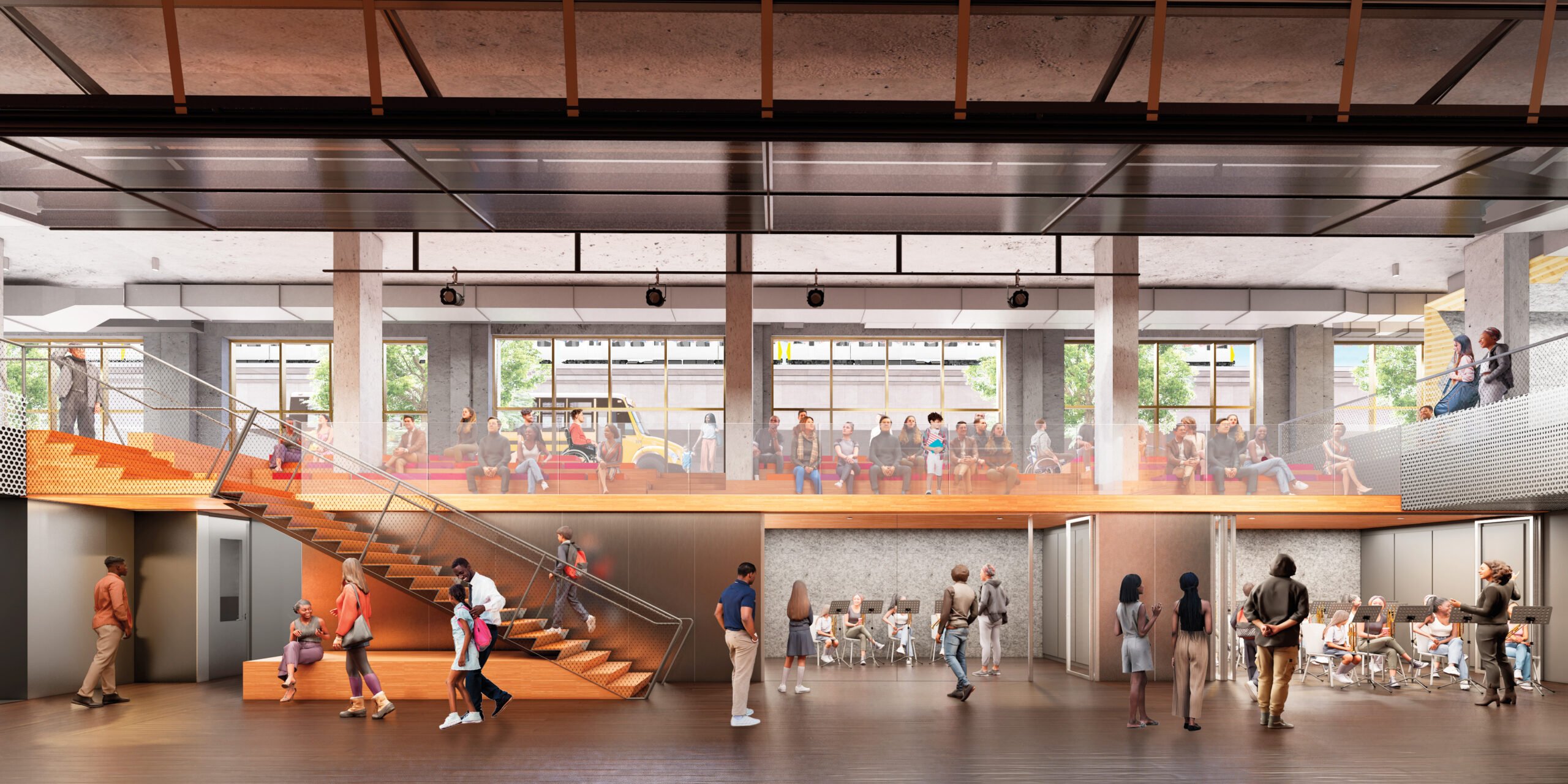
CR: Casa Belongó is the home of the Afro Latin Jazz Orchestra in East Harlem, right underneath the Metro-North train track. So, it’s both an awful site and a fantastic site. We convinced our client to open the entire institution to the street and the public during the day.
We used the [building] section to allow views from above and down into the depths of a performance space, making it part of the street. Another [part] is a center, which can be used by community members and organizations to have meetings and other activities. We’re trying to make Casa Belongó belong to the neighborhood.
FB: What would you recommend your peers, or planners, ask their clients?
LD: The city of New York is a grid city, based on traffic and efficiency. We have sidewalks and streets, but we don’t have many public spaces. Inside some of our tall buildings, you have vast lobbies that are totally empty. Why not develop these beautiful spaces, which are often available, into public spaces where tenants and the public can come together? There could be businesses, retail, places for coworking.
We’re questioning the norms of how we treat the city and where we draw the line between public and private. I also think of cultural institutions; if they want to survive, they need to make new audiences. They need to carefully consider how to bring culture outdoors and how to provide adequate space for unticketed guests.
MARION WEISS & MICHAEL MANFREDI, WEISS/MANFREDI
FB: In your new book, Drifting Symmetries [Park Books, 2025], you propose that architecture can become infrastructure. What does that mean for a city like New York?
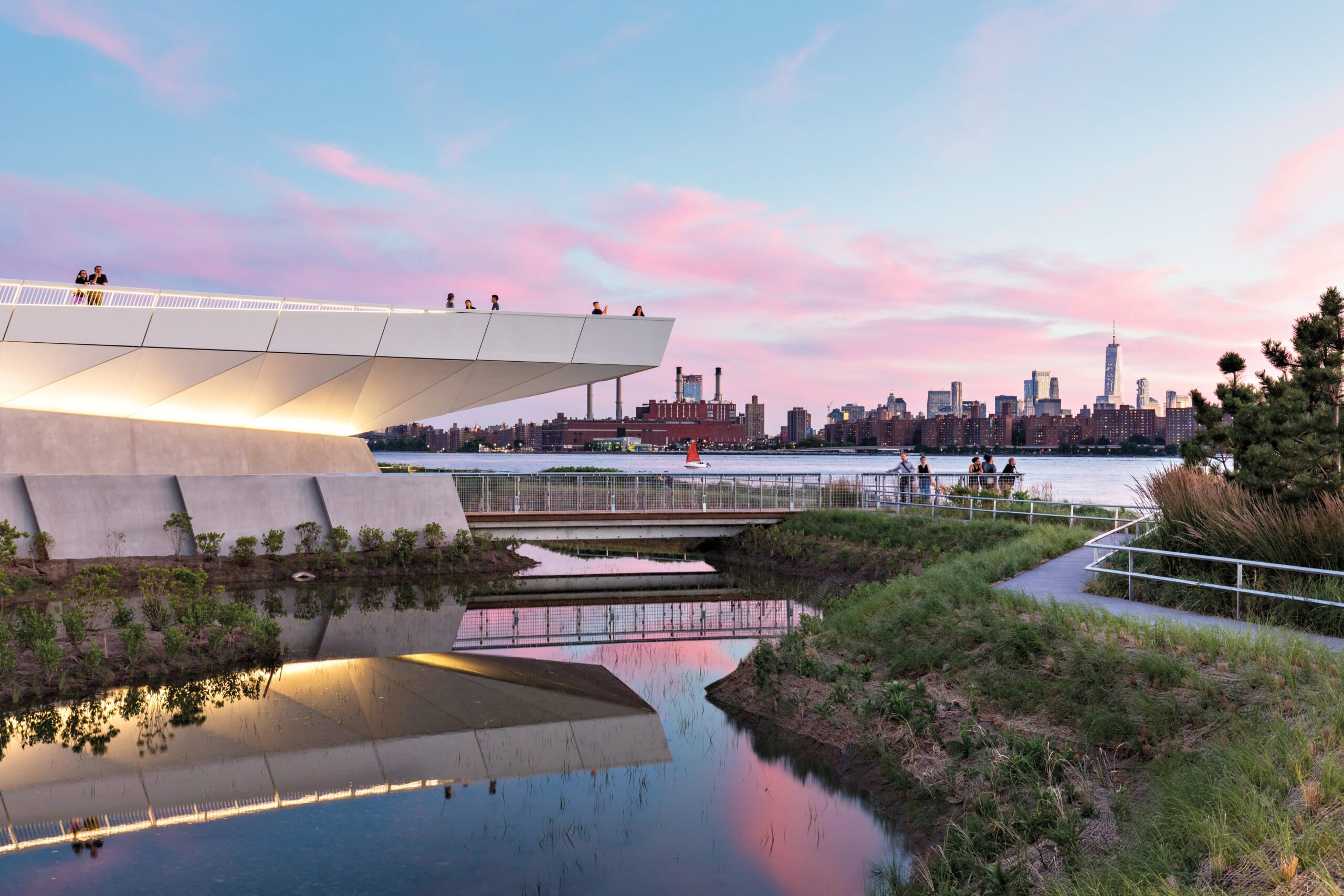
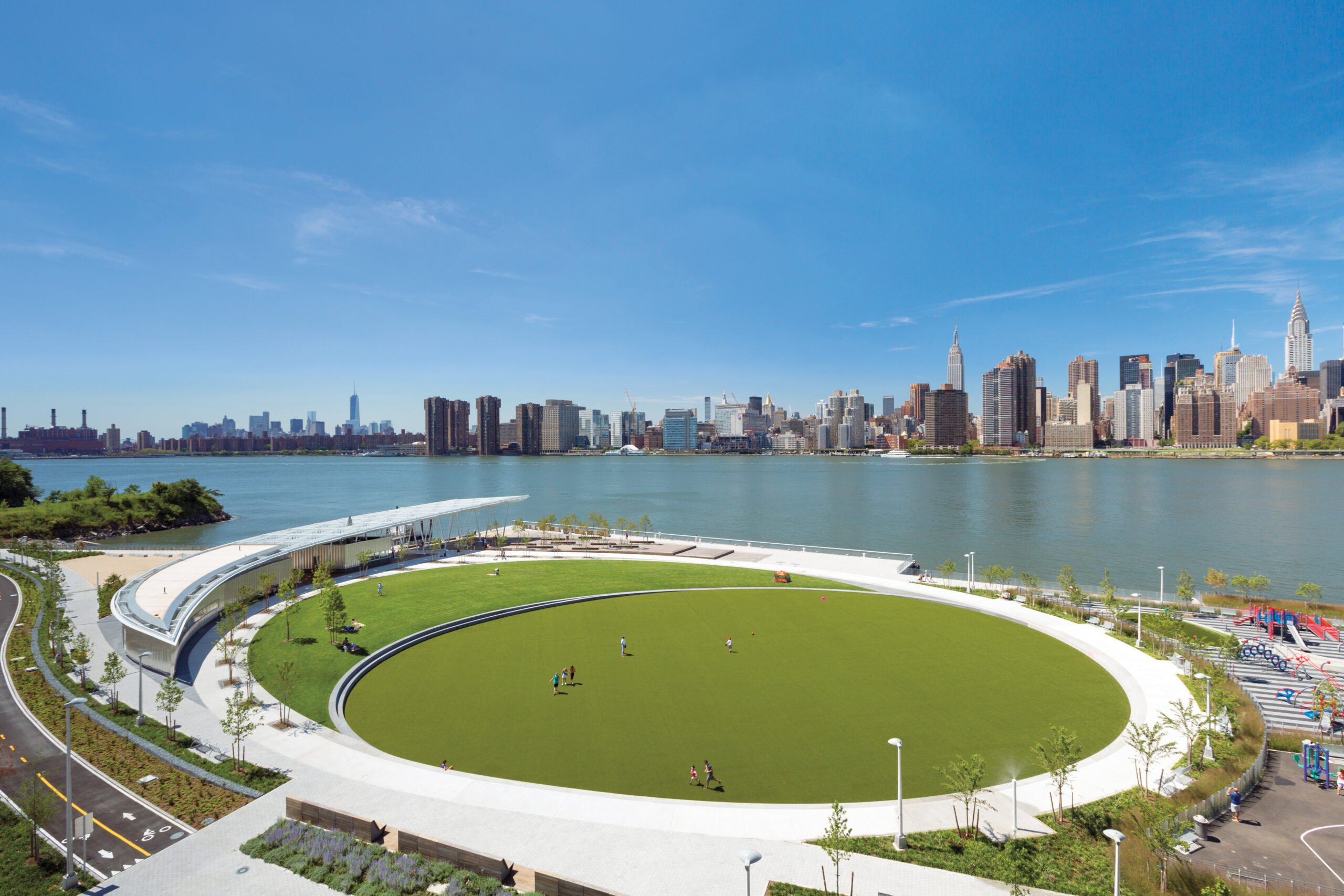
Marion Weiss: We think about work that’s influenced us—like Khaju Bridge in Isfahan or the Agrasen ki Baoli Stepwell in India. When we think about New York City, we start with its very own framework: a grid that is indifferent to the city’s conditions until it reaches other conditions like the edge of water. That’s where the idea played out at Hunter’s Point South Waterfront Park.
That project is not only woven into the grid, but also to its idiosyncratic continuity. It is new infrastructure, and that liminal space is working hard because it needs to prevent flooding as a true infrastructural component but also capture stormwater and simultaneously create new wetlands. But it is first and foremost an infrastructure of urbanity for the people.
Michael Manfredi: We’ve always been drawn to hybrid projects that challenge clear [disciplinary] distinctions. We believe that our challenges are urban challenges, so they are social, infrastructural, and environmental. You can’t solve problems like that only through architecture or only through landscape.
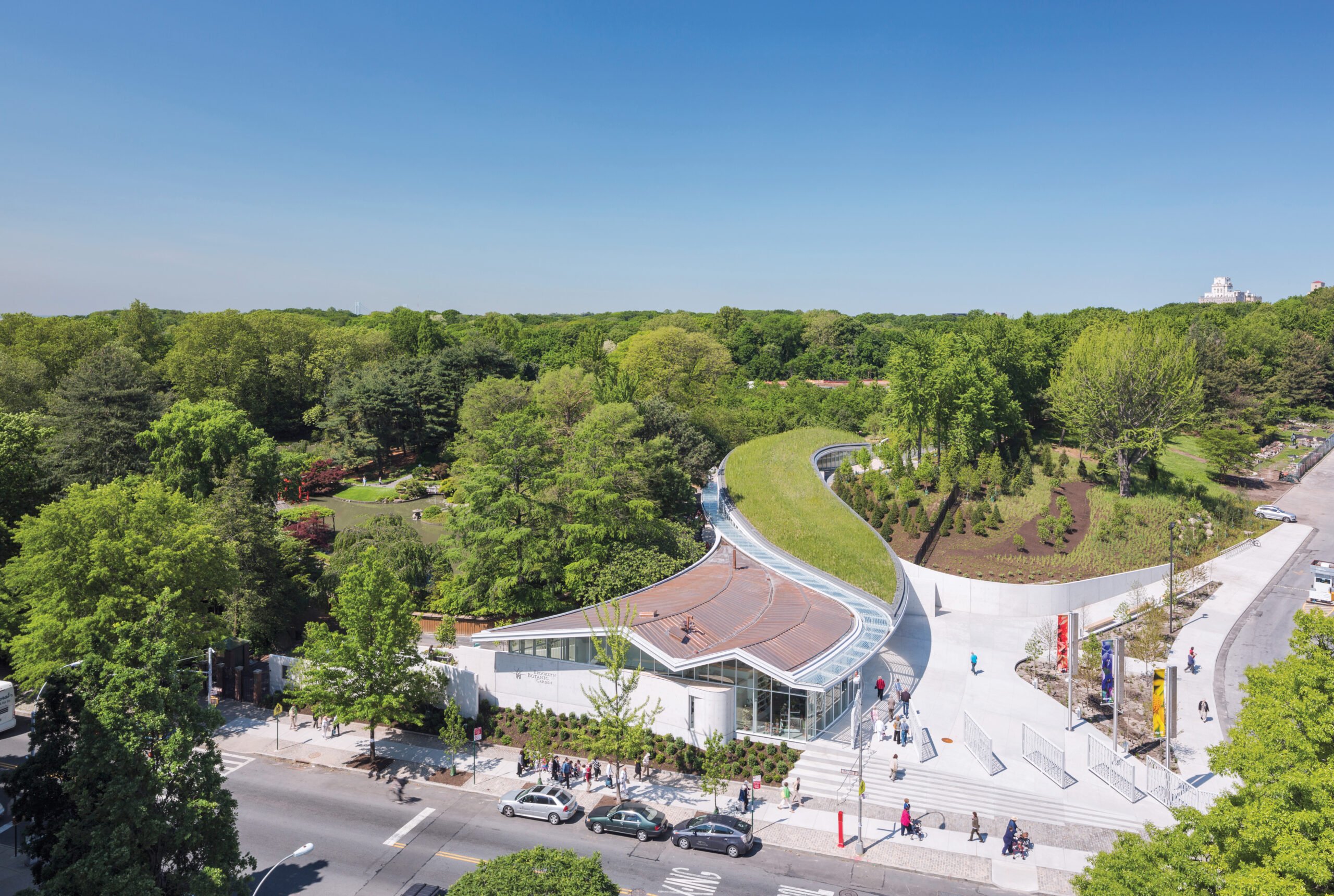
FB: You’ve led architectural projects that became infrastructure and infrastructural projects that became architecture, such as the Brooklyn Botanic Garden’s Visitor Center and Hunter’s Point South Waterfront Park, respectively. What questions should architects ask when working with city agencies?
MW: For the Brooklyn Botanic Garden [BBG] it was about asking the question that was not asked as a foreground of engagement. When the BBG was doing the visitor center’s request for proposals, we observed that if they created a visitor center in the proposed location, it would be a piece of architecture in the middle of the garden, and visitors would have to walk through a large parking lot to get in.
[We thought] it’d be more interesting to see if there was an edge between the city and the site that could be a compelling place to invite you into the gardens and slowly leave the city behind. Never going through a parking lot but maybe slipping along the edges of paths and around the drip lines of trees to find your way into the gardens another way.
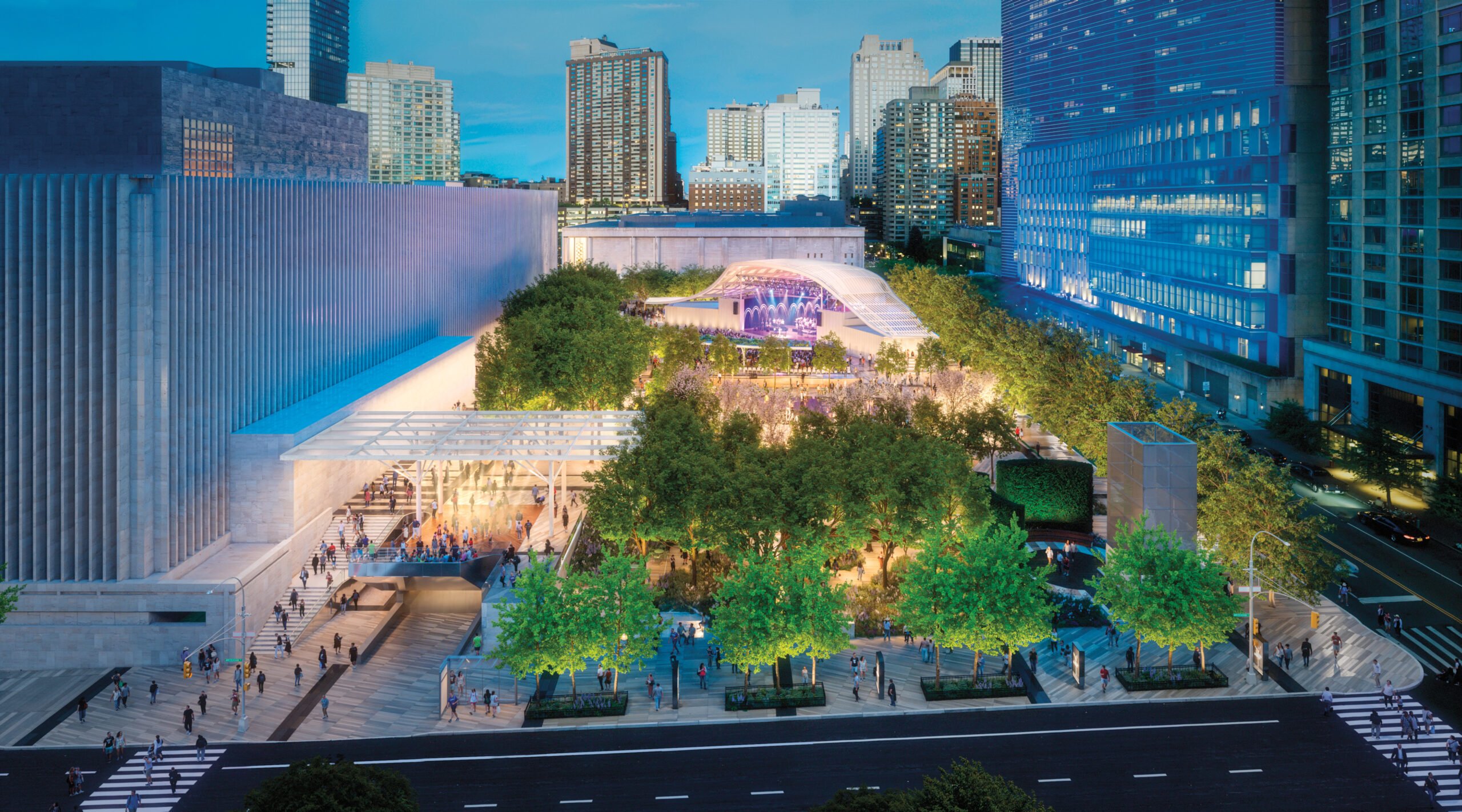
MM: In the case of Hunter’s Point South Waterfront Park, [designed in collaboration with SWA/Balsley] the first phase was listening deeply to the community and to the parks department. We also brought up rising sea levels, a relatively new issue at the time. We slowly started to share with them designs that would weave all these things together. We were able to convince them that we could create a park that was both an incredible recreational opportunity and would leverage a series of strategies to accommodate rising sea levels in an interesting way.
It became a process of “creative flooding,” where flooding becomes an opportunity for a different kind of wet park. Instead of five pavilions, why not make one? And instead of thinking about a random set of paths, why not connect them all so that there’s a one-kilometer loop? The design became one instead of lots of fragments.
FB: You’re redesigning Lincoln Center’s outdoor theater at Damrosch Park. What have you learned about how to make these public spaces work better than their original designs?
MW: At Lincoln Center, we recognized that during the time of urban renewal, the whole expression of this cultural plinth—and its generosity of engagement and invitation—was oriented to the east, turning its back to the community on the west. Our idea was to bring that [west side] wall down, invert the theater, amplify that edge, and bring it closer to the heart of where the theaters are located.
MM: I think both BBG and Hunter’s Point share the idea of questioning the brief—and also reframing it. At Lincoln Center, we did the same working with [landscape architect] Walter Hood. The initial brief was that Hood Design would do the park, and we would do the theater and the audience area. Instead, we all worked very closely to identify this as a theater in the park, which means there are times when parts of the theater become an open plaza rather than just an audience area. There’s also a large trellis that works at both the scale of the garden and the scale of performance.
MW: The current Damrosch Park, you could say, is an infrastructural park. It’s [built] over two stories of parking, so it has some unique constraints that aren’t so self-evident. It’s also one of those rare cases where all the ingredients were there, but none of them were working effectively.
The new oval shape—with the audience on one side and the theater on the other—creates intimacy. The people who were previously furthest away are now half the distance. So, everyone gets an intimate relationship between the audience and the performer. I think that’s new.
JONATHAN MARVEL, MARVEL
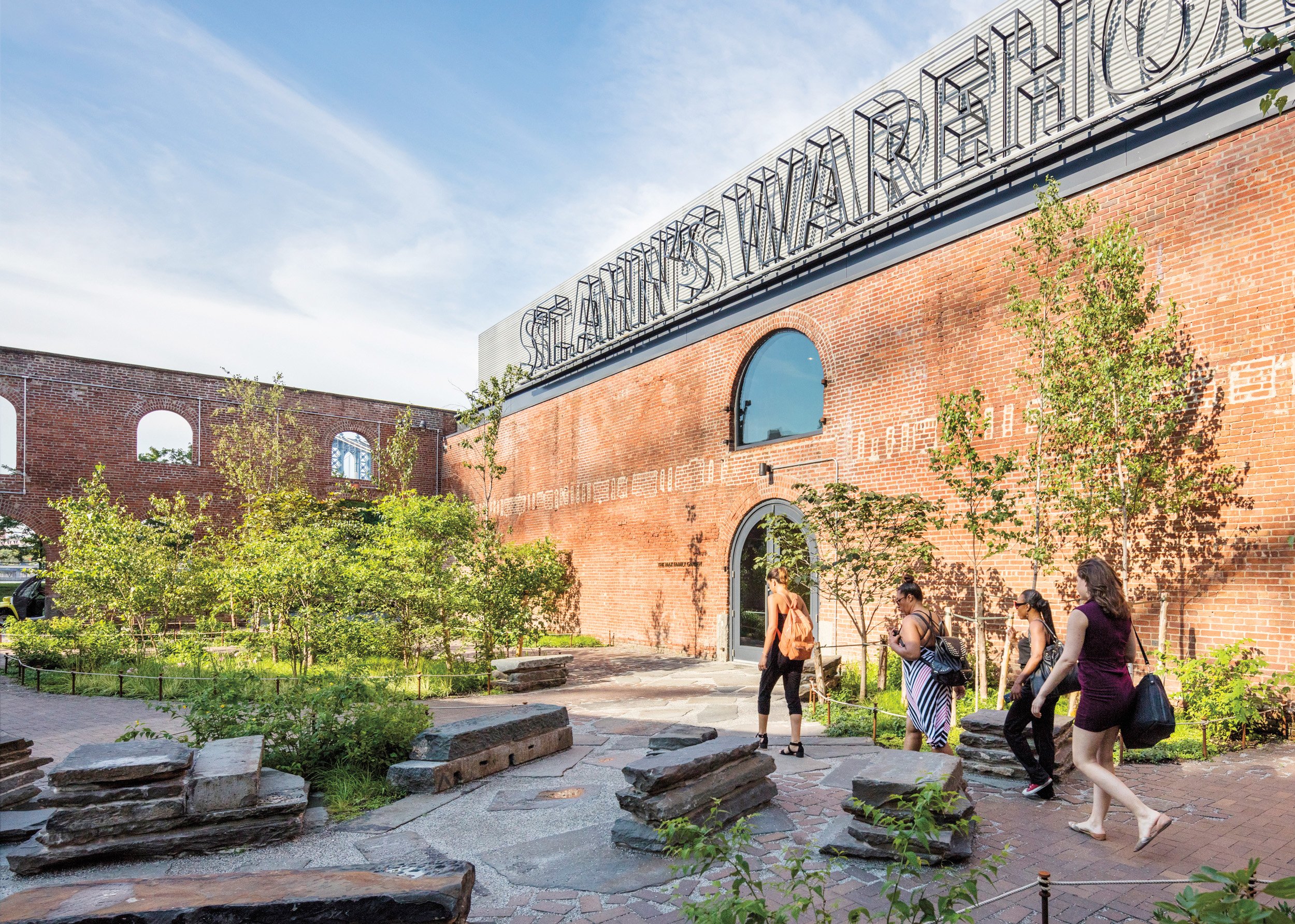
FB: Some of your earlier work, like St. Ann’s Warehouse and the New Lab, were able to integrate the urban fabric and activate some of these areas for public use. How did that inform civic projects like the Bronx YMCA?
Jonathan Marvel: The early work—like St. Ann’s Warehouse and the New Lab—dealt with the overlapping of the found object and with the needs of a very dynamic program: one being a theater and the other a center for innovation.
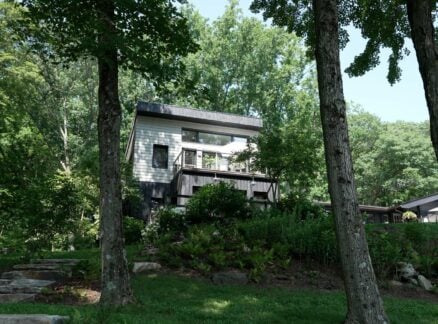
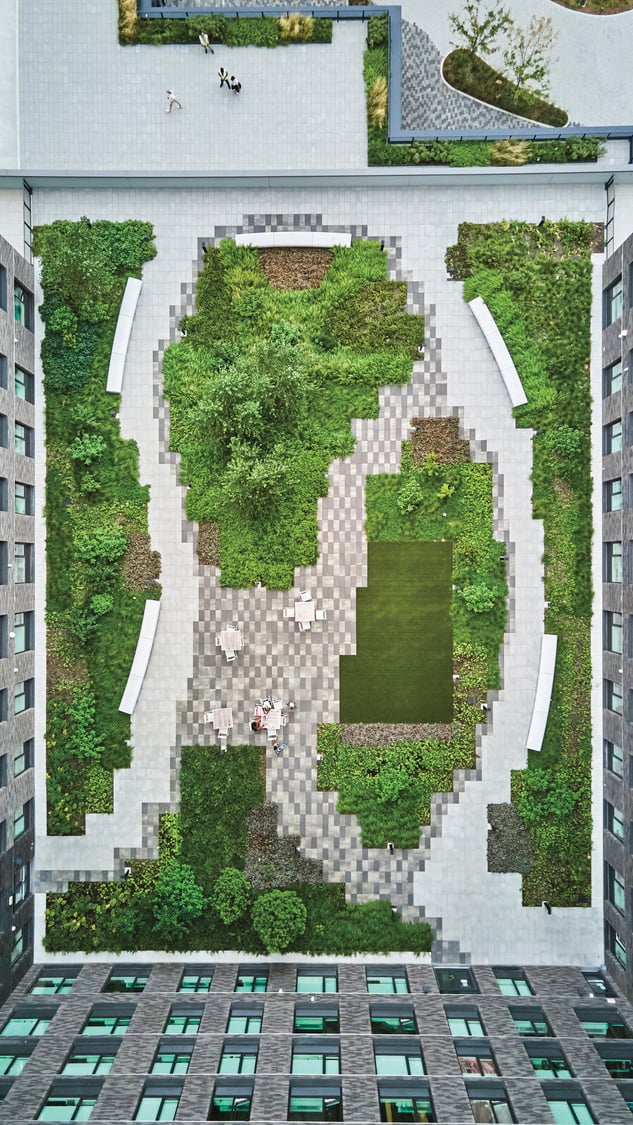
In the case of the YMCA, where we’re essentially in an urban environment in the Bronx, the context became much more subtle and nuanced—and not architectural. The context became a grove of trees over a hundred years old, which is rare for New York City. And a topography of terrain that was challenging—not flat, not paved, but boulders and a twenty-foot drop over a very short distance.
We’ve got a tough site, with no architectural artifacts, but a very powerful collection of significant trees that inspired us to guide the program around them. We documented the trees, gave them names, built the program, and then altered it. We were able to navigate the client through a concept phase where we broke the program into three pavilions instead of one. And where the site sloped way down very quickly, that’s where we put the two big swimming pools.
FB: What other lessons have you learned working on public projects, including the Bronx Point Park and the Bronx Museum?
JM: We learned the importance of offering back to the public an enjoyable, educational, and connective experience. Everything we do begins with the needs of the community.
For example, we conducted an in-depth analysis for a Puerto Rican community in Hartford, Connecticut, to develop a master plan for the conversion of the Sacred Heart Church into a Puerto Rican community center. It’s in a historically Latino neighborhood from the 1950s that has since shifted to a West Indian neighborhood, but it still has strong Puerto Rican roots.
In the analysis, we came up with the phrase “Cultural signifiers make people feel comfortable.” Cultural signifiers make people feel at ease, and they change for different communities. They are essential to include as part of public spaces because when you cue people into the narrative, people wake up. They go, “Oh, this is for me.”
FB: How have those ideas—about cultural signifiers and community participation—been reflected in the new Bronx Museum wing?
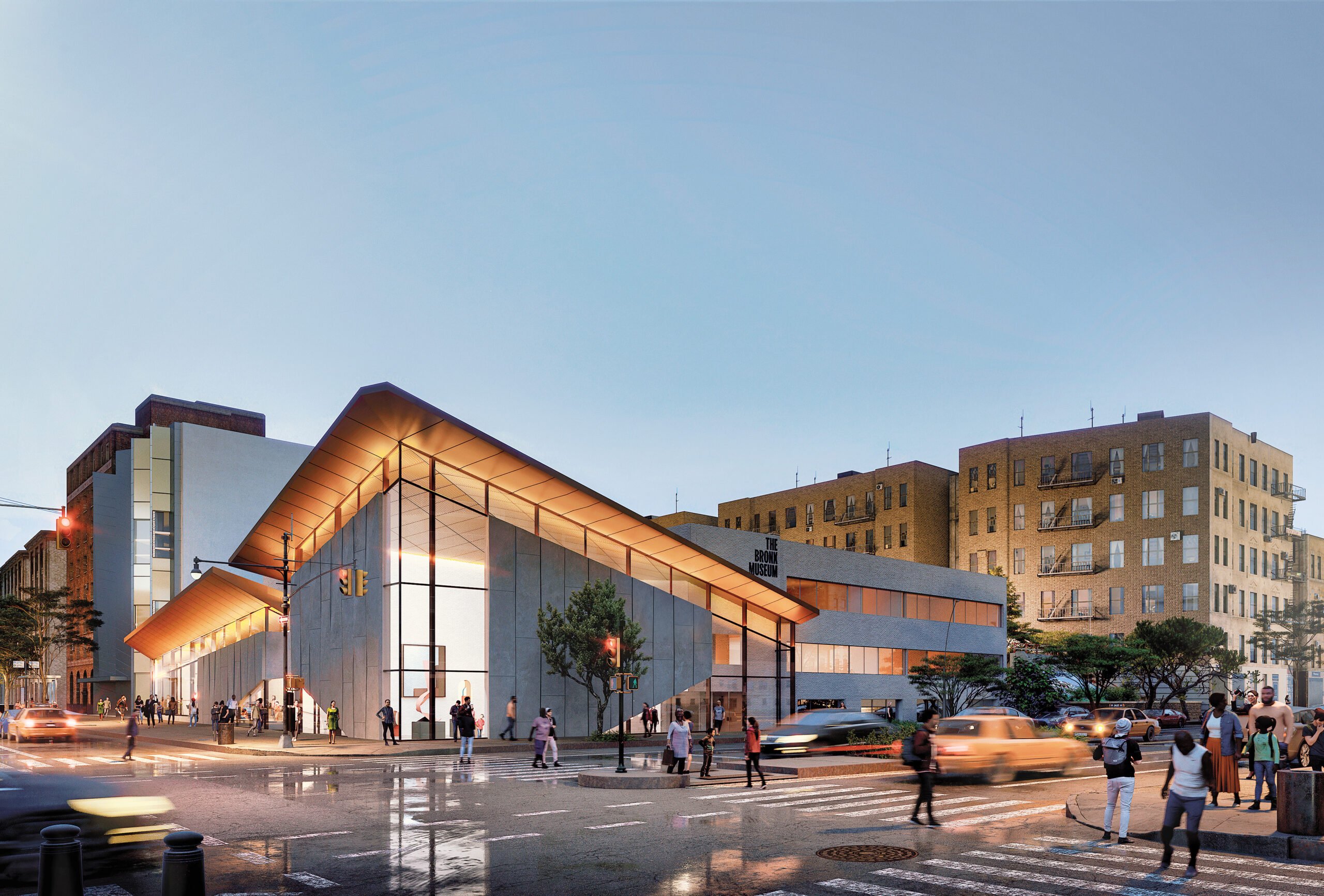
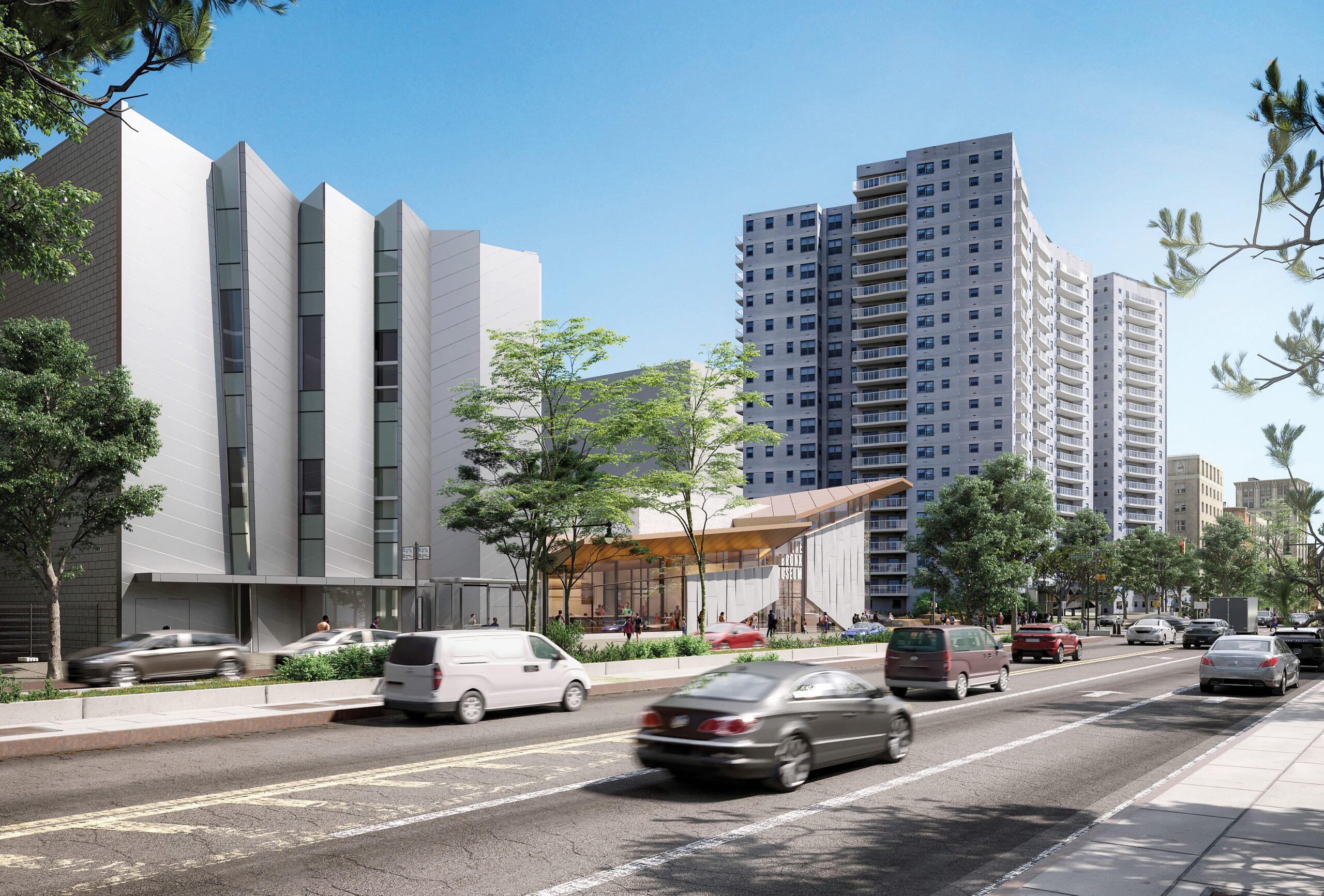
JM: The museum, on the corner of the Grand Concourse and 165th Street, already had a collection of buildings. We were asked to give them a new front door because it was tough for the public to find.
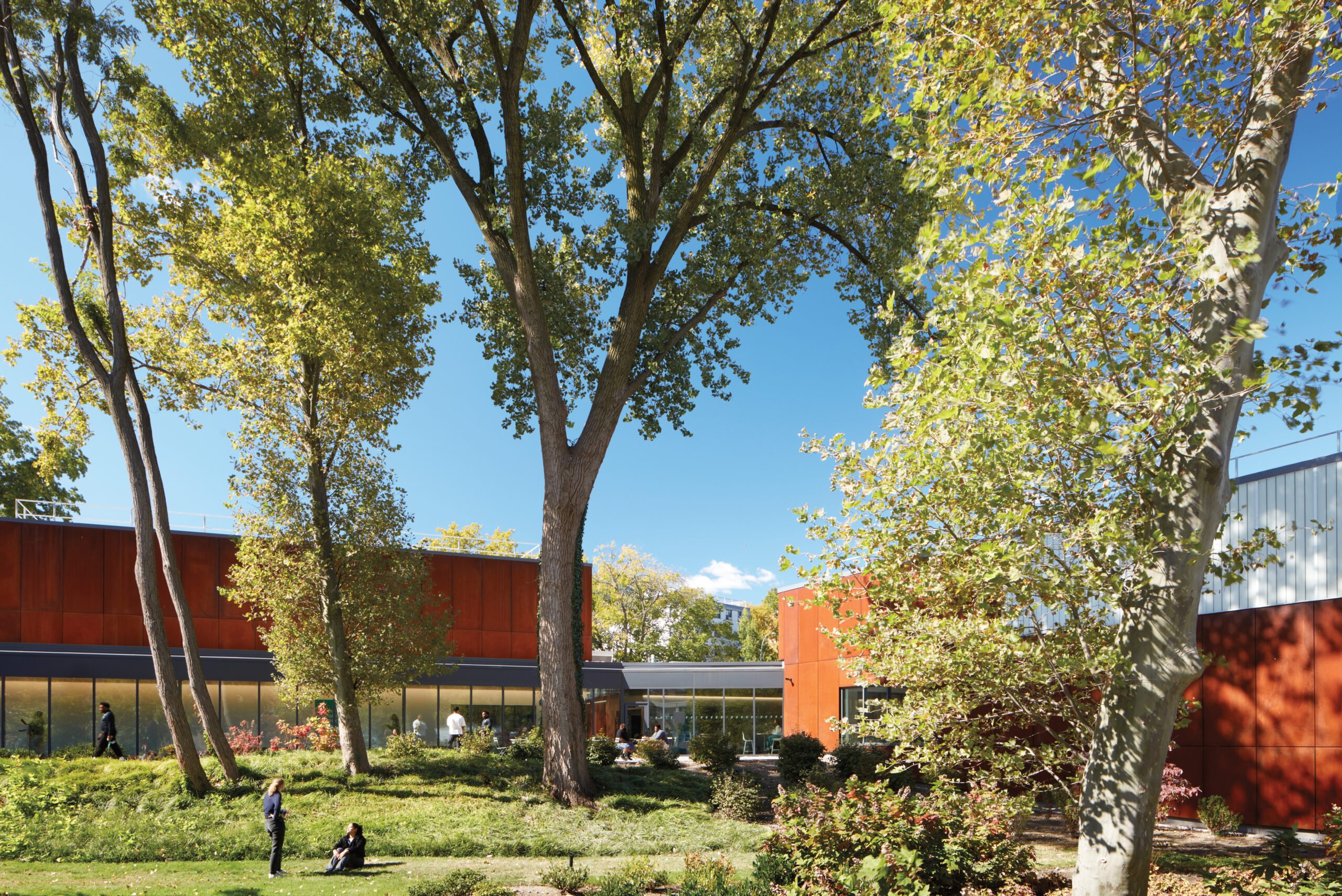
The original building was a synagogue. Later, Castro-Blanco Piscioneri & Feder, one of the only Latino firms in the city at the time, put a greenhouse-type environment next to it. It was a more transparent space that glowed and became the beacon for the community and the neighborhood at night. It was a very clever solution at the time.
Then, Arquitectonica came twenty years later and built their eight-story version of a museum next door. We dismantled the Castro-Blanco Piscioneri & Feder greenhouse and built a new structure on the corner. It essentially extended both the sidewalk into the building and the galleries out onto the sidewalk.
This issue about the public domain and architecture today, for us, is all about that indoor-outdoor experience because it makes people feel included by bringing them in and taking the fear of art away. We wanted the building to reflect that, with the café, lobby, and galleries all designed as an extension of the sidewalk into the building.
Would you like to comment on this article? Send your thoughts to: [email protected]
Latest
Viewpoints
Rediscovering Tile for Sustainable Design
AHF’s Noah Chitty explains how advanced manufacturing and recycling innovation are helping this age-old material meet the demands of sustainable design today.

Viewpoints
The End of Net Zero as We Know It
Architect and climate strategist Anthony Brower explains how the current language of Net Zero is a “good idea worn thin by its own optimism.”