


September 8, 2025
Exhibit Columbus 2025: Exploring Site, History, and Community
“We were thinking about the histories that have been omitted in the conversation around Columbus. Most of it has been focused on modern architecture, while Indigenous space-making and Black inhabitation barely register in the normative discussions around the history of the place.” Emanuel Admassu, cofounder, AD-WO
A Midcentury Modern Laboratory
The Landmark Columbus Foundation (LCF) mounts the biennial Exhibit Columbus program as a more interpretive form of preservation, supplementing the city’s already well-established heritage with a fresh perspective. Like Cummins’s most consequential CEO, J. Irwin Miller—the visionary and financial force behind much of Columbus’s illustrious architectural development—the event provides today’s crop of critically minded practitioners with the chance to leave a mark, if only temporarily.
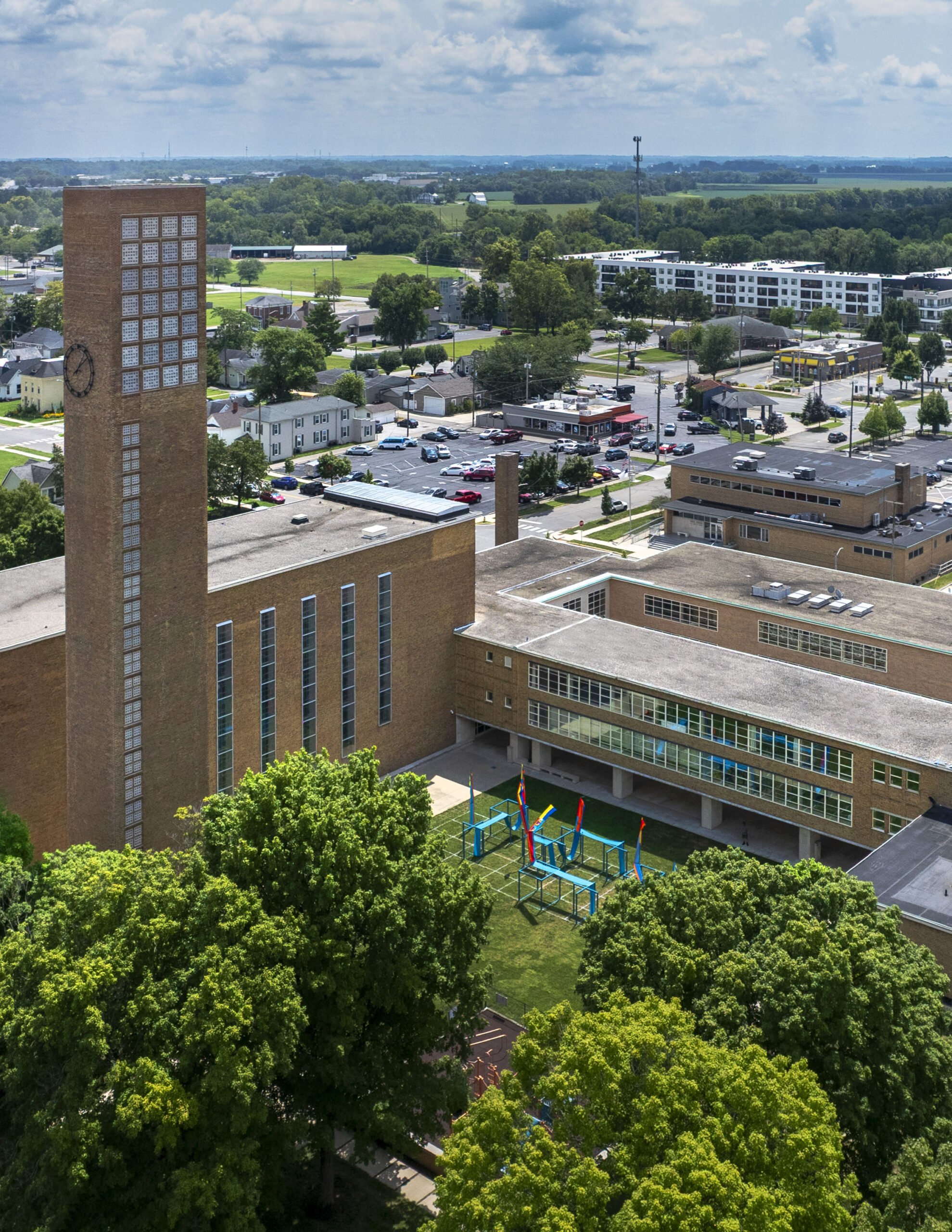
Some have joined the slew of historic buildings as permanent features. For the 2022–2023 cycle of Exhibit Columbus, New York firm PAU conceived InterOculus, a canopied dome that continues to cover the intersection of Washington and Fourth Streets. Though some of the installations in this year’s edition appear viable additions to the town’s “semi-urban fabric,” it remains to be seen whether any will stay in place.
Yes And: A Curatorial Framework
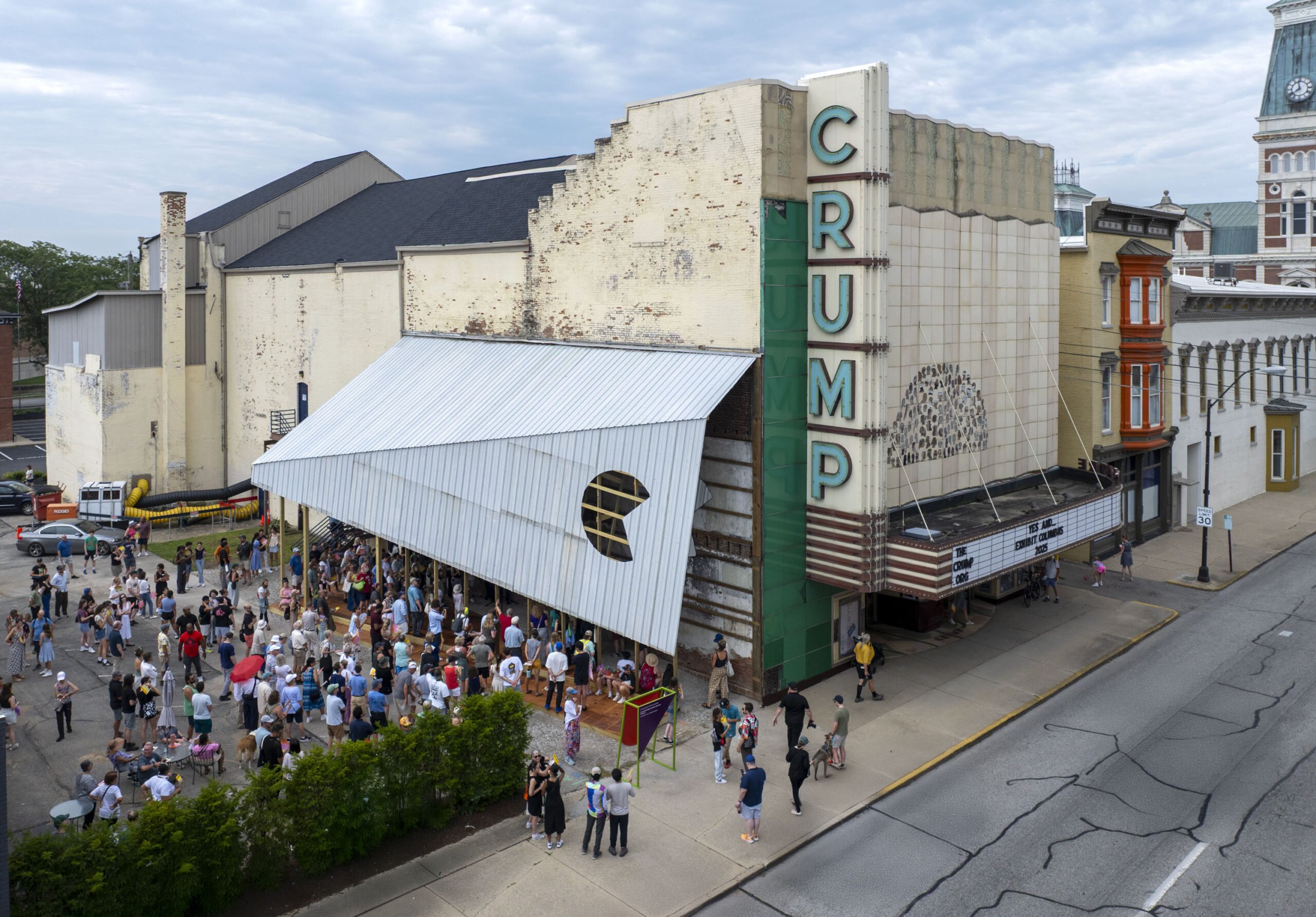
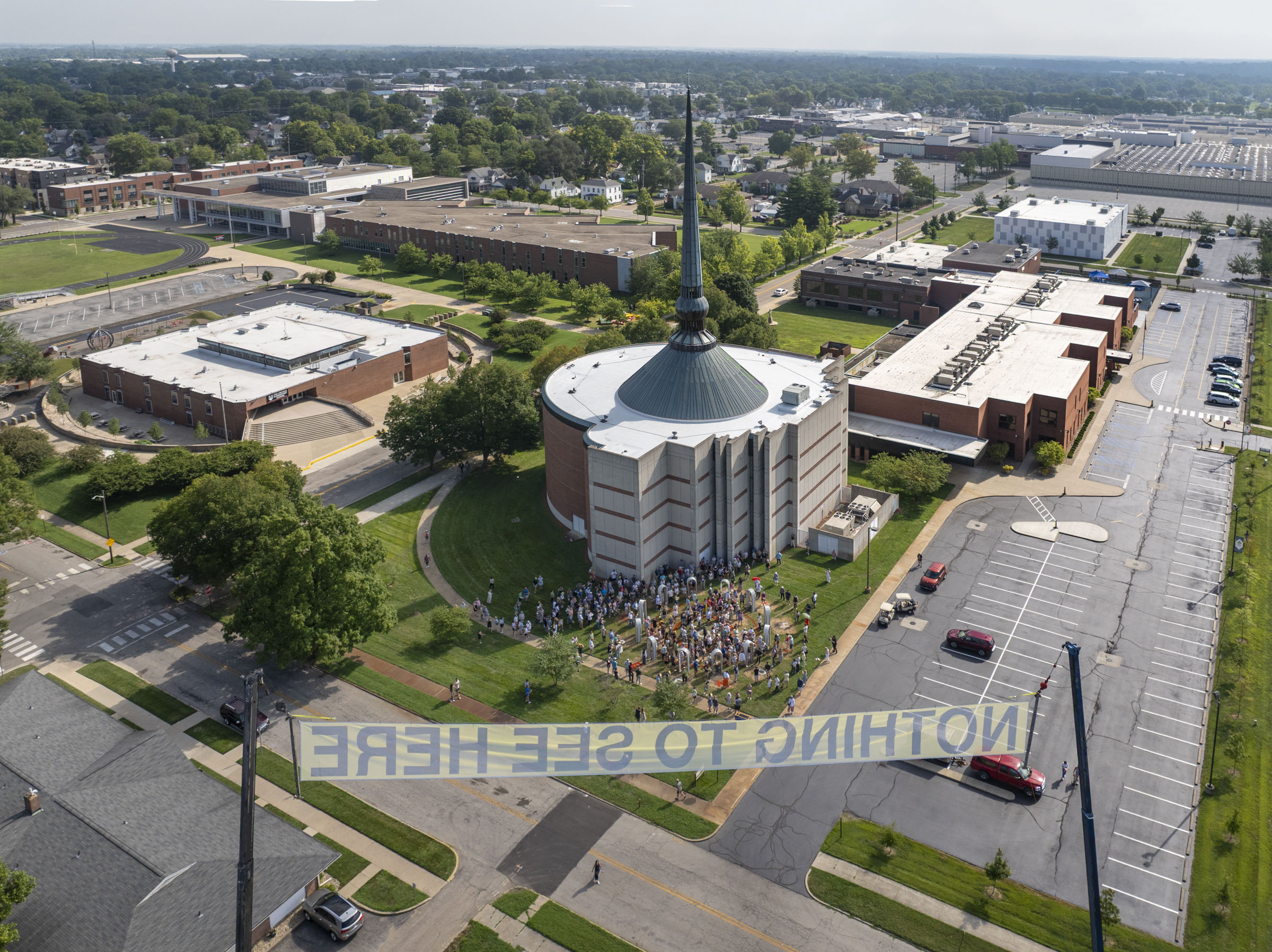
For the 2024–2025 cycle, a curatorial consortium of practicing architects, preservationists, and cultural critics chose the theme Yes, And—a notion borrowed from improvisational theater—as a more open-ended through line. They chose sites throughout town to mount 13 newly commissioned installations, each responding to specific public, semi-public, and private outdoor spaces as added layers of instigation and proposal. Also at play were considerations of site, history, community, and where these fundamental conditions intersect.
While recipients of the J. Irwin and Xenia Miller prize were selected by the curators based on a shortlist, participants in the University Design Research Fellows program were chosen based on an open call. With funds raised from individual donors, corporate sponsors, and government agencies, LCF covers the cost of development and construction.
All were unveiled during an opening weekend celebration (August 15 to 16) and will remain on view for three and a half months. Various performative activations—a DJ set atop a car park and even a “drone drop”—also took place, drawing in an audience of more than 300 visitors.
“Many of the projects disrupt the environment that you locals frequent every day,” Exhibit Columbus curatorial partner, writer, and educator Rasul Mowatt said during a panel discussion. “They look back to the histories that are already known but overlooked, and also those that have never been uncovered before.”
Memory, Ritual, and Engagement
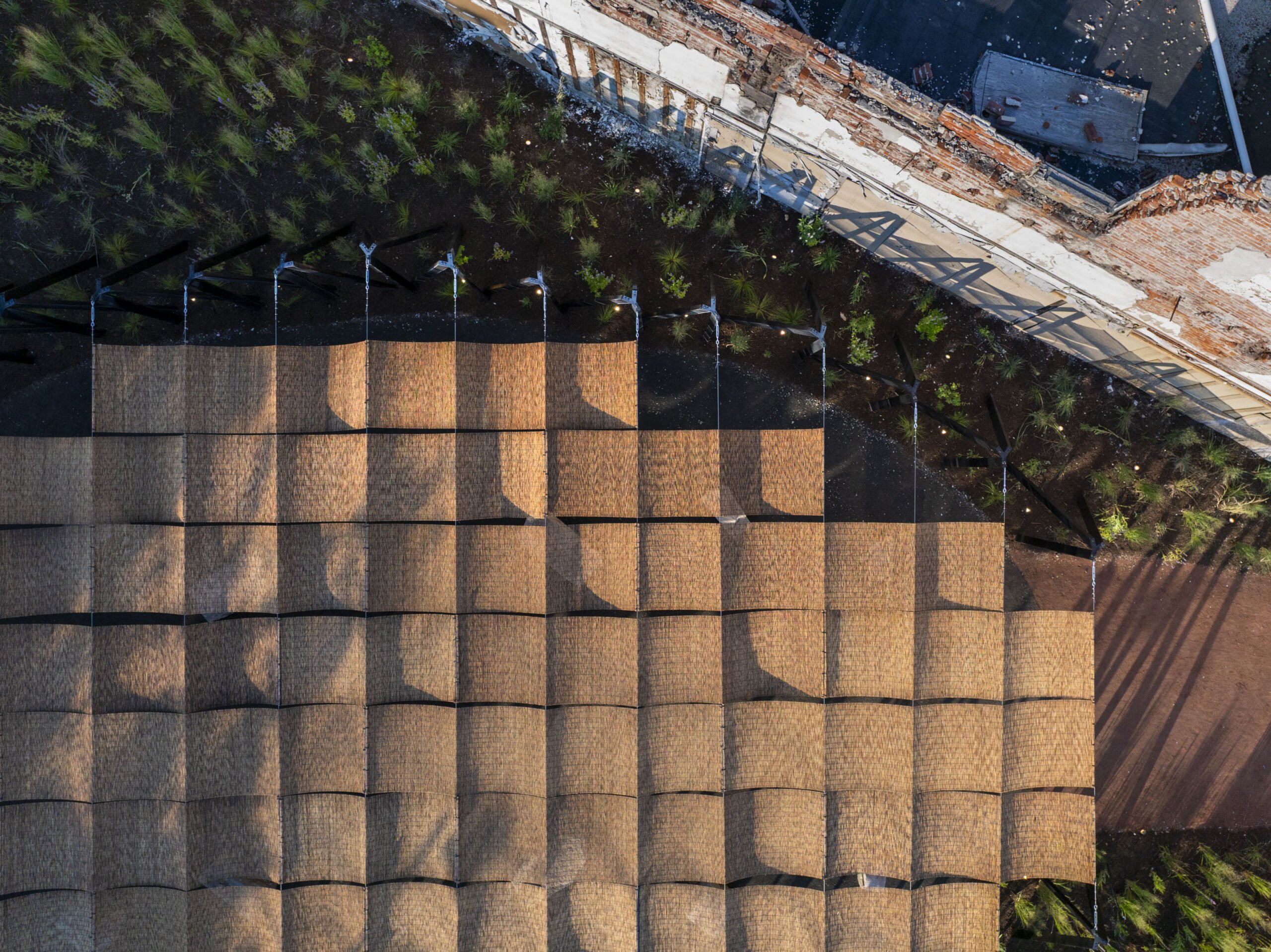
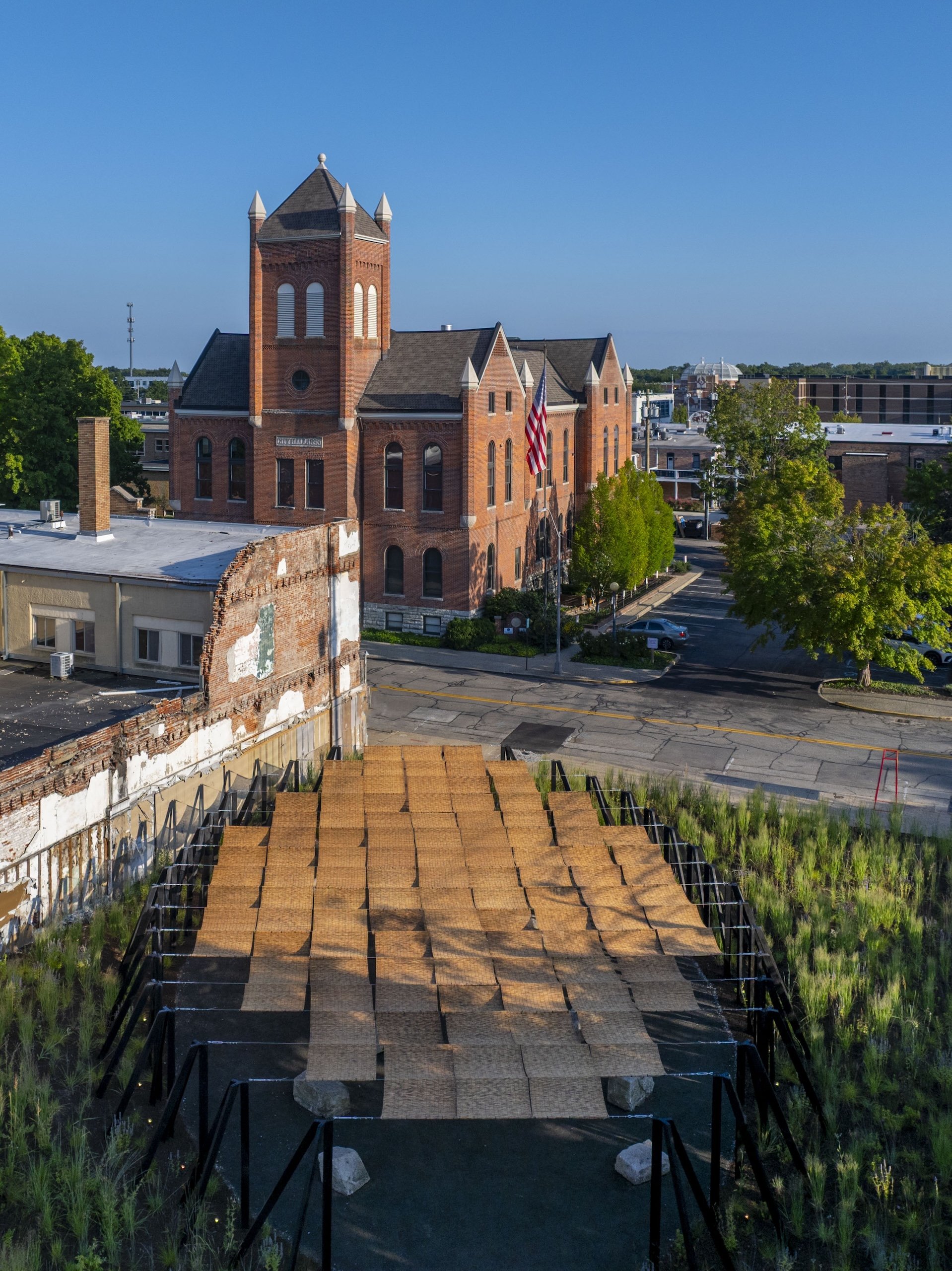
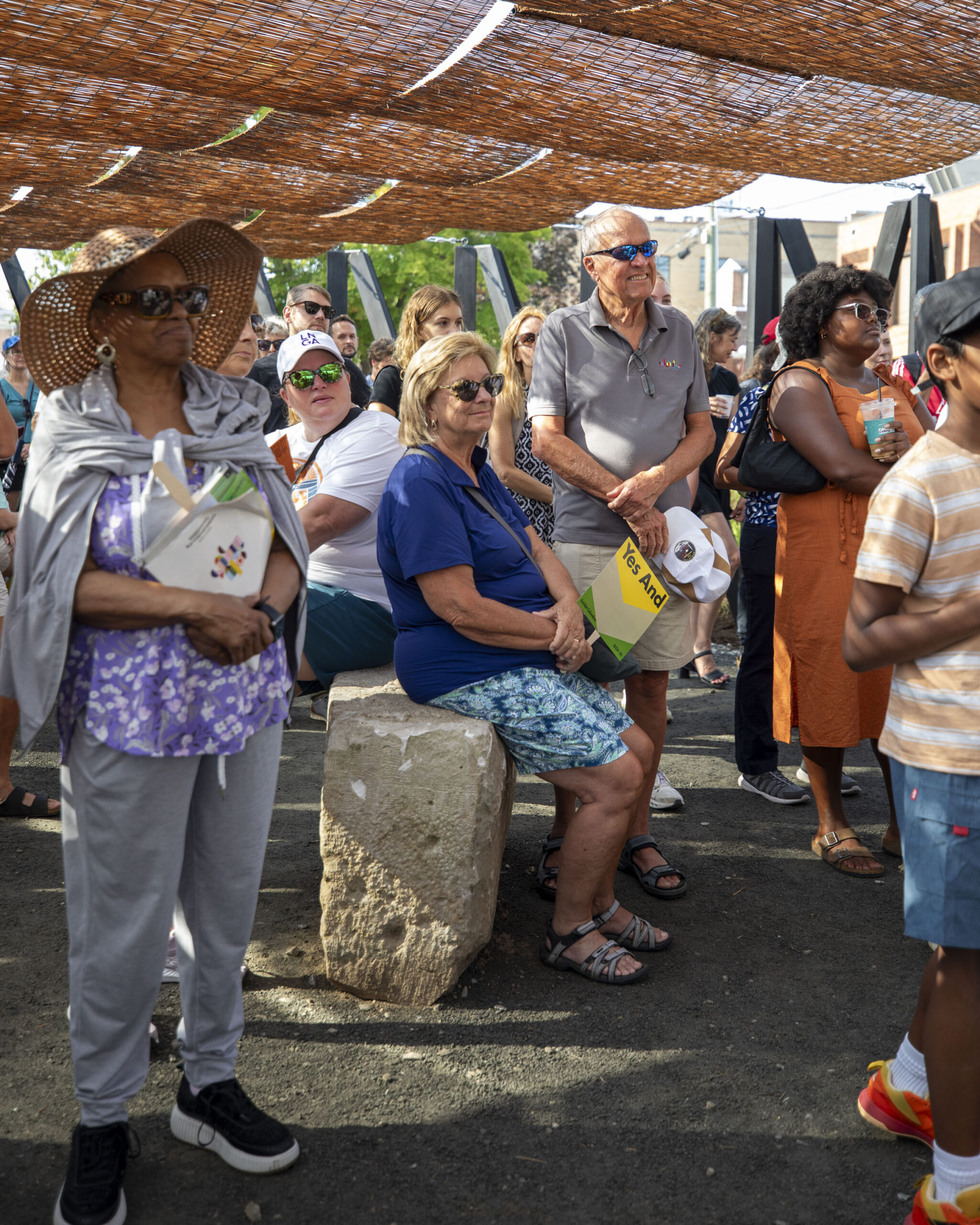
Erected on the site of the historic Irwin Block, which burned down in 2022, AD–WO’s Ellipsis installation is a proposed gathering space constructed, in part, using its remnants. For the Brooklyn-based firm—principals Jen Wood and Emanuel Admassu—the agora of sorts is much more than an abstract reconstitution or monument to the original building. As tragic as it was, the fire opened up the opportunity for a more comprehensive reassessment of the locale’s past.
“We were thinking about the histories that have been omitted from the conversation around Columbus,” Admassu said. “Most of it has been focused on modern architecture, while Indigenous space-making and Black inhabitation barely register in the normative discussions around the history of the place.”
This investigation led them to indigenous practices of burning as a dualistic form of renewal and resilience. While new plantings embedding the structure within its surroundings imply the former, the fire-treating of its structural elements implies the latter.
“In our curatorial meetings, we thought a lot about the role Columbus played in shooting off the careers of the many architects that would gain recognition outside of the field,” said curatorial lead, Mila Lipinski, a Columbus-born, Jackson, Mississippi–based architect “This program provides a similar opportunity, a chance for the participants to build on the existing infrastructure and suggest new solutions—their Yes, And.”
A Public Pool Monolith
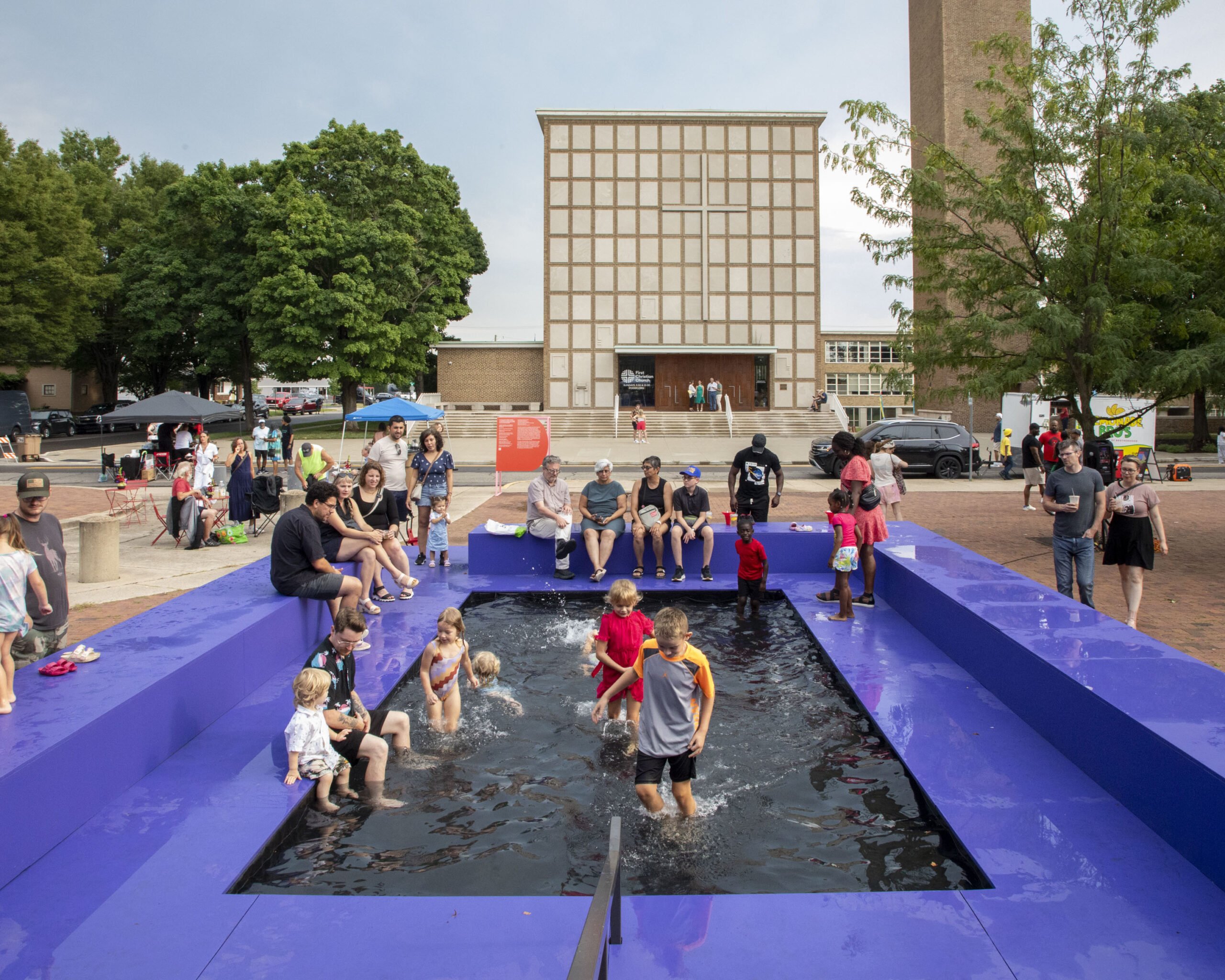
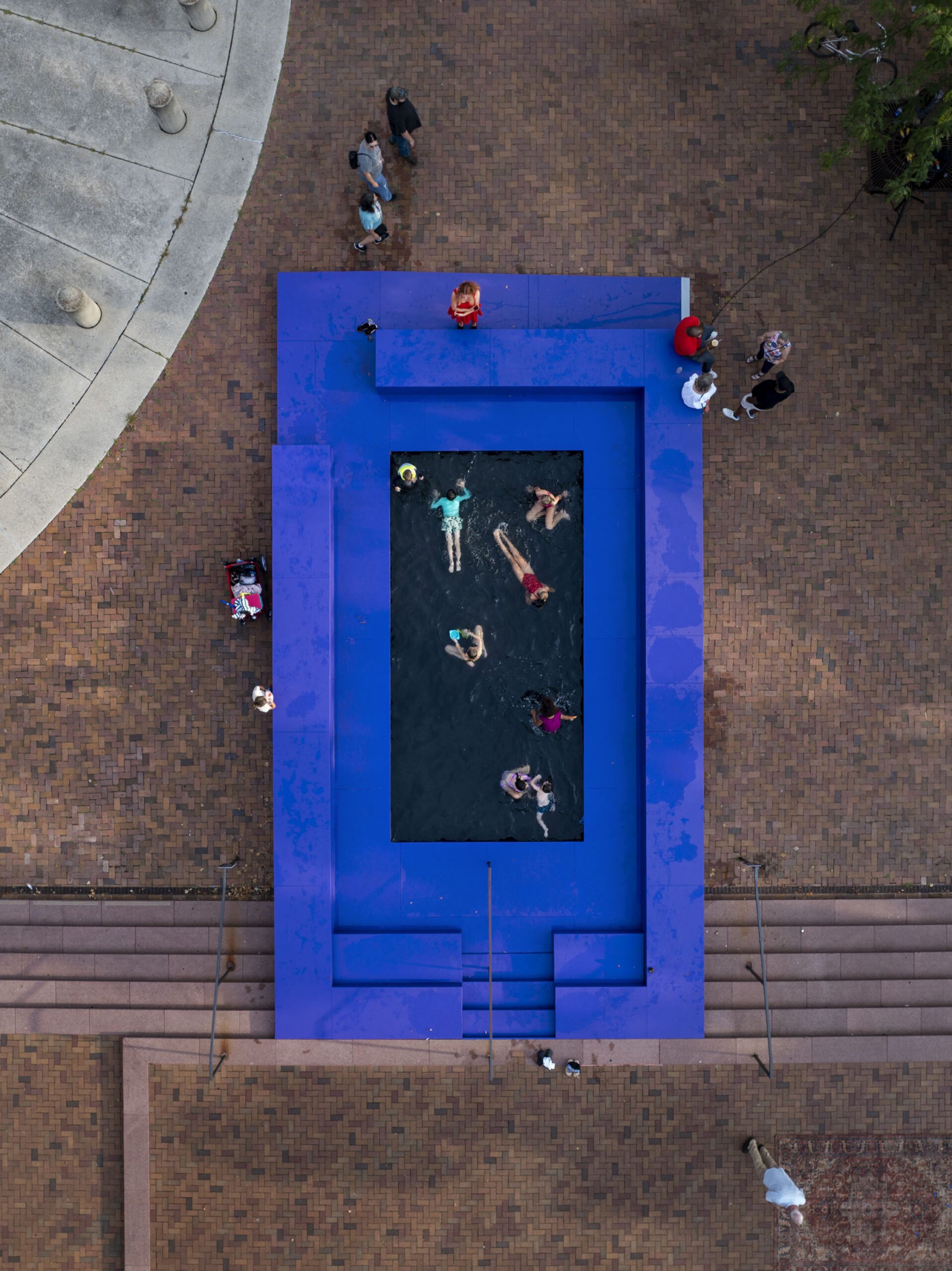
A succinct example of this is University of Illinois Urbana-Champaign professor Akima Brackeen’s Pool/Side installation. Inserted within the plaza leading up to the I.M. Pei–designed Cleo Rogers Memorial Library, the shallow water basin emerges as a striking yet inviting blue monolith. Juxtaposing the modernist trope of reflecting pools—largely nonfunctional and purely aesthetic architectural elements found in some of Columbus’s most iconic sites—with the issue of water access in urban centers, the fully functional “aquatic conversation pit” inspires a new degree of engagement and gathering.
“In helping to develop the various commissions, we looked at sites that both address the idiosyncrasies of Columbus but that are also emblematic of site conditions found across the country,” said curatorial partner Joseph Altshuler, co-principal of Chicago practice Could Be Design. “The car park is a common, frankly underutilized, piece of American infrastructure that needs to be re-examined seriously.”
Joy Riding Design
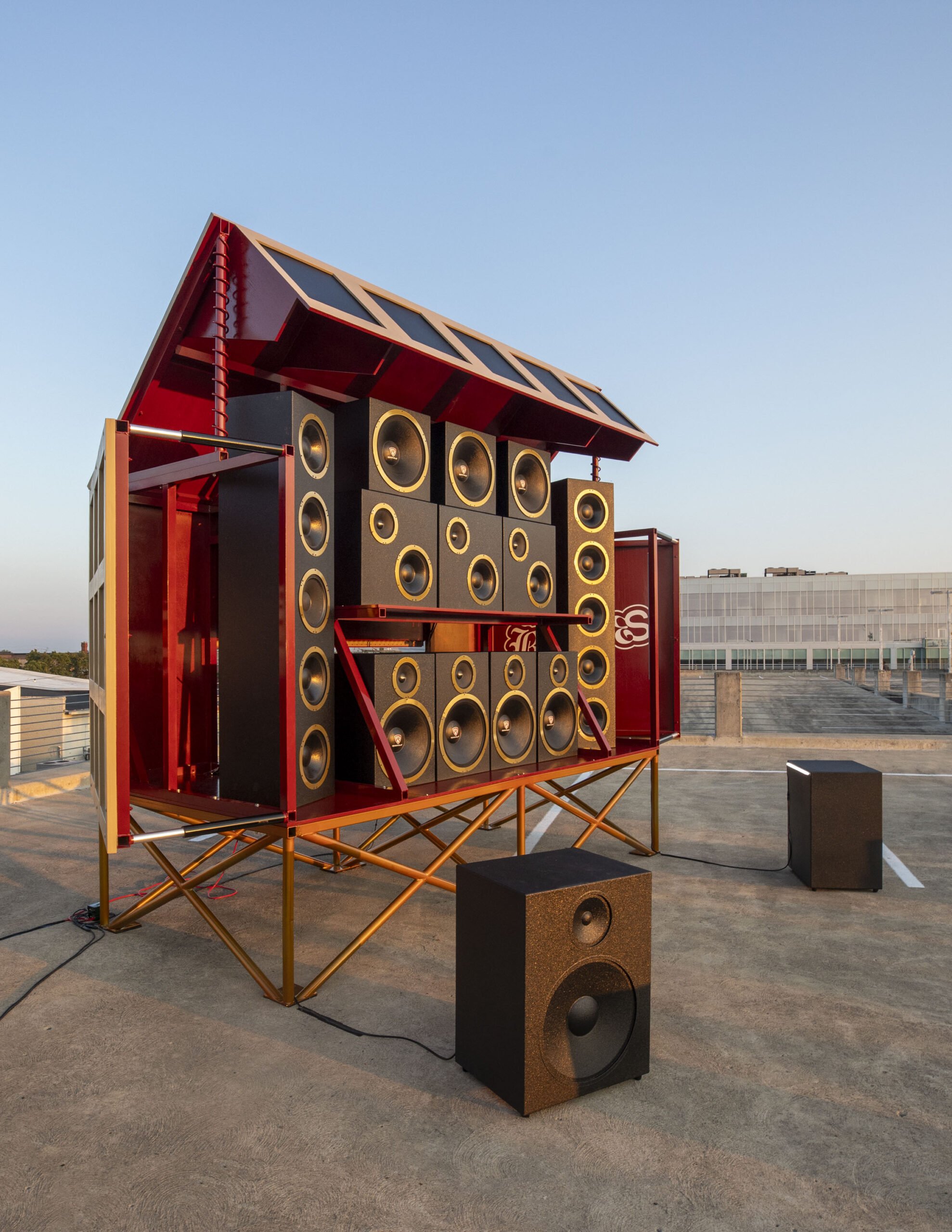
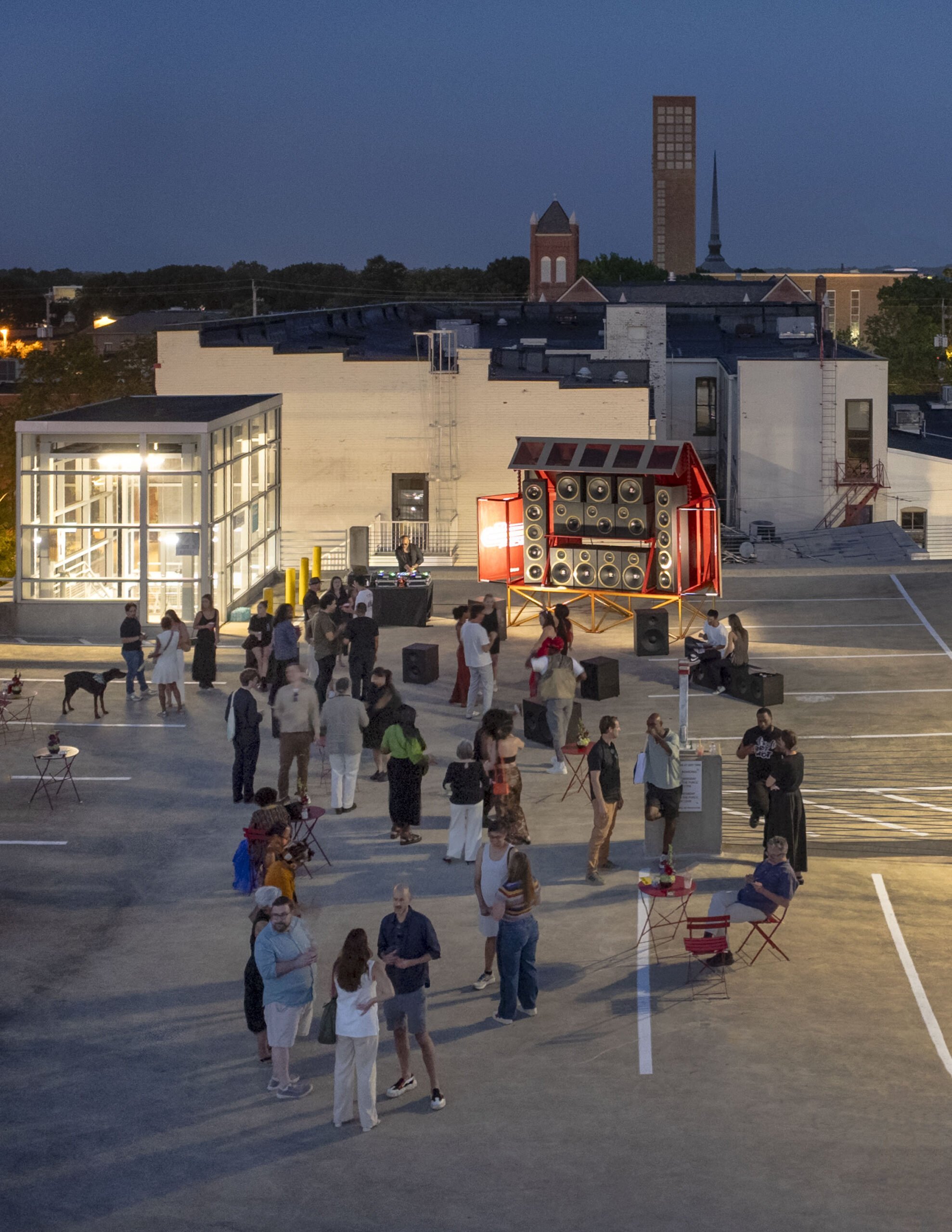
Answering that call is Miami-based practice Studio Barnes’s Joy Riding project. “Once we knew that we had the parking garage as the location of our intervention, we started thinking about the car, car culture, and specifically idling,” says principal Germane Barnes. “If a car is just sitting there parked, what do you do—sing, do homework, or just hang out?”
Consisting of a customized speaker system mounted to a mobile trailer, “the transformer” is enabled with Bluetooth connectivity. Anyone can go up to the top level of Columbus’s Jackson Street Garage and play music, or host an impromptu dance party. According to LCF, the interactive installation “evokes the deep bass lines central to Black car culture and underscores how sound, ritual, and assembly have long served as catalysts for celebration.” After its stint in Columbus, Joy Ride could potentially travel, amplifying various types of public events—concerts, outdoor movies, etc.
All three cited installations reveal the importance of shared public space but also the need for layered interventions to accommodate different levels of engagement: facilitating the reassessment of history, expanding the prescribed function of a site, and maybe even helping its users find consensus
Would you like to comment on this article? Send your thoughts to: [email protected]
Latest
Projects
Inside and Outside Johns Hopkins’ New Bloomberg Student Center
Inside the New BIG and Rockwell’s Bloomberg Student Center At Johns Hopkins, a new student center reconnects the university to Baltimore and redefines how students gather, collaborate, and unwind.
Viewpoints
Archtober and the AIA Center for Architects Invites You to Share Space
Archtober 2025: Sharing Spaces, The 15th edition brings together architects, artists, and the public for a month of events exploring how New Yorkers share and shape their city.