

November 9, 2025
Weaving Nature’s Visual Language into Built Environments
Flat ceilings, uniform walls, and repetitive grids lack the organic complexity that our visual systems crave. We spend 90 percent of our lives in spaces our biology doesn’t recognize—surrounded by surfaces lacking the patterns that signal safety, comfort, and home.
This tension between the built environment and our innate need for nature poses a design challenge that goes far beyond aesthetics. It touches wellness, productivity, and how we experience space. The most progressive interior solutions don’t simply acknowledge this disconnect—they dissolve it, integrating biophilic principles in creative, organic ways that blur the boundary between inside and outside across workplace, retail, hospitality, and residential environments.
Systems Rooted in Nature’s Logic
B+N Industries has built its latest product collections around this very principle. The Fortina Batten System, Iconic Panels, and Infused Veneer collections are designed to provide designers with a comprehensive toolkit, recognizing that biophilia isn’t about simply adding a potted plant to a lobby—it’s about embedding nature’s inherent logic into the architectural visual language itself.
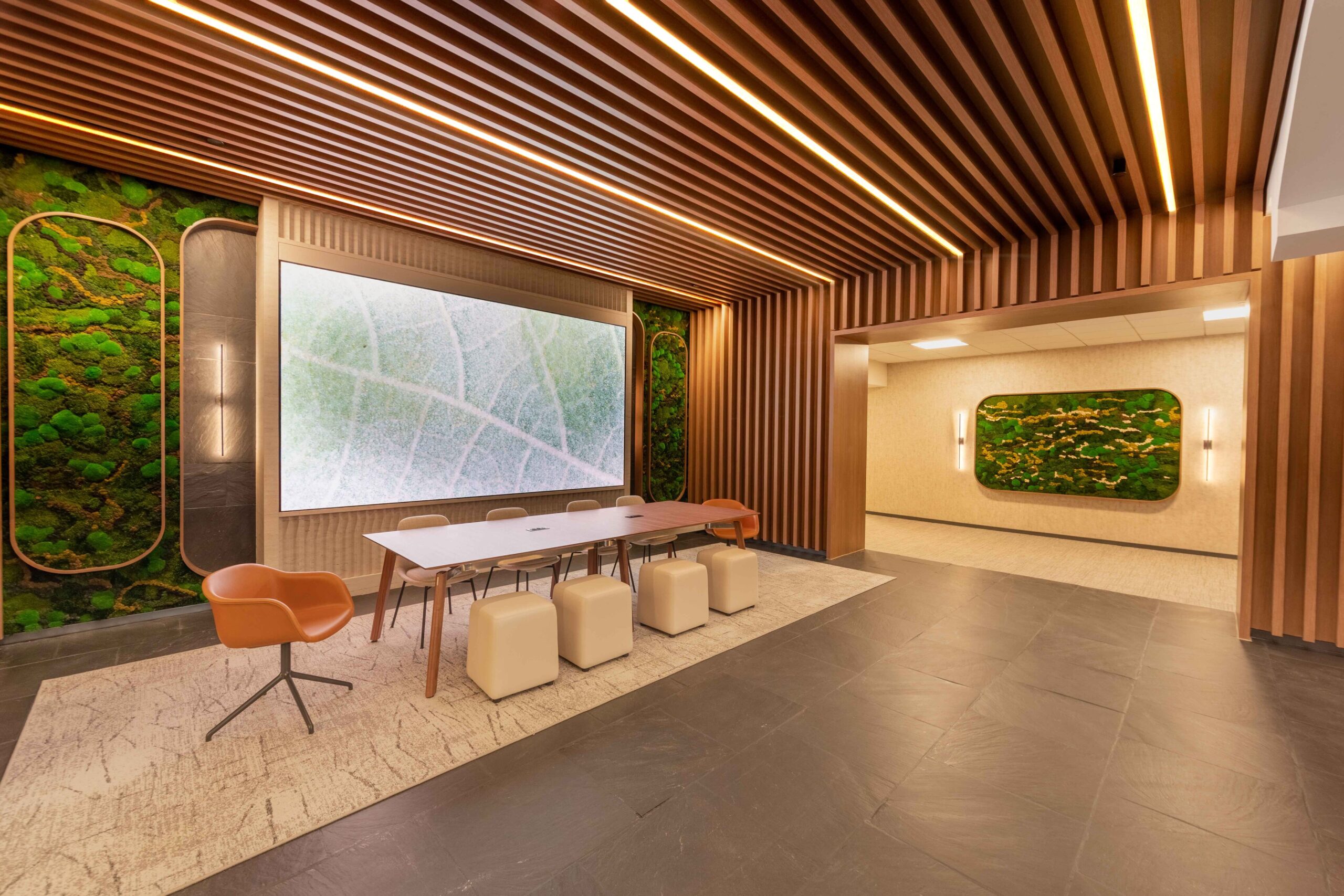
The company’s Fortina Batten System offers over 100 wood-look finishes, capturing the grain, depth, and variation of natural species—from rich walnut to bleached oak. This aluminum batten system, wrapped in patterned non-PVC film, can function as a shading device or a space-defining element. When multiple battens are arranged together, they allow light to filter through in dappled patterns that mimic sunlight through leaves—a biophilic effect shown to reduce stress and enhance cognitive function.
Connecting Art and Environment
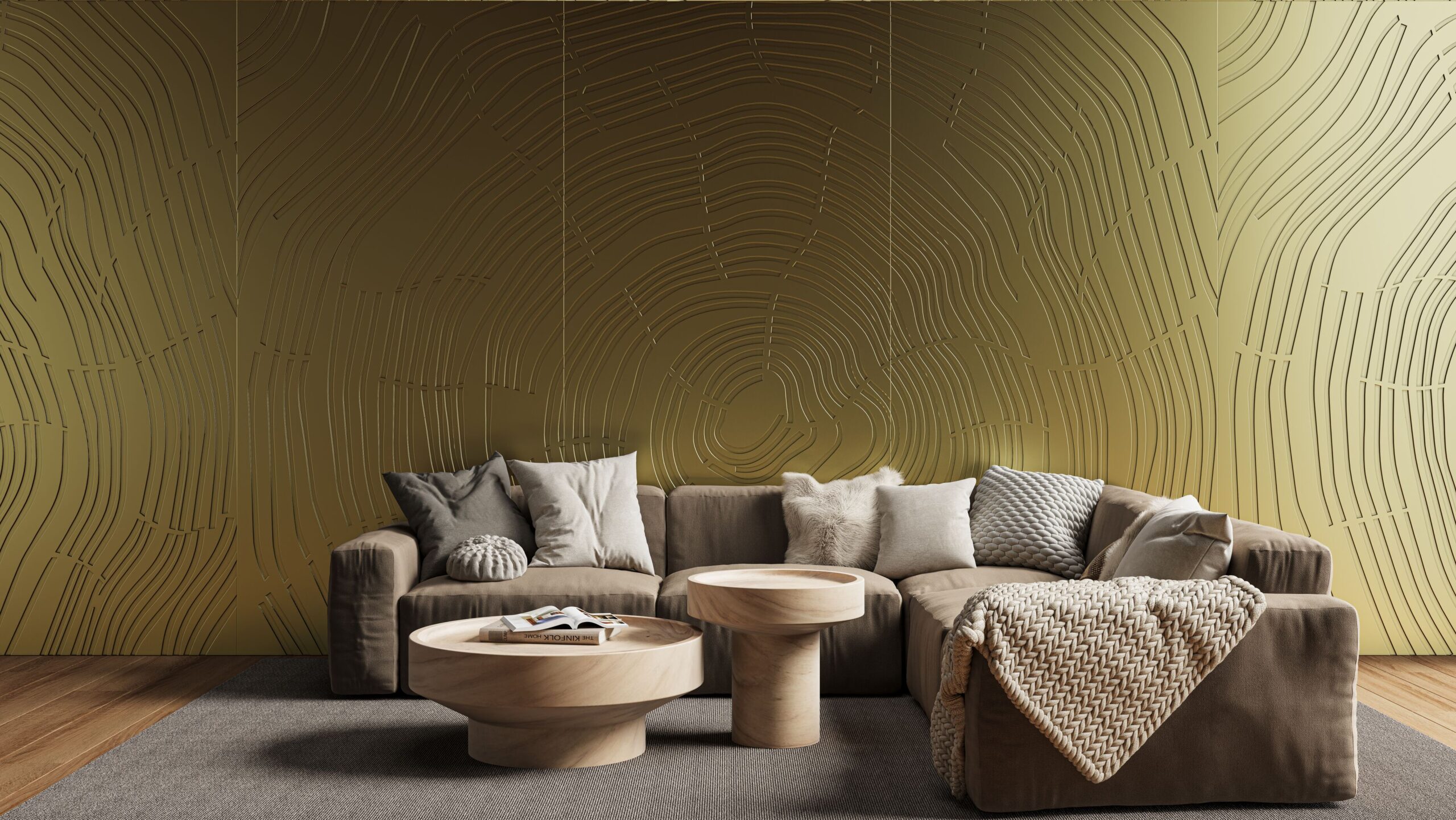
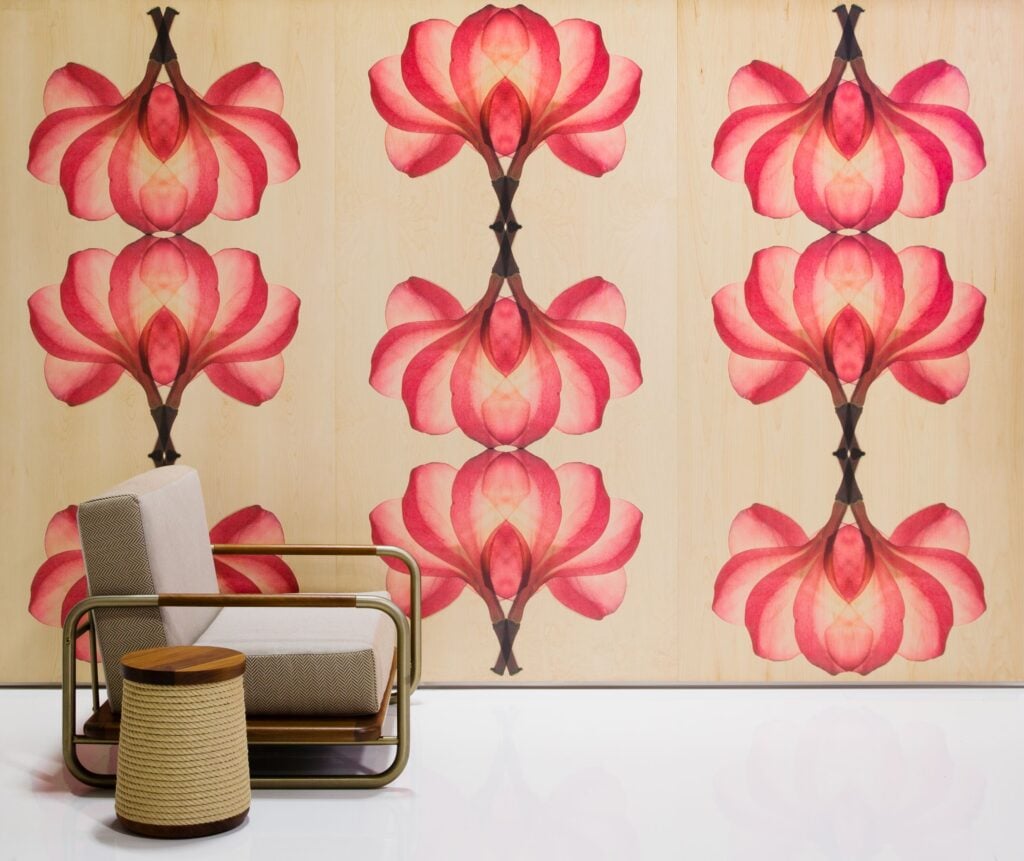
B+N’s Iconic Panels bring the natural world indoors, evoking textures of bark, radial growth rings, and the flowing geometries of leaves and water. These tactile, sculptural surfaces transform walls into dimensional experiences that engage both eye and hand. With over 30 patterns and 12 finishes, the collection reflects collaborations with designer Jamie Durie—whose “transterior” philosophy dissolves boundaries between inside and outside—and graphic designer Rex Ray, known for his abstract, midcentury-inspired aesthetic.
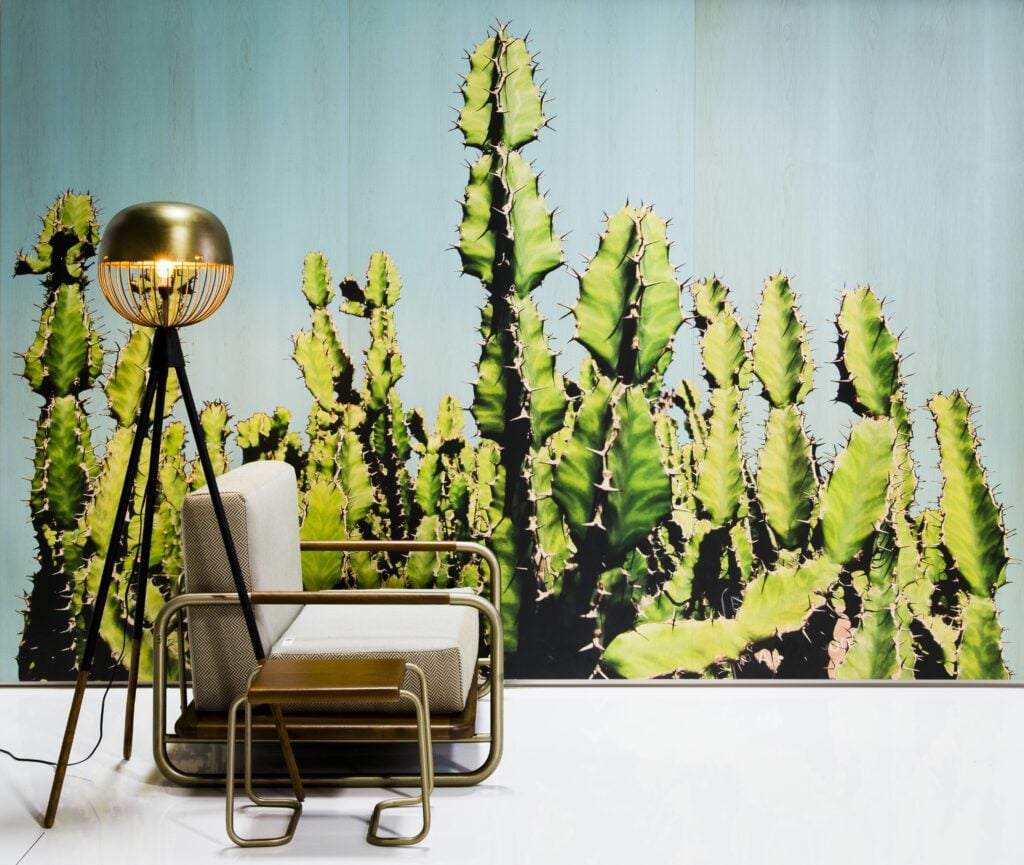
Also featuring designs by Durie and Ray, the Infused Veneers start with real wood, infused with patterns integrated directly into the surface. Durie’s nature-inspired motifs blend with the wood’s grain, evoking forms shaped by wind, water, and time, while Ray’s midcentury-inspired collages add playful color and movement. High-gloss resin finishes deepen richness and texture, creating a vibrant, timeworn, and durable look ideal for walls, fixtures, and casework.
These collections empower creative professionals to bring warmth, pattern, and organic authenticity to indoor spaces, all while maintaining the performance standards that high-traffic commercial environments demand.
Would you like to comment on this article? Send your thoughts to: [email protected]
Latest

Viewpoints
What Is and Is Not Biophilic Design?
The creator of the concept of Biophilic Design explains effective strategies that keep us healthy by bring us closer to nature.
Products
5 Smart Designs That Boost Brain Function
Discover products that blend neuroscience and biophilic design to boost focus, reduce stress, and support brain health.