



June 11, 2025
These Students are Reclaiming Community Through Experimental Design

Adaptive Reuse for Amplifying Community Spaces
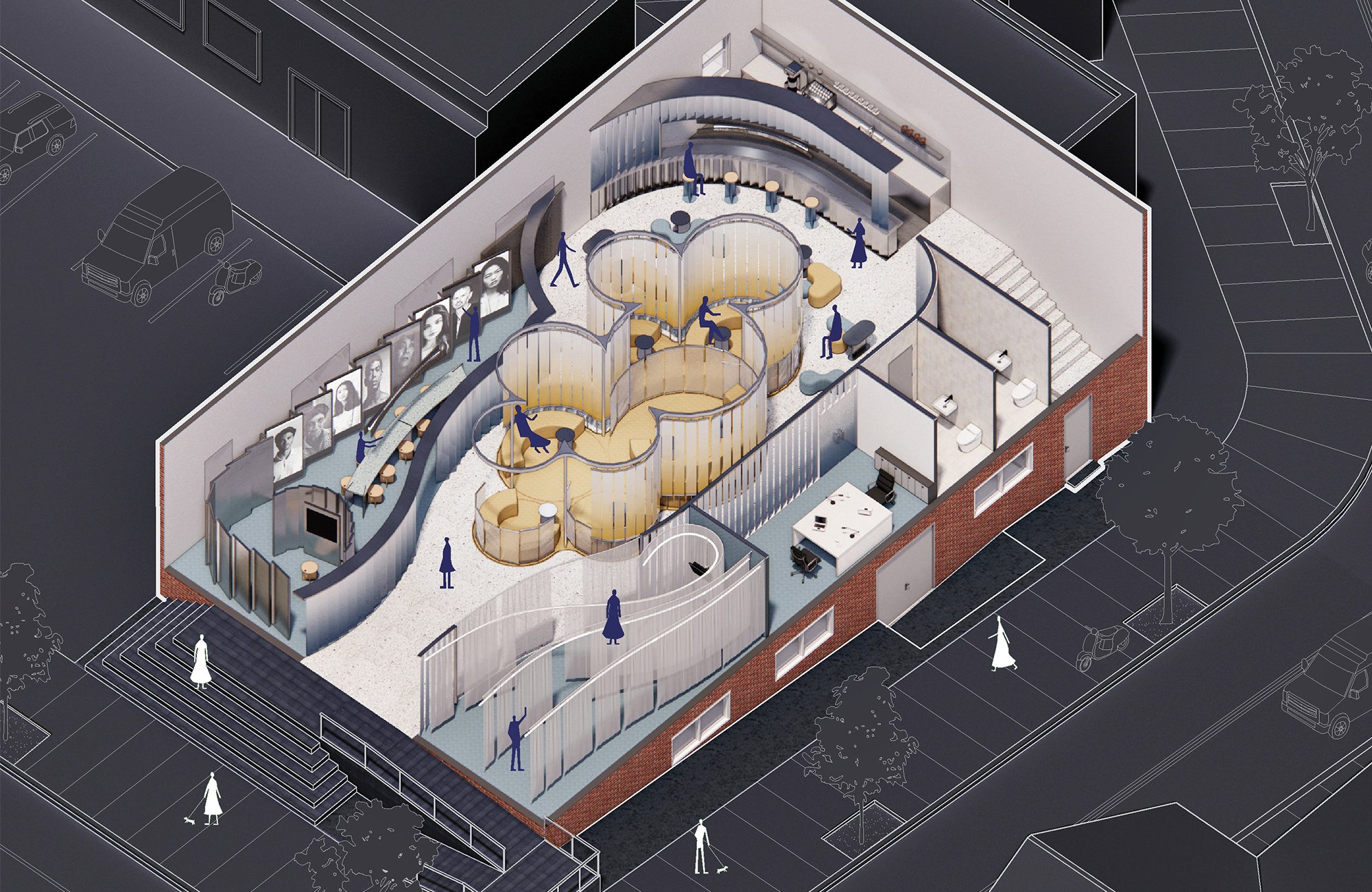
Several of these projects concentrate on amplifying community-based institutions. In her proposed renovation of a Lithuanian American social club in Providence, Rhode Island, RISD interior architecture graduate student Yerim Jang reimagines a public space that honors its heritage while expanding its relevance. Called Threads of Journeys, the community center features interactive exhibits and video oral histories to preserve the club’s history, while flexible, modular spaces invite diverse groups from the surrounding neighborhood to meet and collaborate.
In her reimagining of a historic farmers’ market in San Francisco at the nexus of the Bernal Heights neighborhood, a canyon, and a highway, California College of the Arts M.Arch student Layla Namak intervenes to expand the market’s role as an urban connector. Observing that the existing building didn’t encourage visitors to circulate throughout its interior, Namak proposes replacing it with a soaring, exuberantly daylit structure that pulls people through from one end to the other. Along with a food hall and stalls for produce vendors, the plan includes classrooms, social services, and a library to engage community users.


Holistic Community Planning
In the Little Caribbean area of Flatbush, Brooklyn, bachelor in architecture student Evelyn Krutoy at the City College of New York designed a community center in consultation with the GrowHouse neighborhood organization, with space for gardens, food vendors, art exhibitions, and educational exchange. Employing terra-cotta details and rich colors, Krutoy wove together a communal kitchen, café, coworking, classroom spaces, offices, and a rooftop garden–creating a design that sensitively addresses the urban design scale as well as the scale of the interior.
For his design of a city block in Portland’s Albina neighborhood—previously razed for a never-built hospital—Cornell bachelor in architecture student Omar Leon integrates residential buildings and community spaces into a holistic concept of well-being that includes community gardening, green building, and healthy lifestyles. Instead of private backyards, the plan prioritizes shared central spaces. “Since the whole block was empty, the idea was to create those smaller communal spaces at the block level to create a community that was self-sufficient in a way,” says Leon.

Fostering Community Using AI-driven Regenerative Design
At a similar urban scale in Los Angeles and New Orleans, Sci-Arc M.Arch recent graduate Michael Boldt and Tulane bachelor in architecture student Brandon Gicquel explore how housing developments can preserve and produce communities. For Boldt, that meant creating mixed-used residential spaces in L.A.’s Arts District on the site of a polluted rail yard that has been adopted as an ad hoc arts space. His design process involved using a 3D scan of the site with AI-driven regenerative design to grow buildings that also preserve shared artist spaces for fabrication, assembly, and living.
Gicquel’s design borrows the vernacular of shotgun houses in New Orleans’s West Riverside neighborhood, rotating and stacking volumes around a central courtyard so that artists and musicians of different ages and cultural traditions have room to perform and show their work. “The emphasis shifts from the dwelling unit to the courtyard,” says Gicquel. “A community is generated as opposed to the isolated living approach that is often prevalent in suburban communities.”
Would you like to comment on this article? Send your thoughts to: [email protected]
Latest
Projects
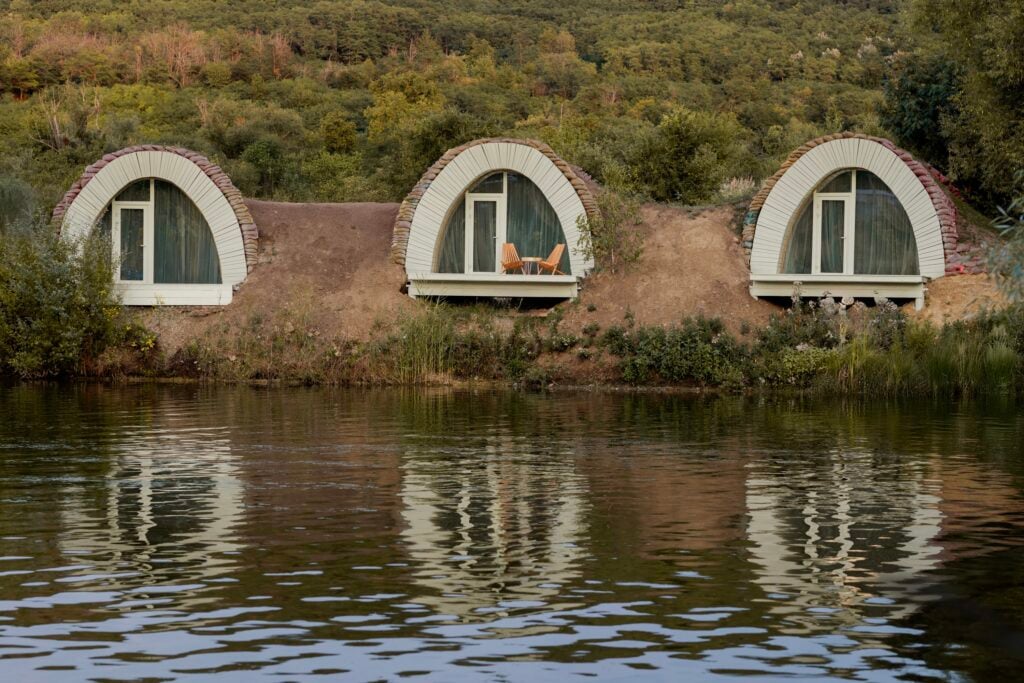
Inside Moldova’s Real-Life Hobbit Houses
LH47 ARCH has built three earthen cabins that use low-tech materials and vernacular craft to model sustainable hospitality in Moldova.
Projects
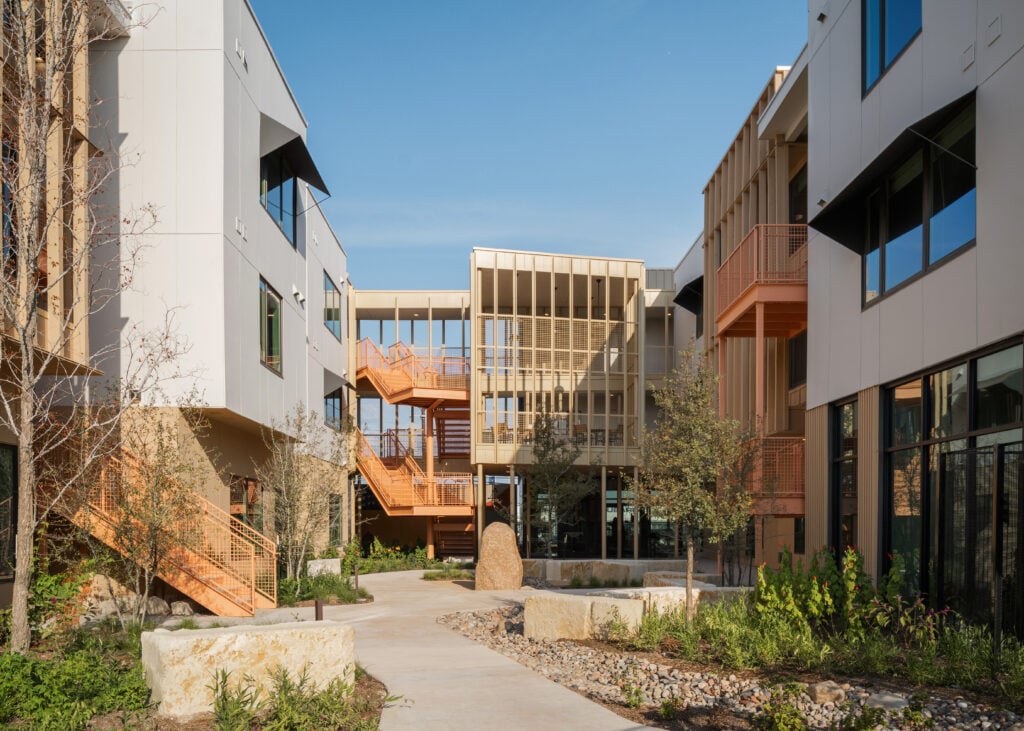
Where Housing Meets Humanity
Three innovative housing projects that focus on care, community, and climate, redefining public housing with dignity.