


September 30, 2025
3 Cinematic Hospitality Spaces That Put Guests Center Stage
In a sea of sameness, hospitality designers are curating immersive spaces centered on stylish circulation, authentic storytelling, and polished materiality. On the Vegas Strip, Caramella—Planet Hollywood Resort & Casino’s newest restaurant—channels 1970s Italy. In Houston, Asian steakhouse Haii Keii blurs the boundaries between imagination and tradition, while in Brooklyn, Unveiled delivers an alluring subterranean retreat with amorphous seating and a reflective dance floor.
Haii Keii
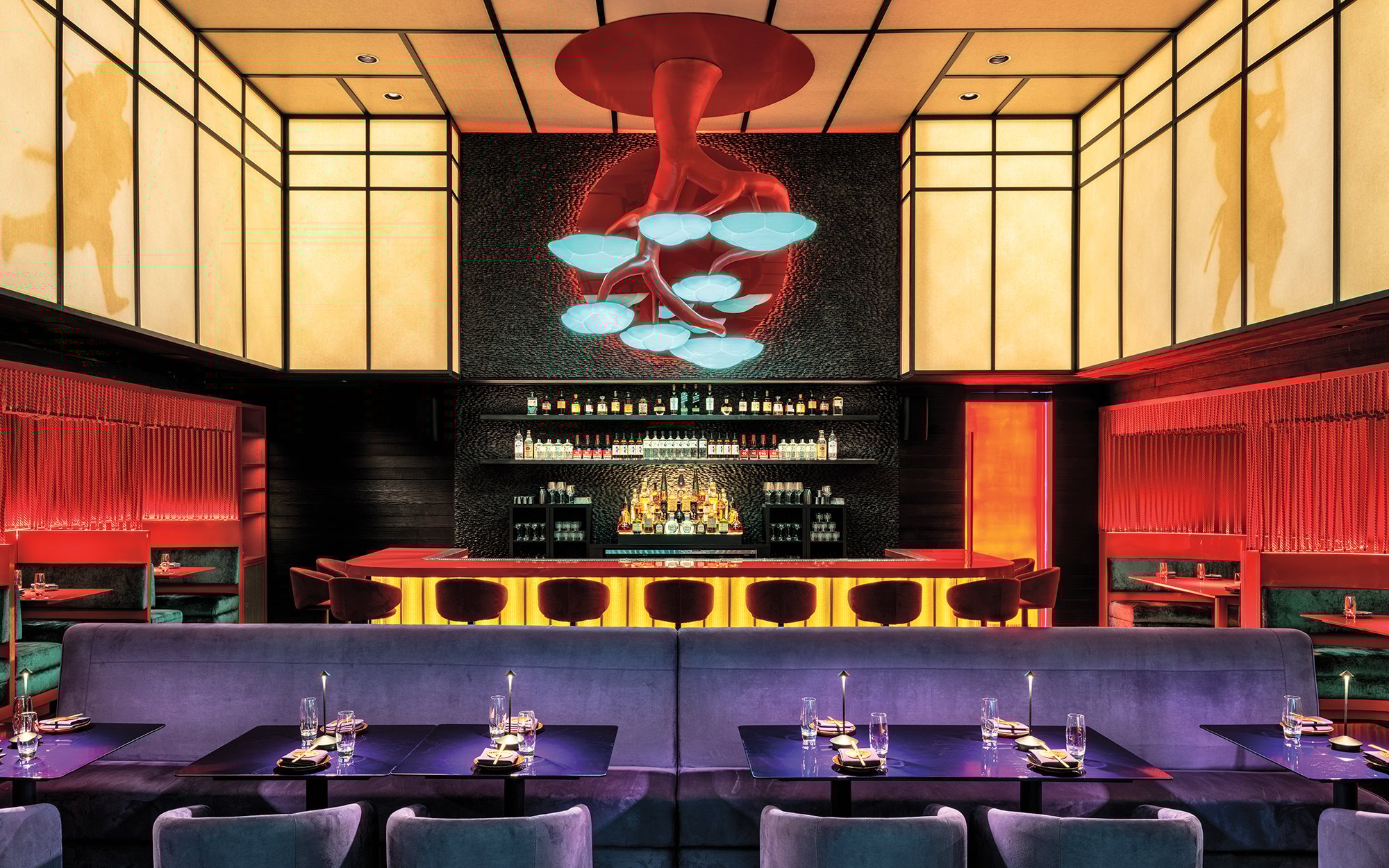
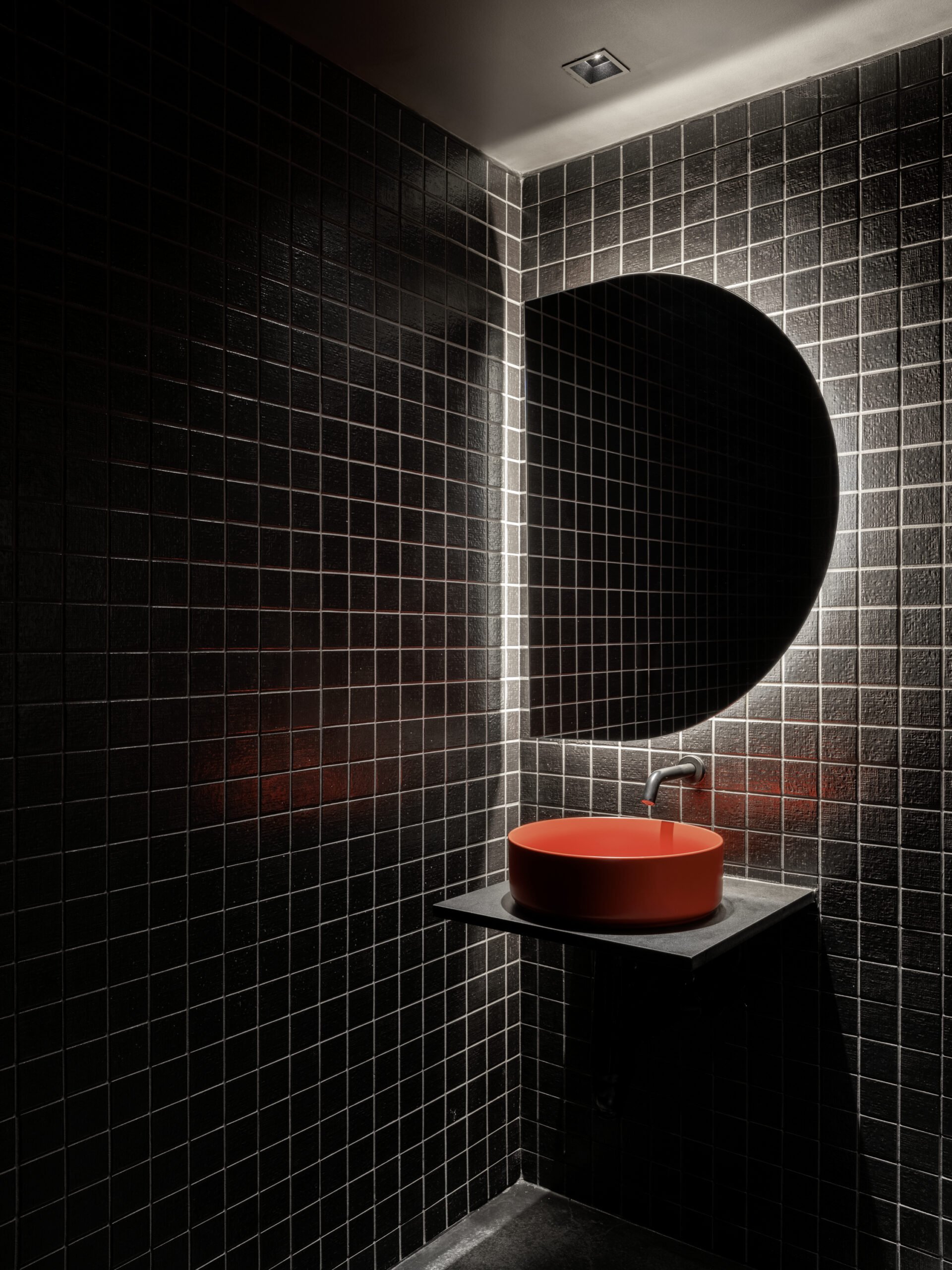
Dining at Houston’s Haii Keii is like stepping onto a science-fiction set, its saturated and futuristic palette drawing on films such as Blade Runner and Kill Bill. Designer Gin Braverman calls it “a surreal and cinematic reimagining of a Japanese ryokan.” While the owner aimed to bring “something really experiential and elevated to Houston in the way that Miami and Vegas have highly conceptual restaurants,” the brief was open-ended. Braverman set out to achieve “the experiential and visceral” by flipping tradition in favor of the unexpected. “I wasn’t going to do cherry blossoms,” she says.
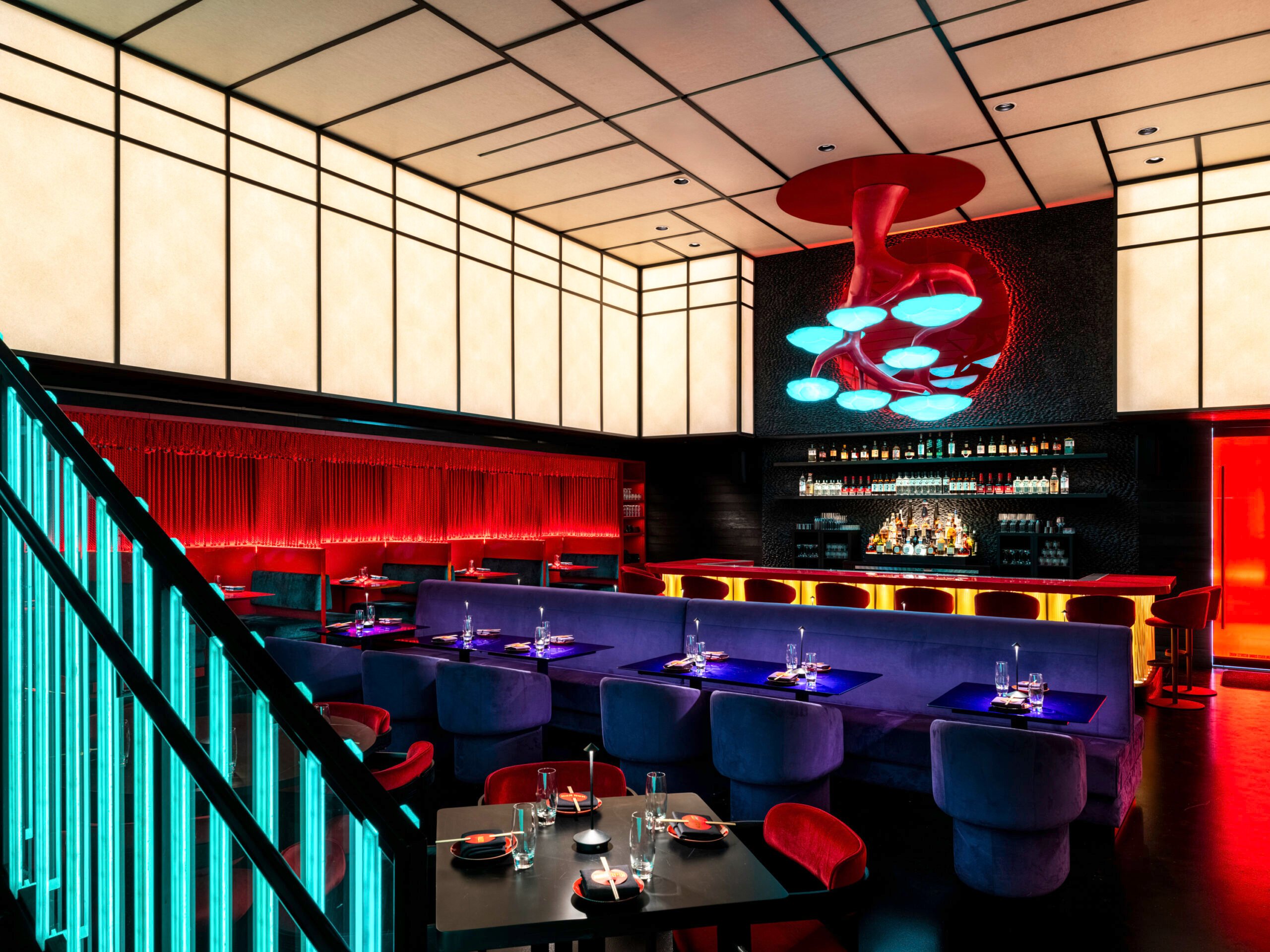
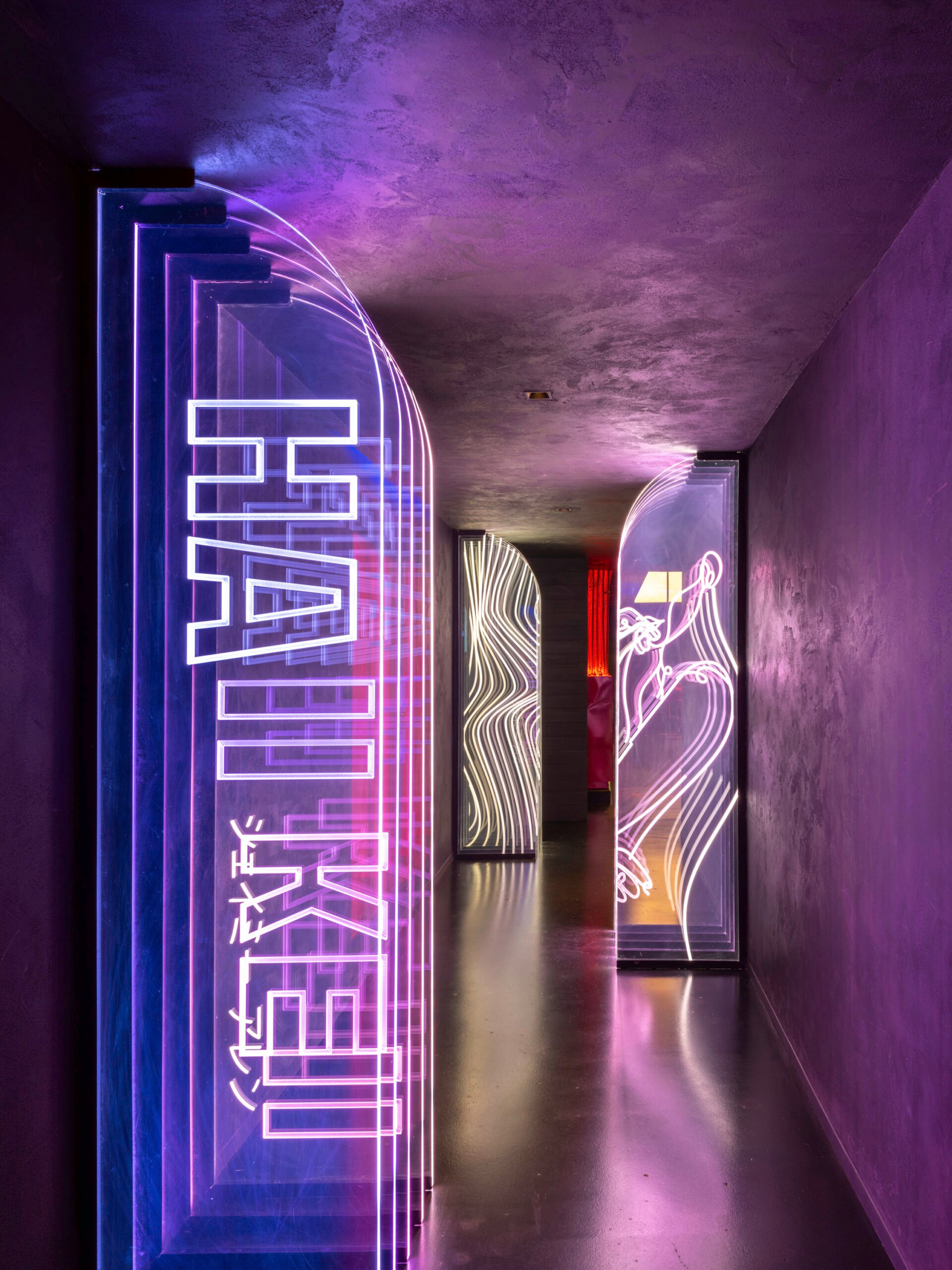
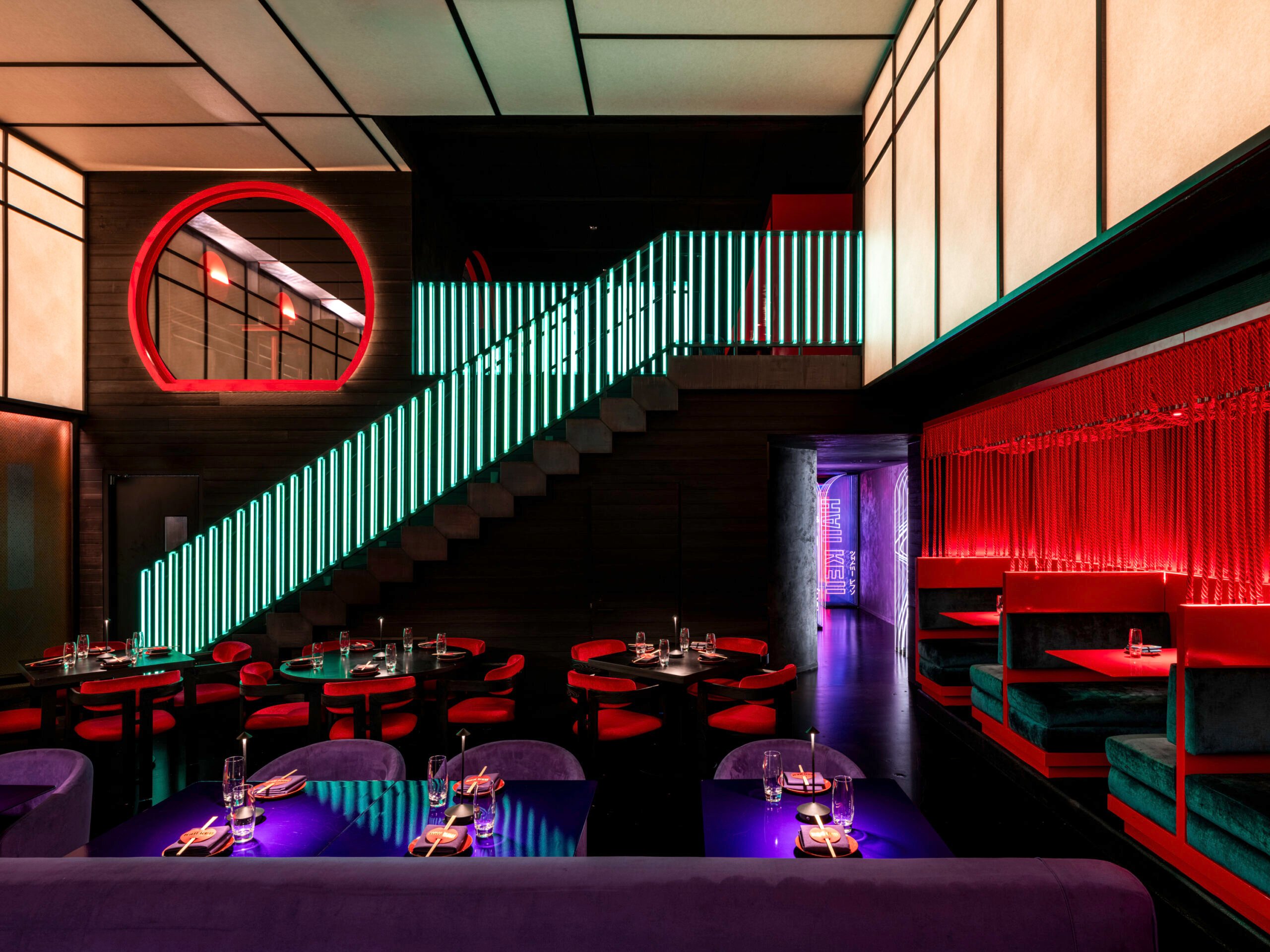
Instead, the 3,000-square-foot interior centers on a glowing, inverted eight-foot bonsai tree and a set of shoji-style screens that wrap the upper level. “We put a samurai in there for fun, and every once in a while, he comes around,” she says of the rotating shadow projections that animate the space. Guests arrive through a glowing red glass door and navigate a narrow hallway lined with etched lucite screens before emerging into the dramatic, double-height dining room.
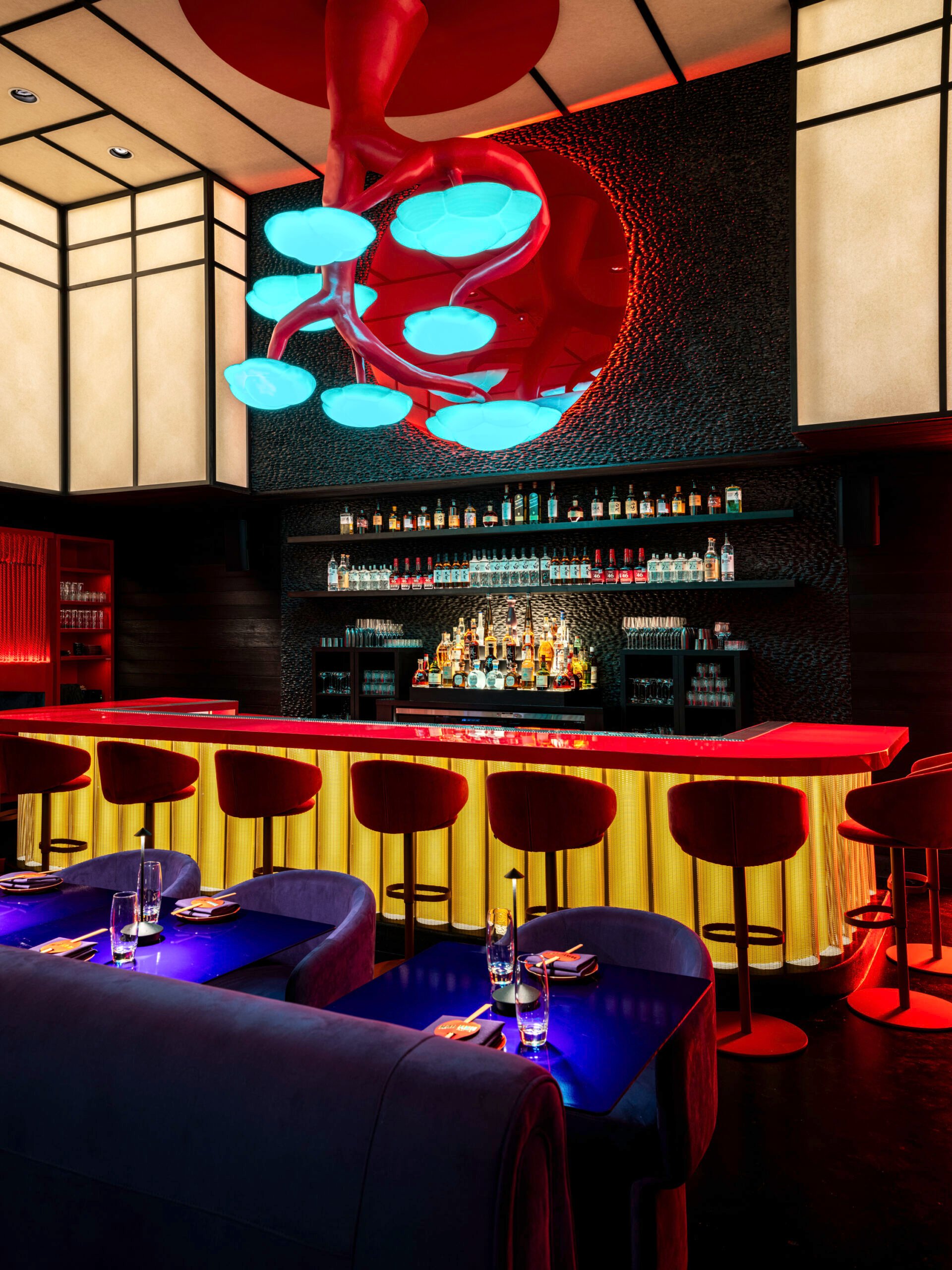
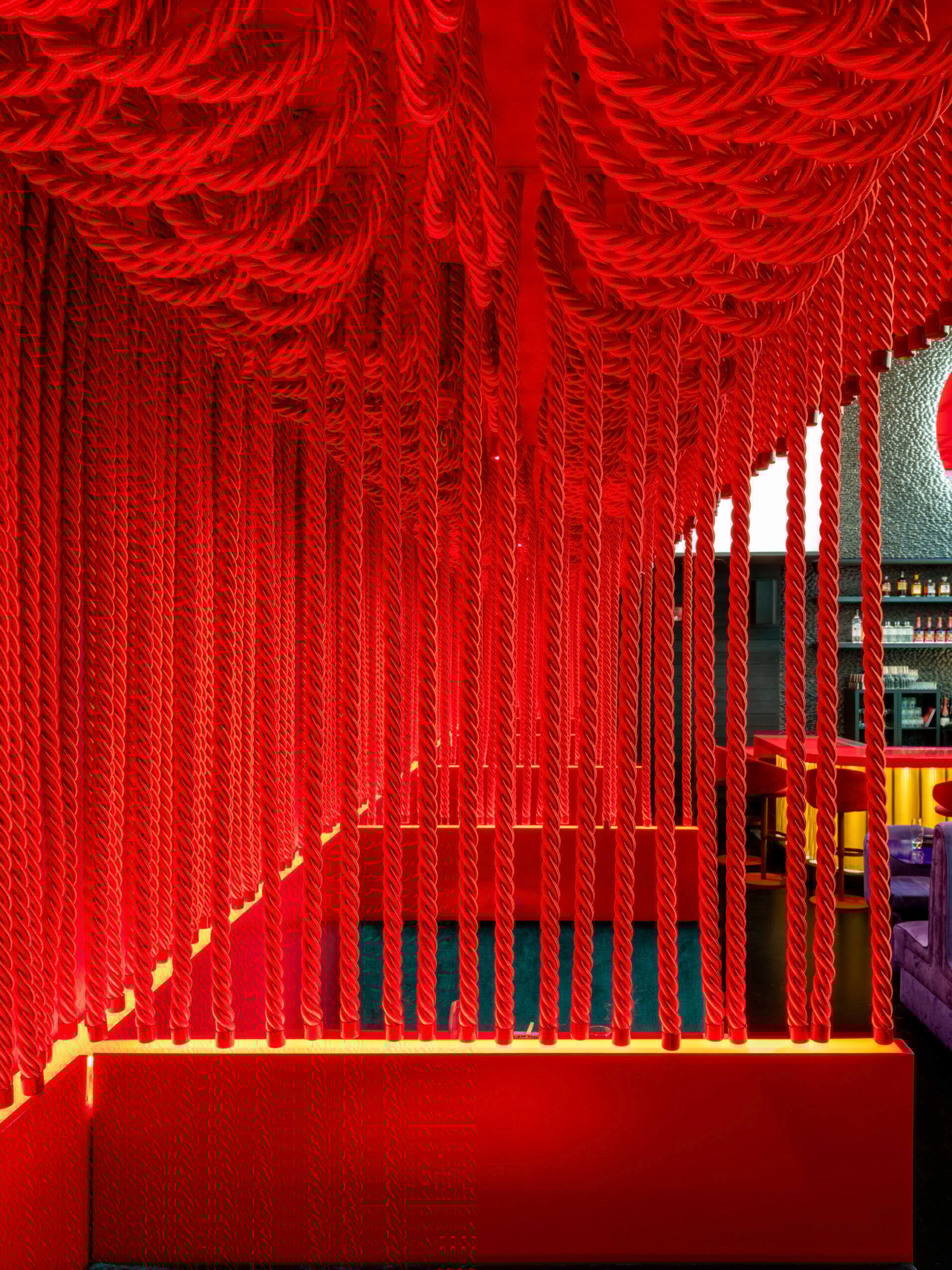
Curved black plastered walls set the tone, while black leather booths are wrapped in more than 4,000 linear feet of red rope—an idea inspired by a dumpling den Braverman visited in Japan. Velvet upholstery softens the scene, while the backlit bar gleams with a powder-coated top and a scalloped brass mesh base. “There’s something about the way the colors come together,” she says of the bold red, turquoise, and purple palette. “It’s very physical.”
At mezzanine level, a private dining room is tucked behind thick black curtains and a keyhole-cut wall. “It has this circular, fishbowl-like window that feels like you’re in some high-rise in Tokyo,” she says.
While Braverman is no stranger to hospitality design, Haii Keii stands apart. “This project really let us open the floodgates on creativity,” she says. Conceived and built over approximately 18 months, it involved a close-knit team of collaborators, including a light artist, fiber artist, plaster specialist, and upholsterer. “It took an amazing team of people to pull this off.”
The result is a space where lighting, material, and mood constantly shift—immersing guests in something that feels elevated and highly choreographed.
Caramella
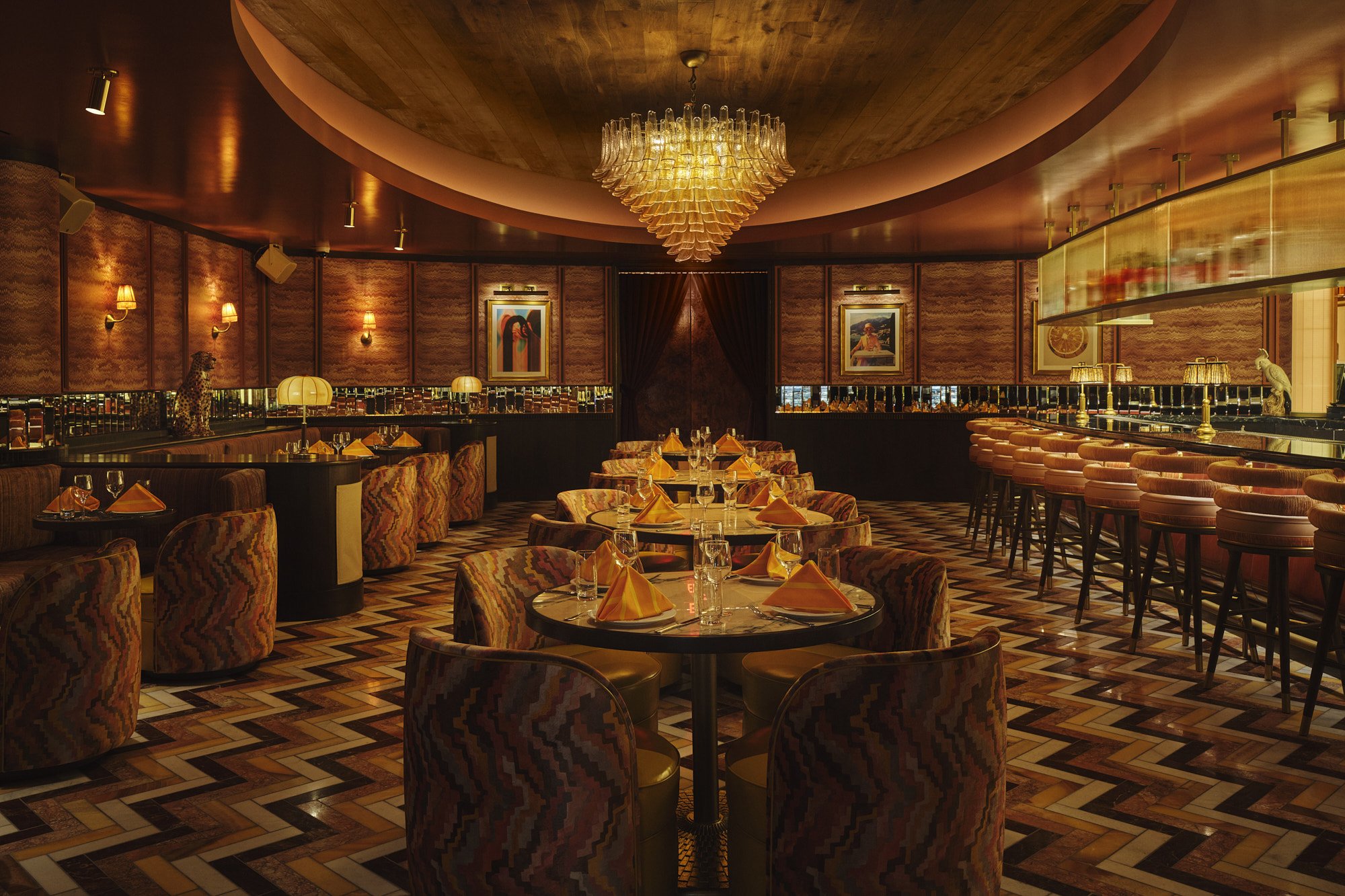
A bar, restaurant, lounge, and sweetly hidden speakeasy provide Vegas visitors a new destination to playfully peruse. Once a disjointed restaurant, the 9,500-square-foot space has been reimagined by Tao Group and Fettle Design cofounder Tom Parker as a maximalist ode to all things Italia.
The brief called for a “concept-driven restaurant that was very much 1970s Italian disco inspired,” Parker says. “A lot of the Tao Group restaurants are clubby as much as they feel like a restaurant.” The initial imagery was “over-the-top fun and tongue-in-cheek,” he adds, nodding to the Italo disco movement—a bold blend of musical and architectural experimentation that inspired iconic nightlife venues like Studio 54 and Italy’s Baia degli Angeli, placed high above the Adriatic.
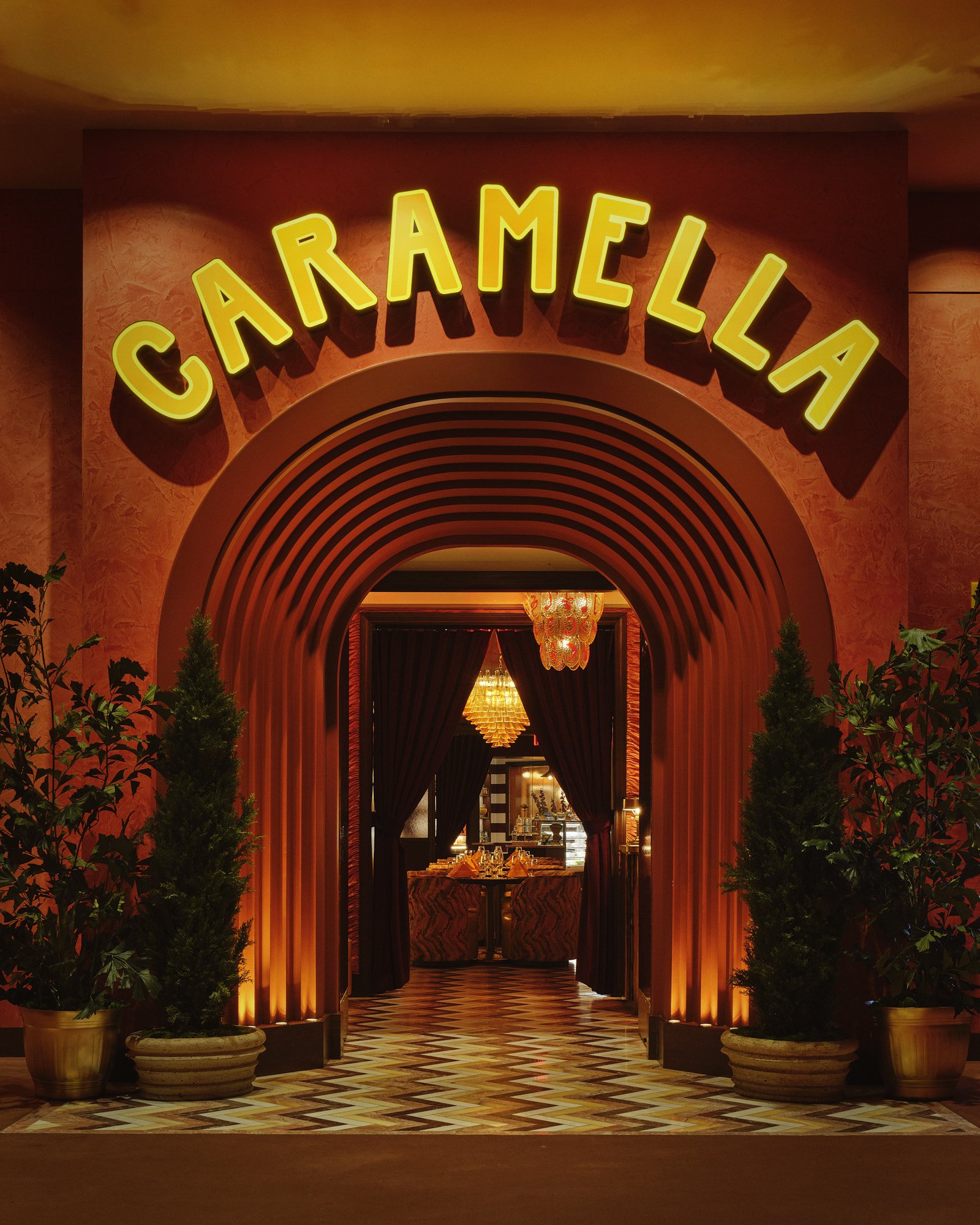
Because guests must pass through the casino’s cavernous concourse before arriving at the mezzanine-level Caramella, Parker and team found it crucial to “recalibrate the scale after that journey,” he says. “So we created a fabric-draped vestibule that acts as a kind of decompression chamber.”
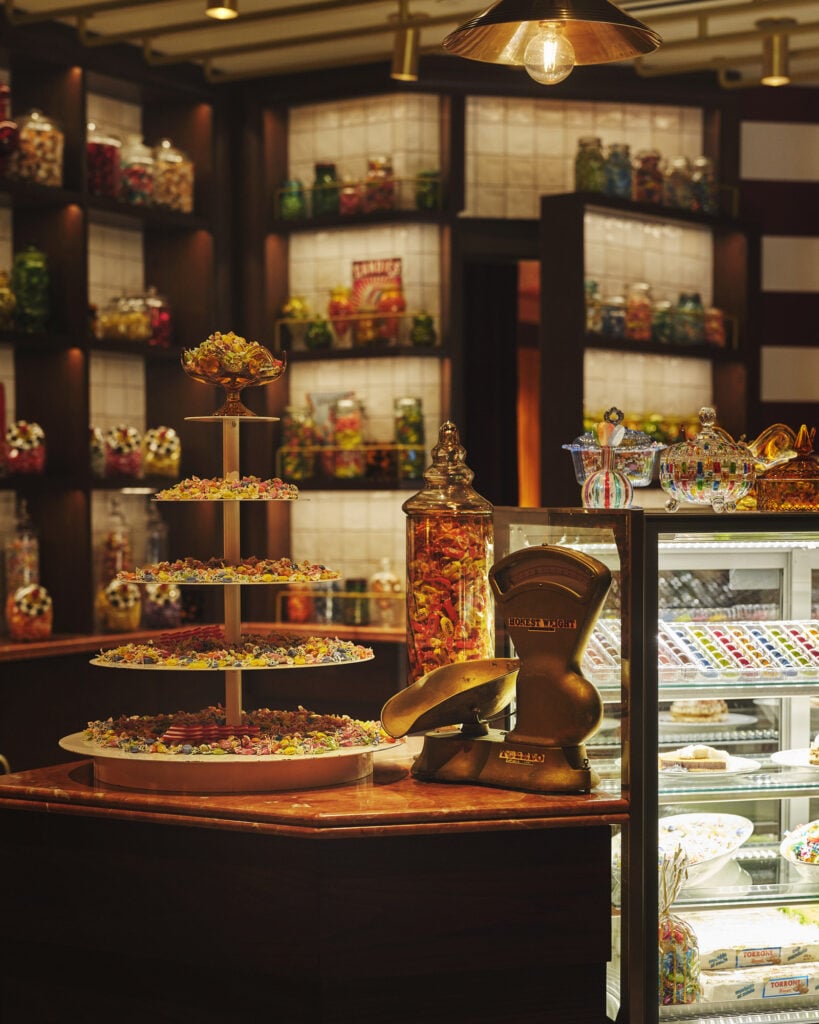
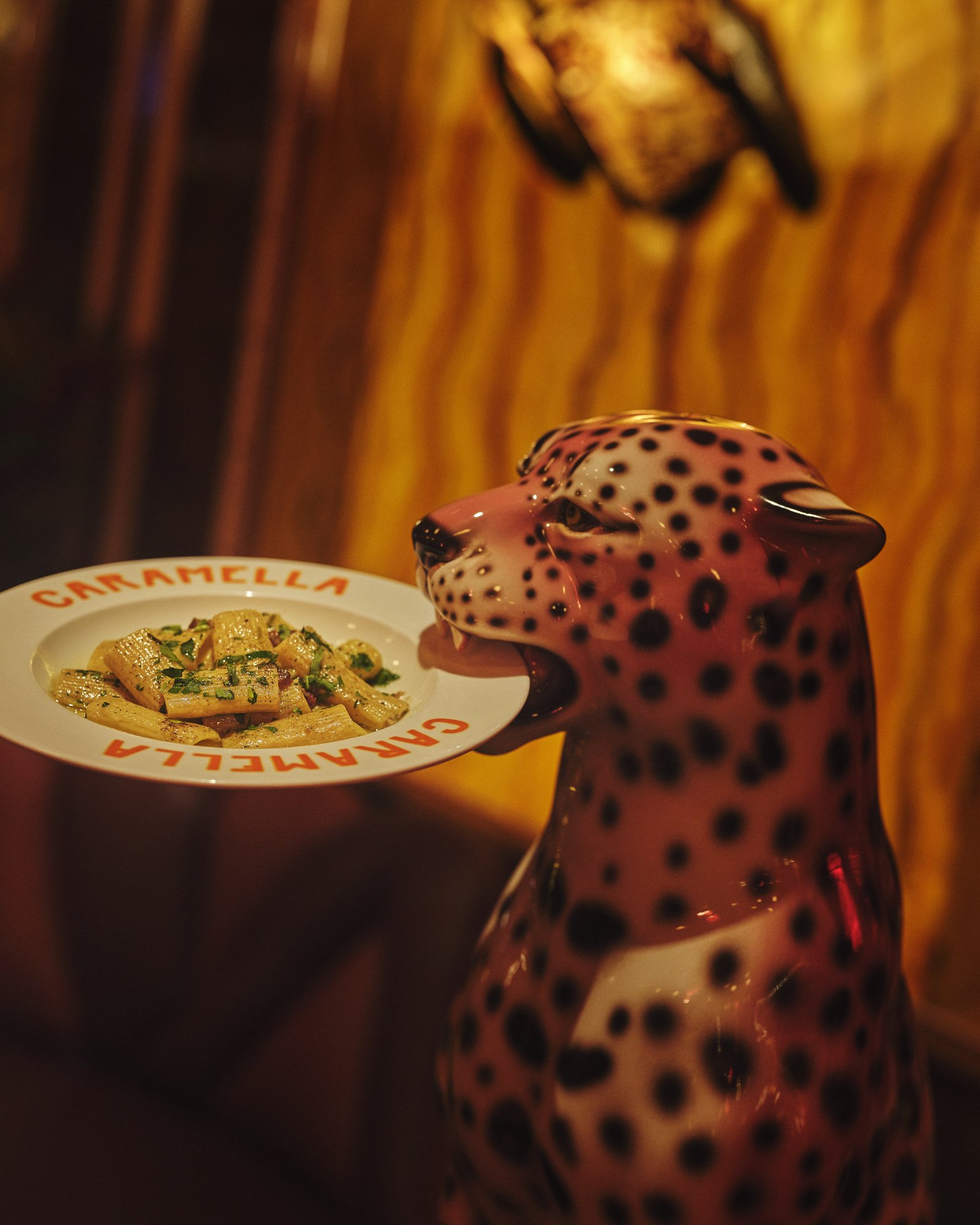
Inside, the new layout—achieved by following the boundary of the original kitchen and reorganizing the multiple dining experiences—breaks the vast footprint into immersive zones. There’s a sweet shop, which conceals a speakeasy, as well as a bar, main dining area, and back patio, all seamlessly awash in whimsical, richly hued fabrics.
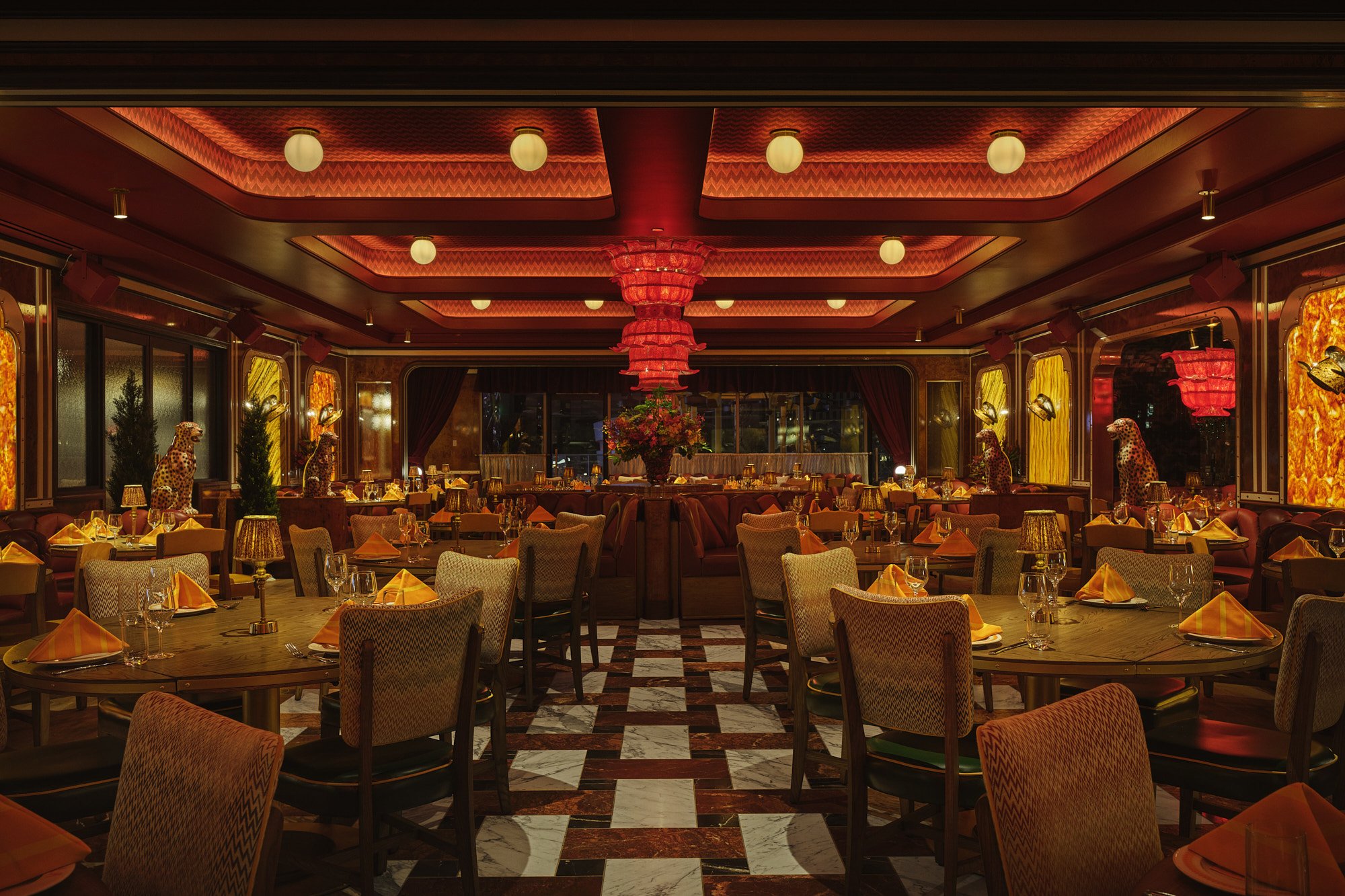
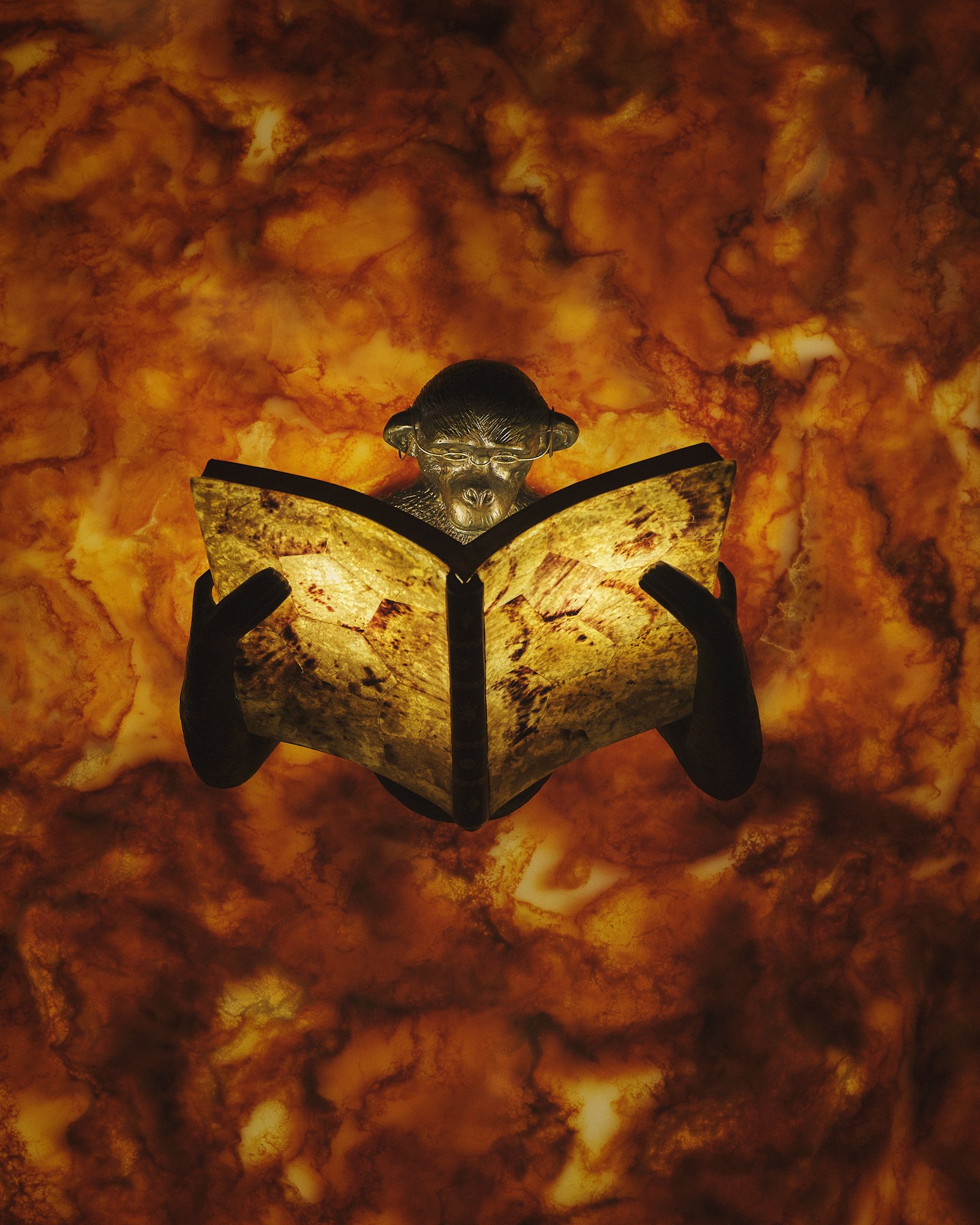
The palette is pulled directly from the era with orange, brown, and warm reds in Missoni-esque zigzag and other geometries, while Murano chandeliers and custom furnishings punctuate the stylish Italian way of life. “There’s a lot of pattern-on-pattern, marbling, and almost every fabric and wall finish we selected had a bit of a ’70s twist to it,” he says. In the speakeasy, kitschy leopard print adds a “colorful, bold, and jazzy” touch, he notes.
The project marked a turning point for Parker’s team. “It encouraged us to lean more into narrative design,” he says. “Even when the outcome isn’t this visually intense, the storytelling approach has stuck with us.”
Unveiled
Below Williamsburg’s William Vale Hotel, Unveiled has turned a formerly underutilized basement into the coolest cocktail bar and club in town. “We were given this underground space that the hotel didn’t know what to do with,” says designer Maurizio Bianchi Mattioli of Studio MBM. The goal: an electric and high-end hospitality escape designed for total immersion.
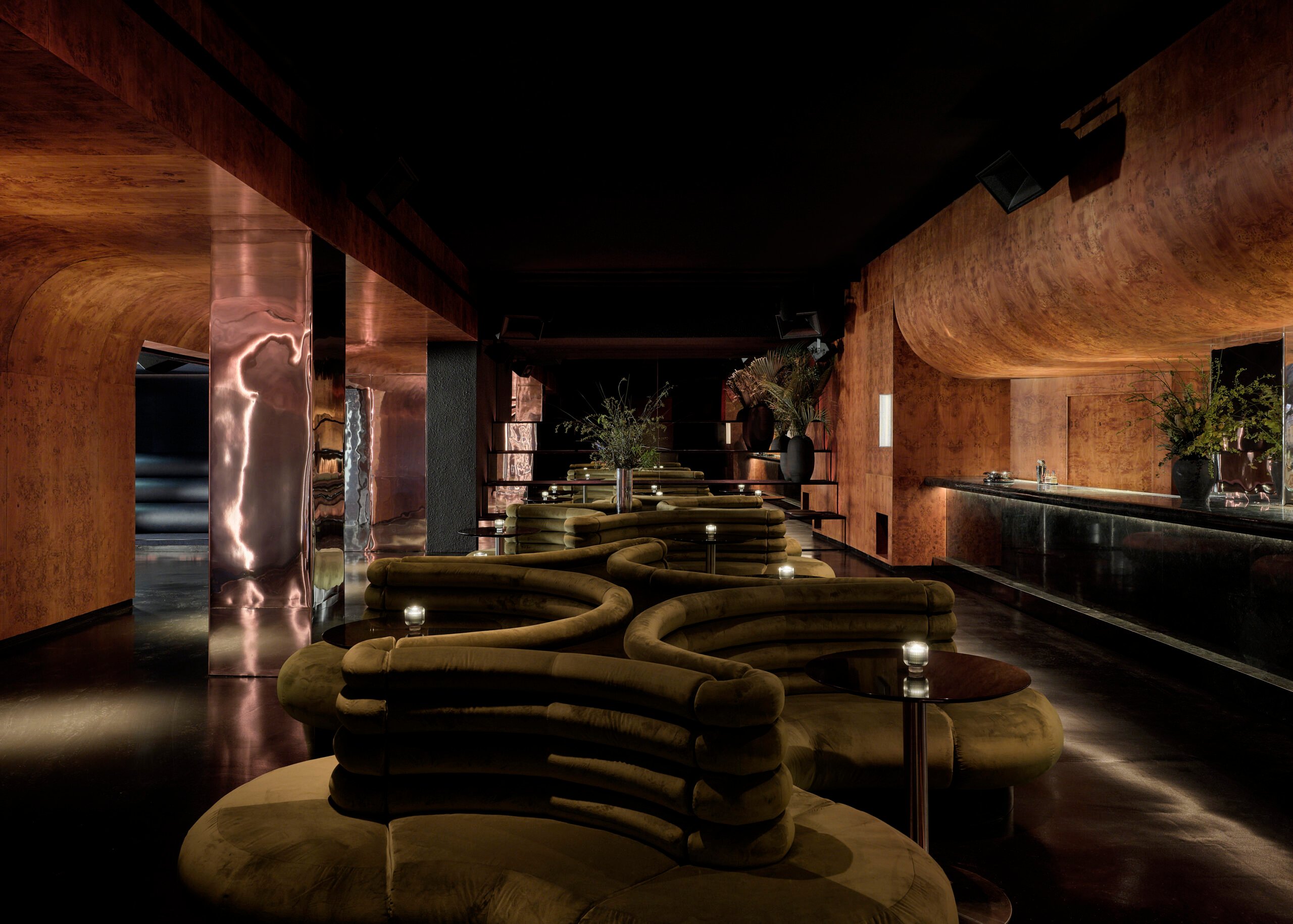
The L-shaped basement, which came with initial challenges such as awkward circulation, large columns, and plumbing infrastructure, also brought an opportunity to compose two “very different environments that were still related in terms of texture, materiality, and volume,” says the designer. While he and his team started with research on historic New York clubs, he knew he wanted to “go back to the core and create something highly designed, but still raw.”
Rather than taking guidance from hospitality tropes, the team paid homage to postmodern architects like Philip Johnson and Gae Aulenti, as well as included details reminiscent of vintage car interiors, elements he felt could be translated into a contemporary setting. “The leather, the wood, the reflective lacquer—all of that set the tone for the material palette,” he says. The main bar area includes “heavy burl wood that formed geometries,” accented by green marble and curves that “feel almost carved out of the basement.” The ceiling was left as is and painted black, a simple choice that further contributes to Unveiled’s moody tone.
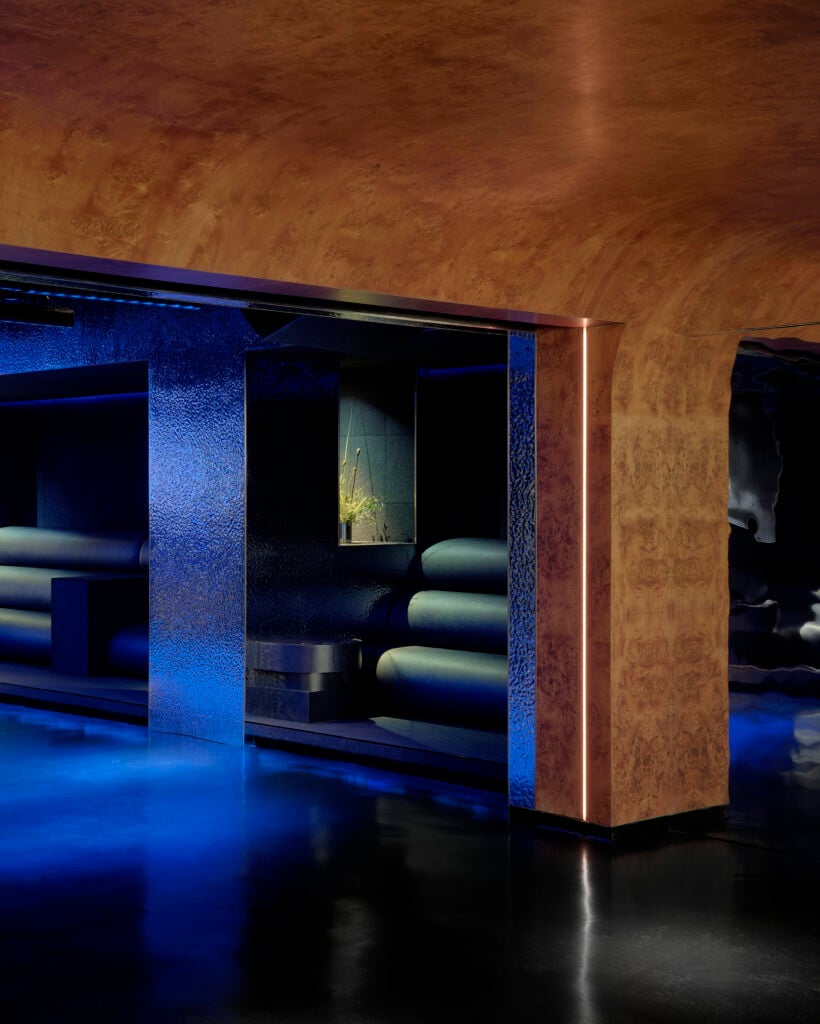
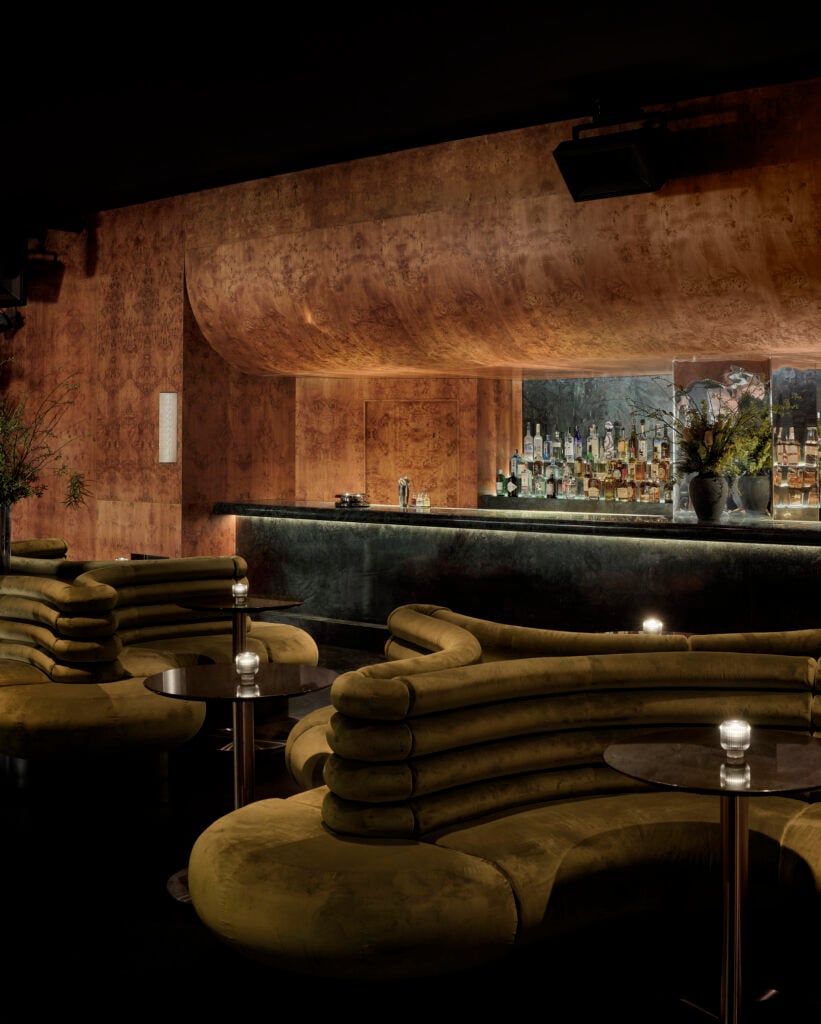
The seating arrangement, which Mattioli called the activator, generates different table sizes for unique usage throughout the evening. “People sit on top of it, on the side—it’s a much more dynamic central element,” he says.
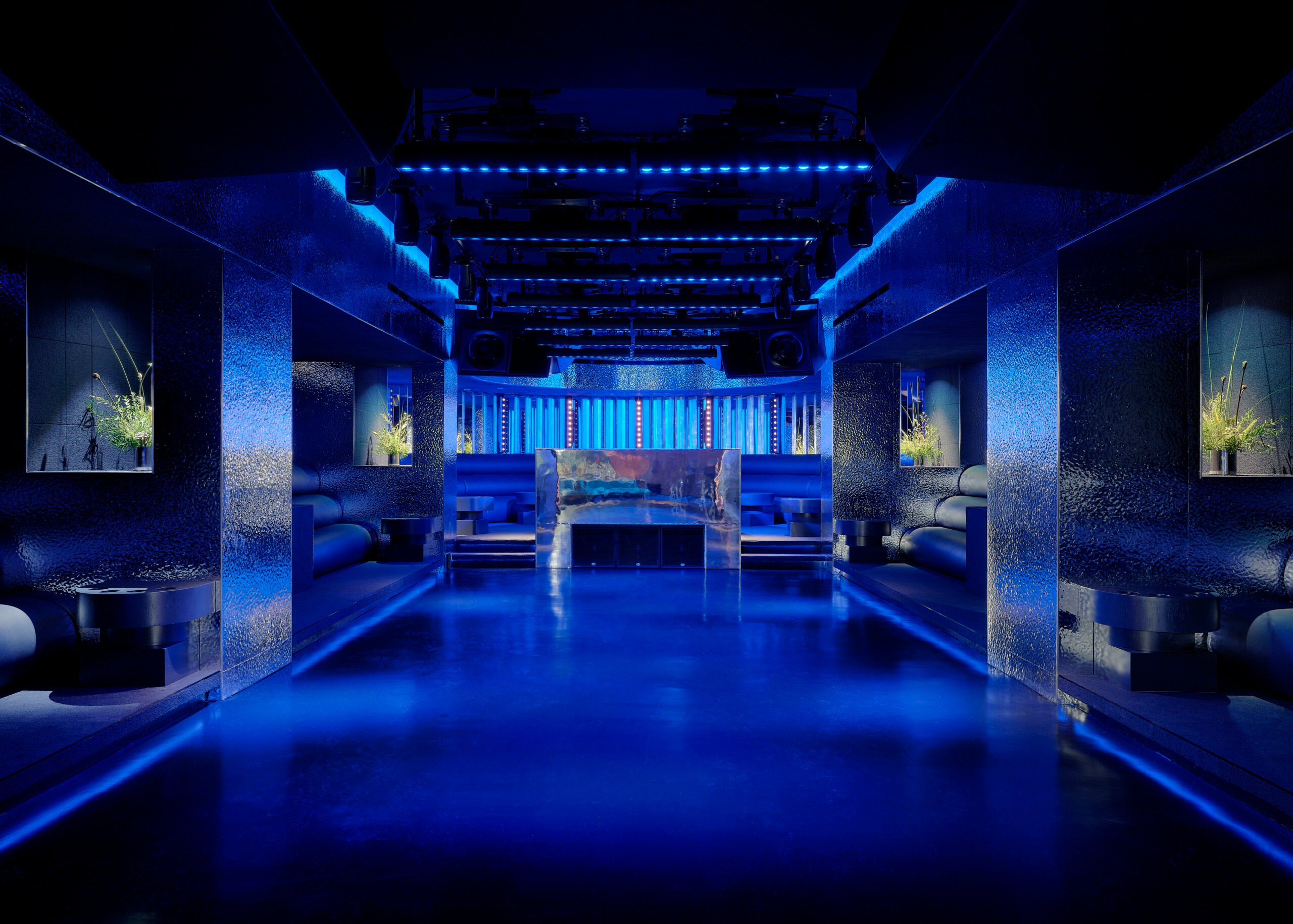
For the club, that spatial rhythm continues with an equally playful iteration. Seating is placed around the edges, while the center is left open for dancing. “The DJ booth became the central altar—it’s church-like in a way.”
A half-mirror, half-perforated metal facade behind the booth creates trippy reflections and fluid movement. Lighting by Kawa Lighting changes constantly, reshaping the room moment to moment. “You suddenly find yourself slightly under a ceiling curve, then emerge into a different zone. It’s unexpected and active.” Patrons may even catch themselves in the mirrors.
The bathrooms are part of the experience too, featuring triangulated vanities, reflective walls, and stepped staging. “They’ve become social spaces,” the designer says. “The whole place is designed for performance—yours included.”
Would you like to comment on this article? Send your thoughts to: [email protected]
Latest
Viewpoints
Bas Smets on Designing Augmented Landscapes
The landscape architect discusses his design for Notre-Dame, this year’s Venice Architecture Biennial, and what he means by biospheric urbanism.

Projects
Kazakhstan’s Almaty Museum Celebrates Central Asian Art
Designed by London-based Chapman Taylor, the project is the city’s first private museum.