



August 8, 2025
Turkey’s Ephesus Experience Museum has Learnt History’s Lessons
Ever since I was a child growing up in Izmir, Turkey, I have been visiting the ancient ruins of Ephesus. As a curious elementary school student or a cultural studies scholar with a critical eye towards archeology and heritage management, I have always had a difficulty in imagining how life was in this unique historical site before it was completely abandoned due to natural and human-made disasters. Plaques by the Agora would tell me that the big, empty square was once a busy market but I would ask myself, “What did the shoppers wear?” I would see the remnants of temples, gymnasiums, and even toilets but I would still fail to completely understand the past life of my fellow townsmen and women. The closest I felt to grasping what it was like to live in Ephesus was when I attended concerts and plays at the Grand Amphitheater. Even then, I would ask myself: “Without microphones and electricity, how did people enjoy plays at this magnificent site back then?”
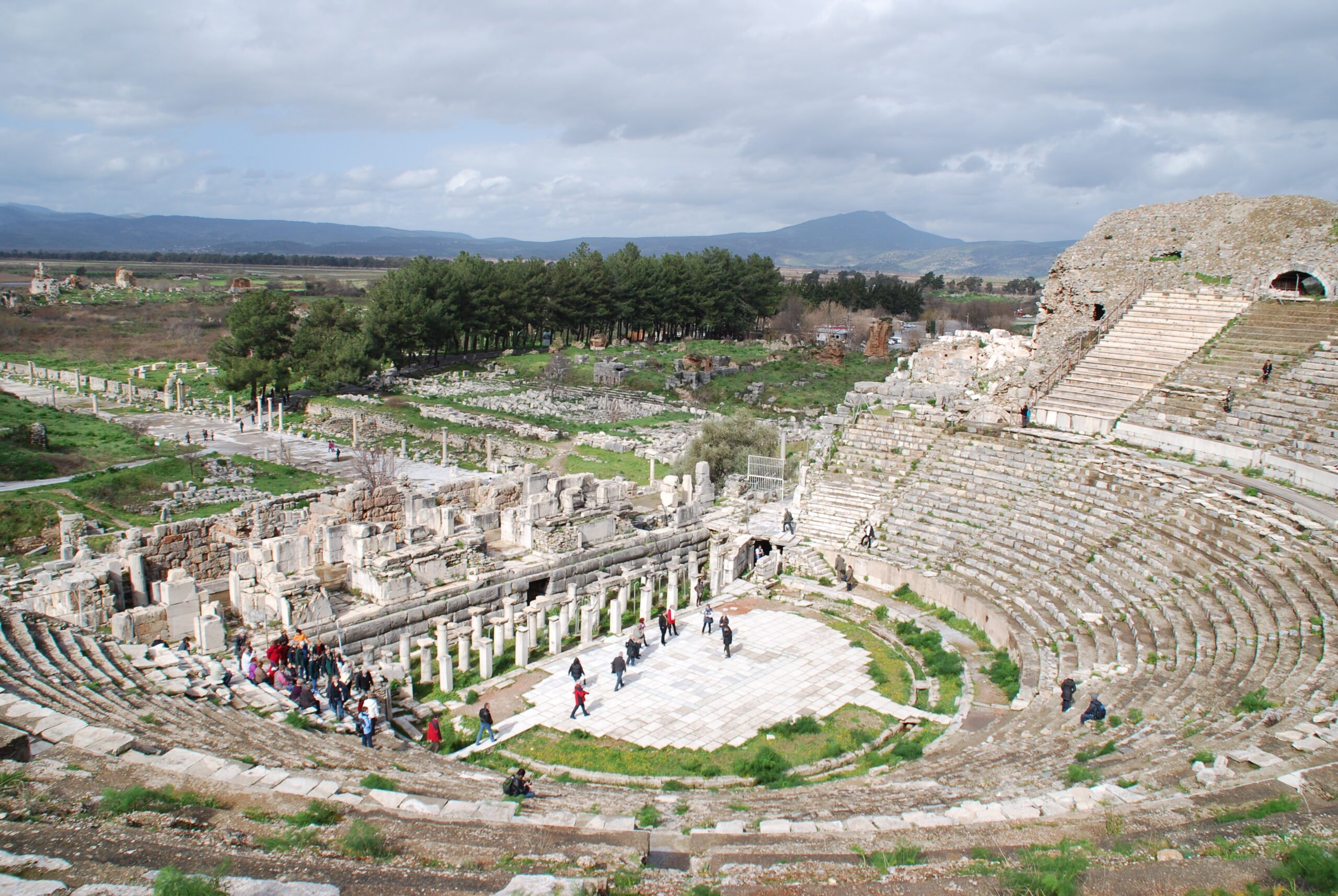
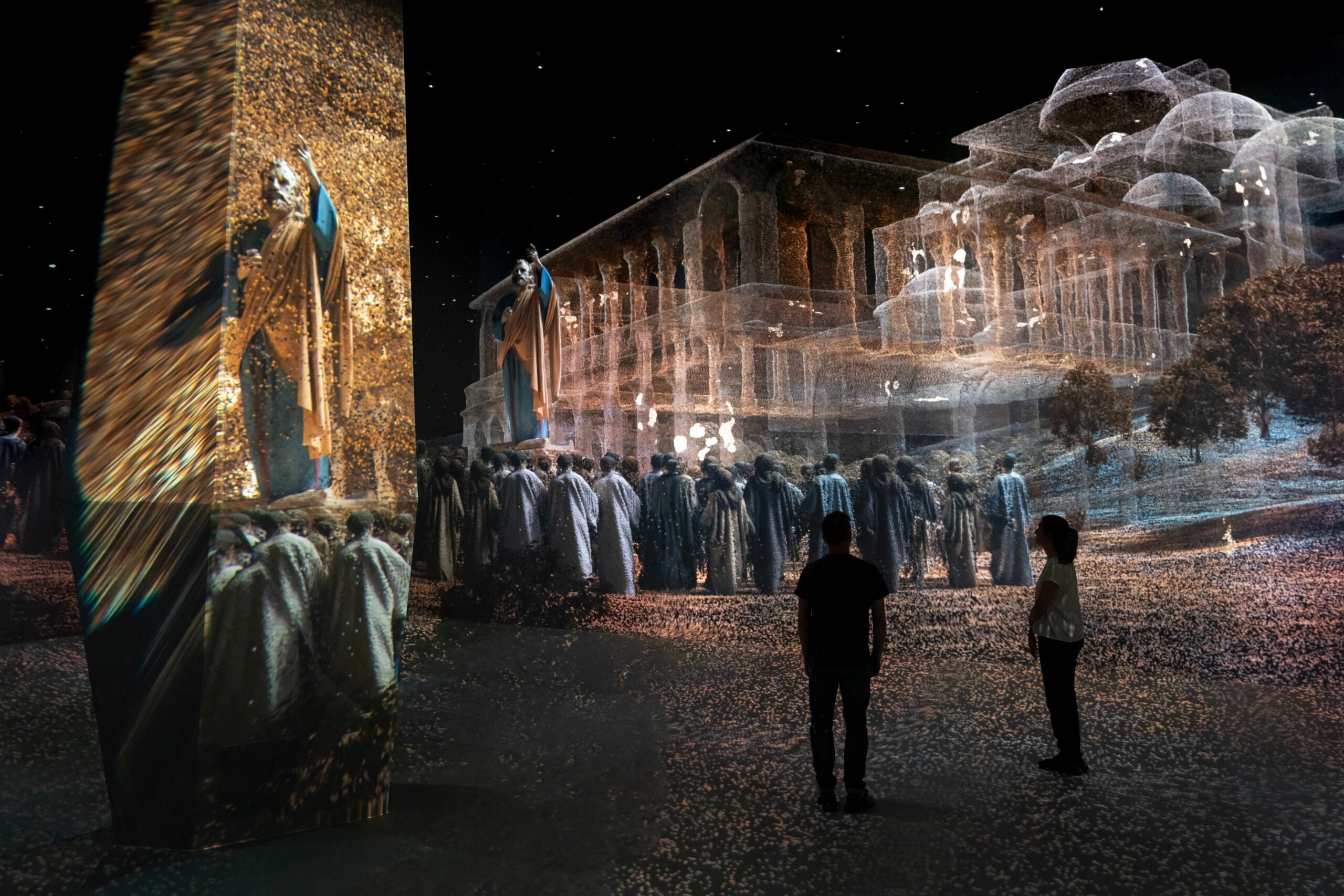
The Ephesus Experience Museum (EEM), placed right in front of the Grand Amphitheater, is changing how one imagines and learns about the life that once bustled in the streets of this ancient city. An immersive animation of everyday life as well as the disasters that led to the demise of what was once one of the most important Roman cities in Asia Minor allows visitors to step into the life of the city’s inhabitants. With the help of deliberate space and content design, the EEM breathes life and imagination into the ruins of Ephesus.
According to Nico Lorenzi, PR coordinator at Atelier Brückner Gmbh, the firm responsible for designing the building, the museum’s exteriors were kept deliberately minimalistic and the architects used “reflective surfaces mirror[ing] the surrounding pine trees and landscape, allowing it to visually ‘disappear’ into its setting.” Unlike the marble ruins of the archaeological site, which stand out starkly in the rolling Mediterranean terrain, the EEM’s grey buildings are carefully tucked behind trees and landscaping.
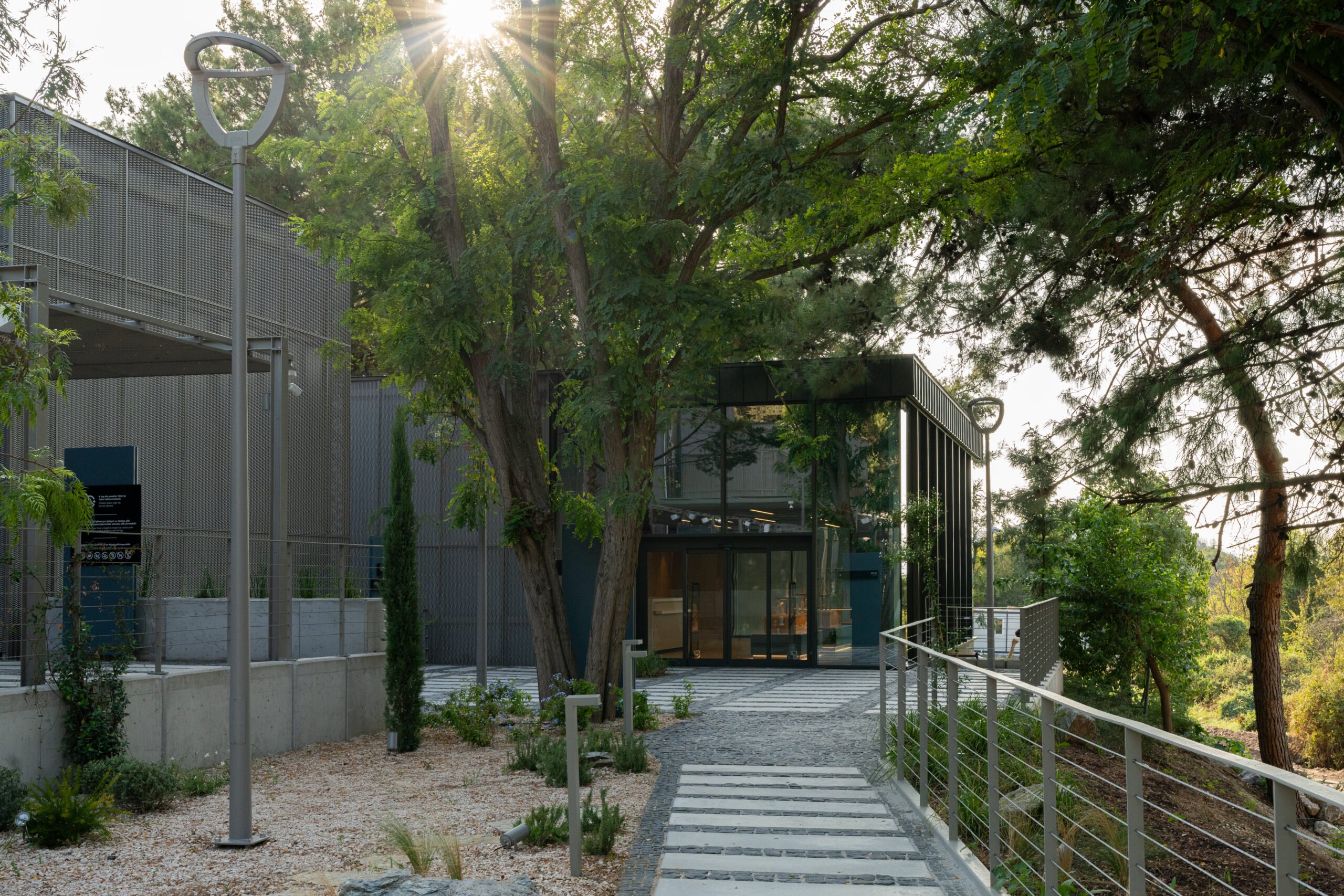
But how did the firm build this contemporary structure in the middle of an ancient city without damaging the historical marvels surrounding it (and possibly those under the soil, waiting for excavation)? According to the architects, there were no archeological findings at the construction site, and the building’s shallow foundation did not require them to dig too deep. However, relying on that kind of a foundation in an earthquake zone is risky.
Founded in the 10th century BCE, Ephesus was devastated by multiple earthquakes up to the 7th century AD. The modern-day neighboring city of İzmir is still an active seismic zone; the latest damaging earthquake killed 117 people in 2020. So the architects and engineers of the EEM chose a prefabricated steel structure which sits lightly on its foundations and is ductile enough to absorb seismic energy. These design choices also allow a complete dismantling of the building if needed, leaving no trace behind at the historical site. This strategy is a revolutionary idea, and it builds on admitting that our present is only a small chapter in the long history of Ephesus.
Fulfilling today’s needs with minimal degenerative impact while recognizing that future generations’ choices and needs may change is at the crux of what we must learn from the history of cities. After all, Ephesus was once a bustling port city with a population of almost 100,000, but now it is a touristic site 6-miles inland with 2 million visitors a year. This place, like any historical site, adopts to the novelties of human activity. Keeping this in mind while building anything new here only suits its adaptive nature.
Entering the museum through its dark grey steel gate and seeing its minimalist exteriors gives the visitors an ultra modern feeling, something entirely different than visiting an ancient city. It is almost calming, after one has soaked up the bright yellow of the Aegean sun, the textured green of pine trees and maquis shrubland of the surroundings, and the marbled white of Ephesus’s ruins. The immersion starts in the first grand hall which tells the story of Artemis and how her temple was destroyed three times. Artemis, the goddess of hunt, wildlife, and chastity in Greek mythology, was one of the most revered goddesses of Asia Minor before Christianity took over. The third and last iteration of the temple was considered one of the Seven Wonders of the World, and its fragments were excavated and transferred to the British Museum in the early 20th century, although this important piece of Eurocentric, colonialist history is missing in the immersive story told to the visitors.
The second hall tells the social and cultural life story of Romans in Ephesus. The city was bustling thanks to agriculture, trade, and its harbor, and many important characters of ancient history, such as Alexander the Great, Marc Anthony, and Cleopatra passed through. A curated soundscape accompanies visitors as they watch animated reenactments of life in this busy city.
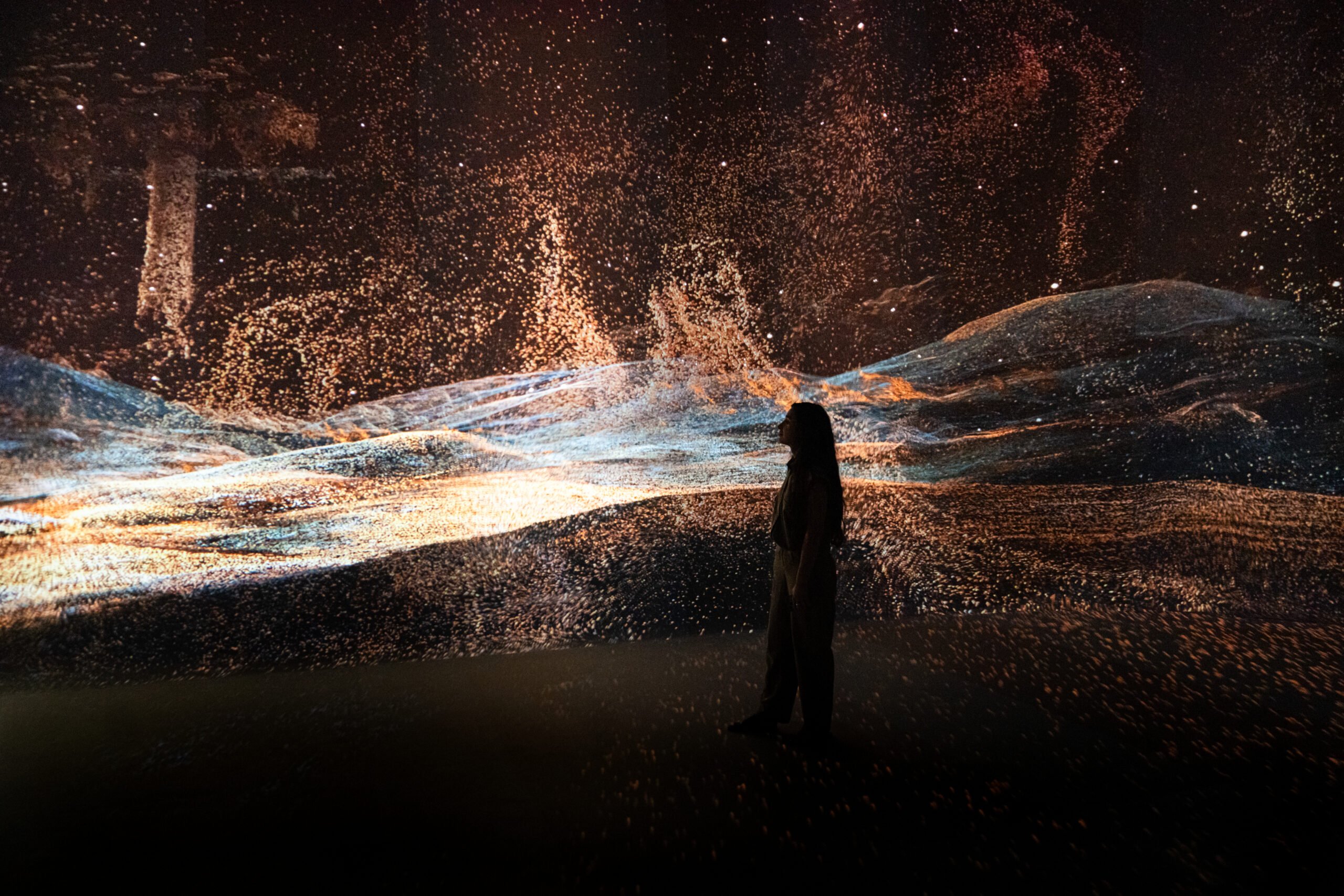
In both halls, the visitors are immersed in a sensory experience that uses all the walls and the floor of the hall to project visuals, recount the history in visitors’ headphones, and occasionally makes the ground tremble. What is interesting is that the visual storytelling constructs and destroys the imagery in small dots, like grains of sand sand flying from one time period to another, reminding one of the frightful sight the Angel of History has to watch in Walter Benjamin’s famous work “Theses on the Philosophy of History.” In contrast to the Angel of History’s agony, the visitors are offered the experience of slices of history for their pleasure and learning.
The last hall of the immersive experience is reserved for a life-size replica of a statue of Artemis. It’s a signal to visitors that they stand on what was once a land of goddesses, before the monotheistic belief systems of Christianity and Islam took over. I find it an important reminder since Ephesus is a crucial place for early Christianity (a nearby site is widely believed to have sheltered Mother Mary after the crucifixion of Christ) and the population now living in the nearby town of Selçuk is predominantly Muslim.
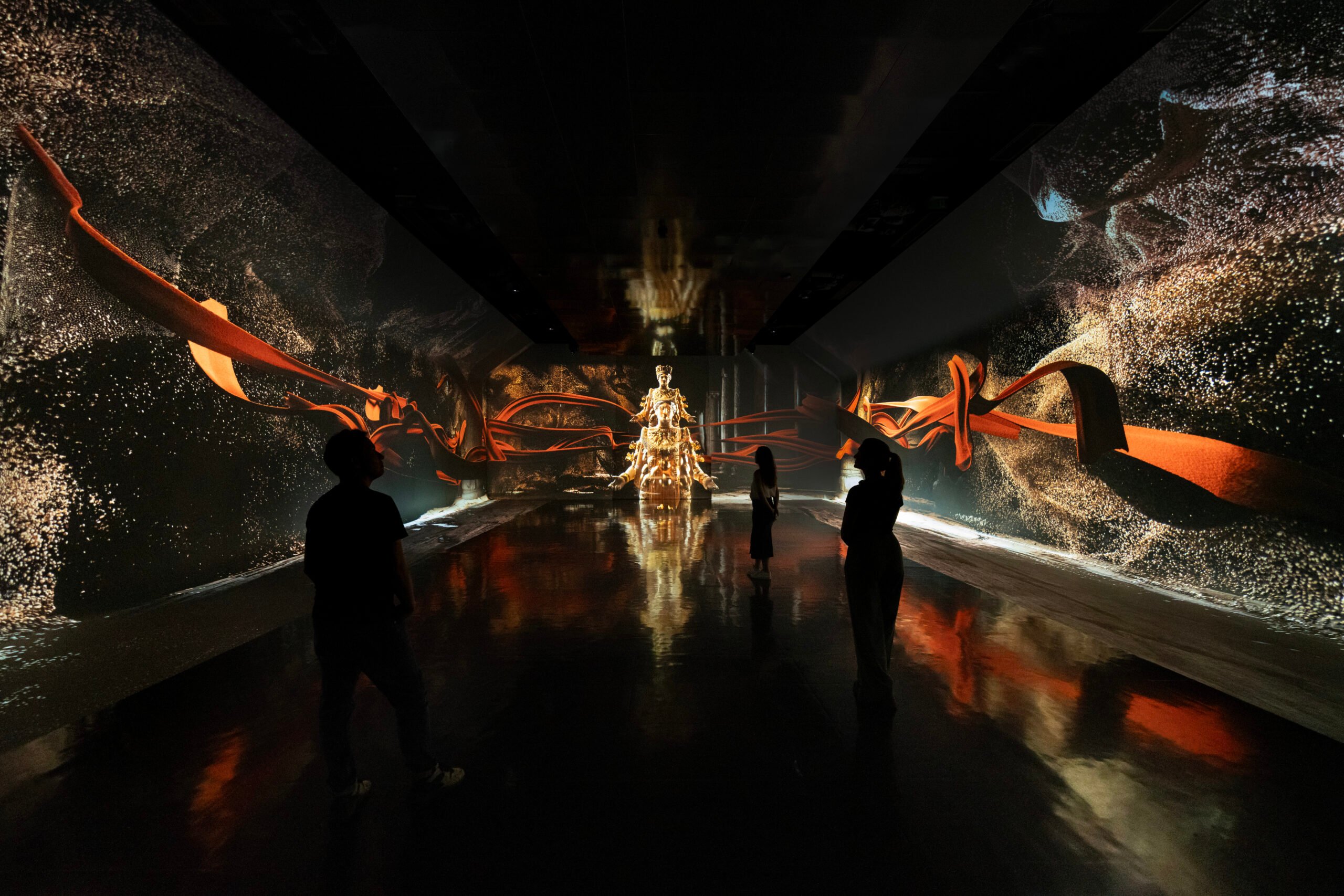
Immersive experiences in art are not new. Some praise them, and some criticize them, due to the questionable practice of museums that prioritize flashy digital experience over imparting in-depth information. “Can we appreciate Van Gogh’s paintings without diving into them?” critics have asked of the popular attractions that have popped up recently in major cities around the world. But individuals might not navigate art and archeology in the same way. If immersive storytelling can enrich visitors’ appreciation of a site by giving them a more complete picture of history, if it moves them to contribute to the site’s preservation and new excavations, if it reminds them that they are part of a story that’s longer than the 80 or so years they are on this earth, then it may be worth a try.
Would you like to comment on this article? Send your thoughts to: [email protected]
Latest
Projects
Where Housing Meets Humanity
Three innovative housing projects that focus on care, community, and climate, redefining public housing with dignity.
Projects
Jeanne Gang on Harvard’s New Rubenstein Treehouse
The architect unpacks how material, structure, and openness converge in the university’s first mass timber building.