


July 25, 2025
In Chile, Monolithic Garden Follies Conceal a Group of Wellness Pavilions
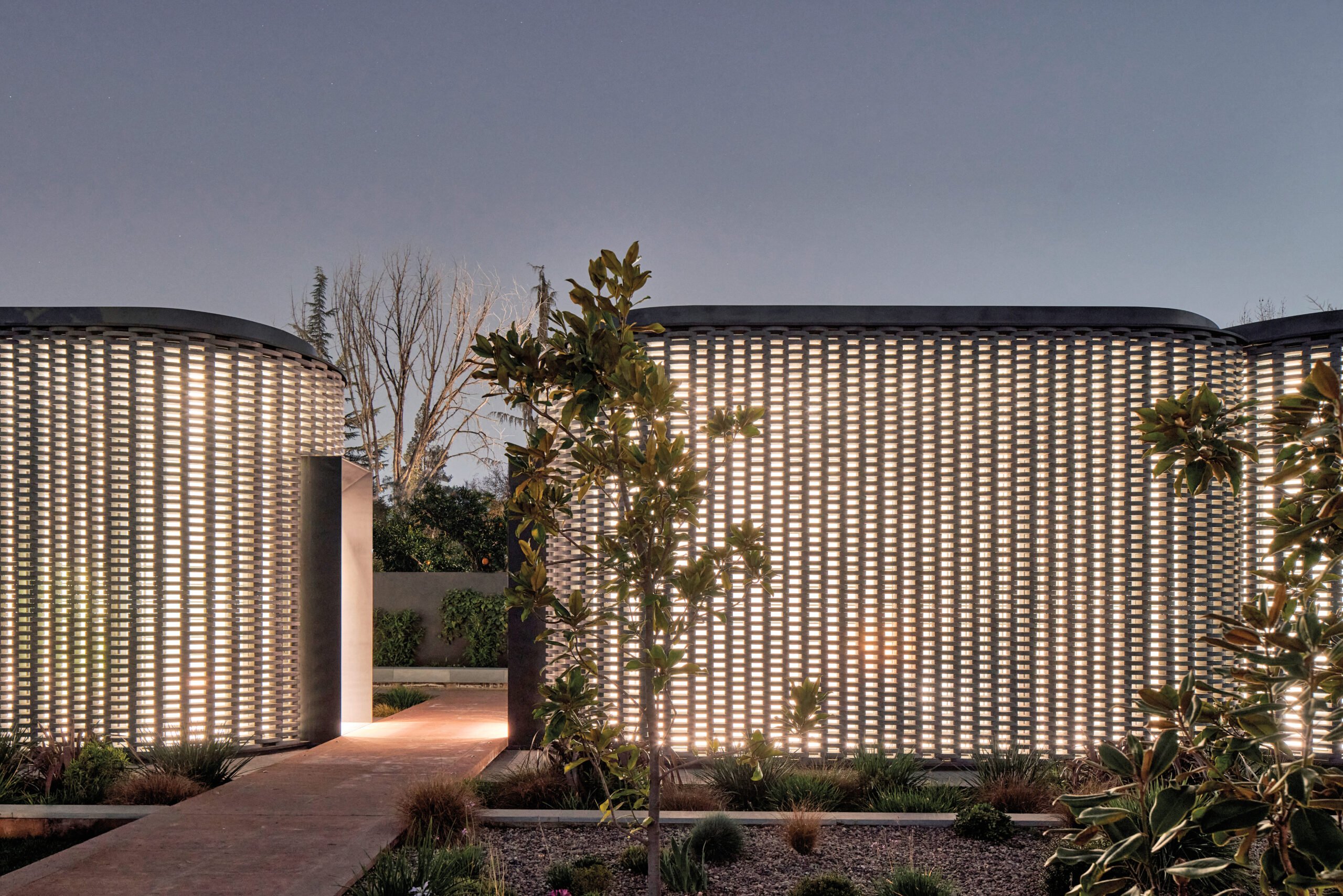
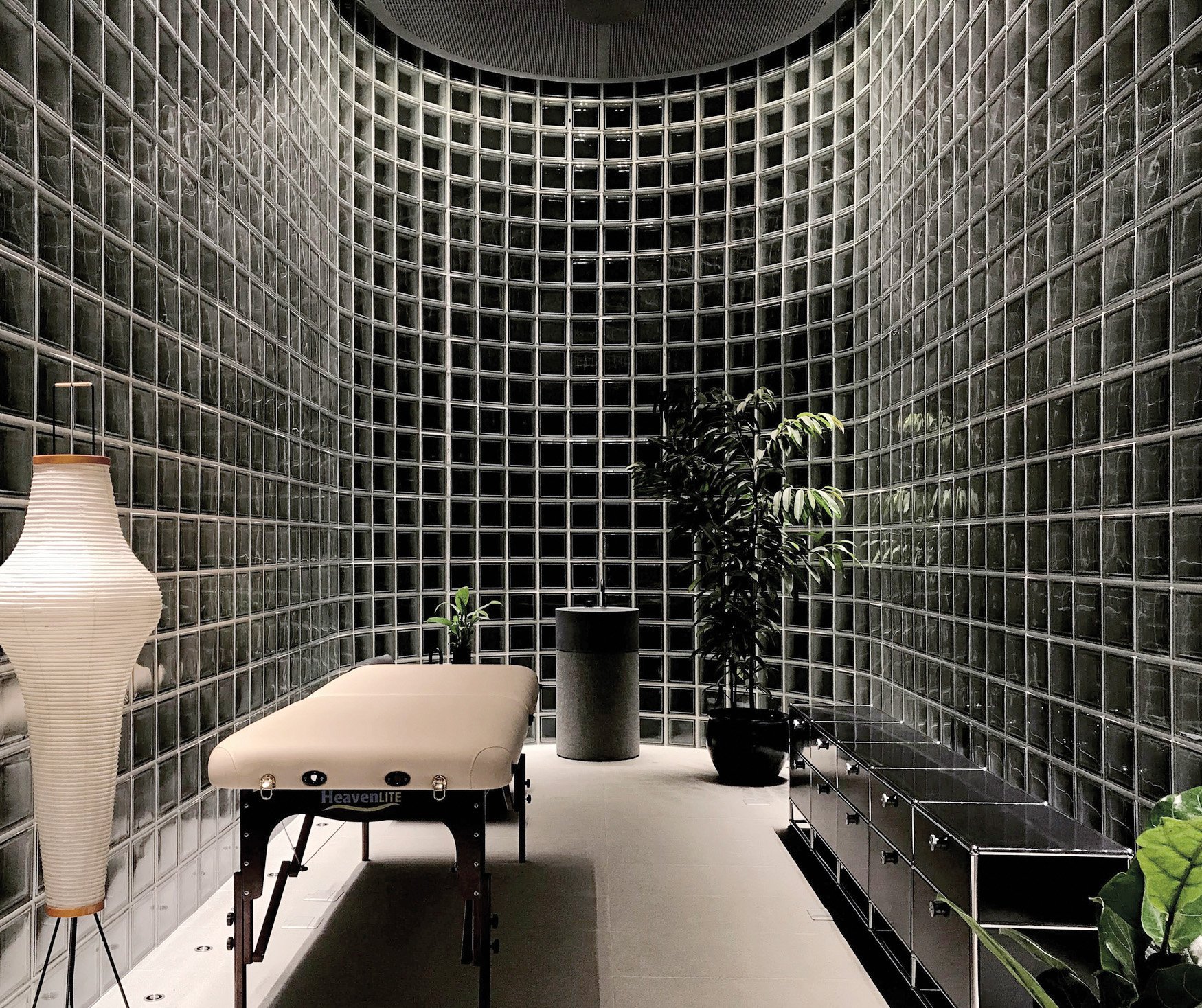
Enigmatic in nature but not in functionality, the YR Pavilion is a series of sculptural forms nestled within a meditative garden in Vitacura, Chile. By day, they appear to be monolithic structures, their woven concrete facades casting intricate shadows. By night, they emit a warm glow as interior lights filter through the translucent glass brick within. The wellness pavilions, a collaboration between Cruz-Mandiola Arquitectura & Objetos and Elton Léniz Arquitectos, were crafted for longtime clients. “They were in their 80s when we started,” says architect Mauricio Léniz, who embarked on the “highly personal” commission after completing multiple projects for the family, including a beach house and an art gallery.
Merging Functionality with Customized Aesthetic Design
“They needed a space that was both serene and practical,” Léniz says. A compact 484 square feet, the pavilion backs up to their main residence and is at the same level as their primary bedroom. It skillfully integrates an exercise area, sauna, massage room, and bathroom, all tailored to meet one of the clients’ daily physical therapy sessions. “He didn’t use a walker or wheelchair but had mobility issues, so we focused a lot on the comfort of the interiors as well,” Léniz adds.
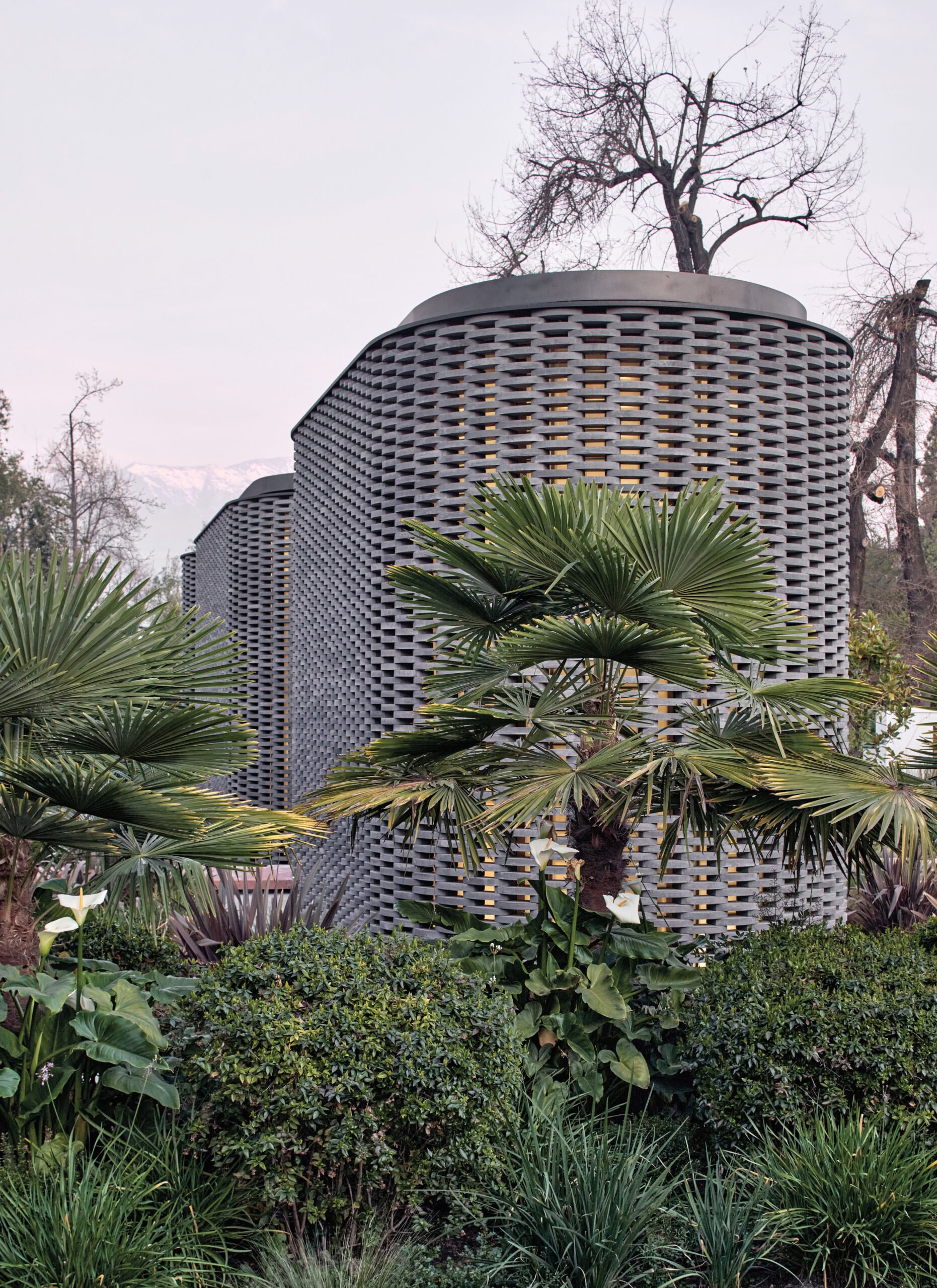
The pavilion’s dual-layered skin, crafted from custom prefabricated concrete and hermetically sealed glass bricks, was built not only with an artful aesthetic in mind but with thermal performance as well. The concrete exterior, developed with Chilean manufacturer RCubo, includes four distinct brick types and provides structural integrity and a ventilated facade, allowing light to get in without raising the pavilion’s internal temperature. “There are rounded bits for corners, linear portions, and smaller ones” to fit the pavilion’s unique shape. “It’s kind of like Legos,” he says of the construction.
Sustainable Wellness Pavilions Blending Light, Acoustics, and Local Materials
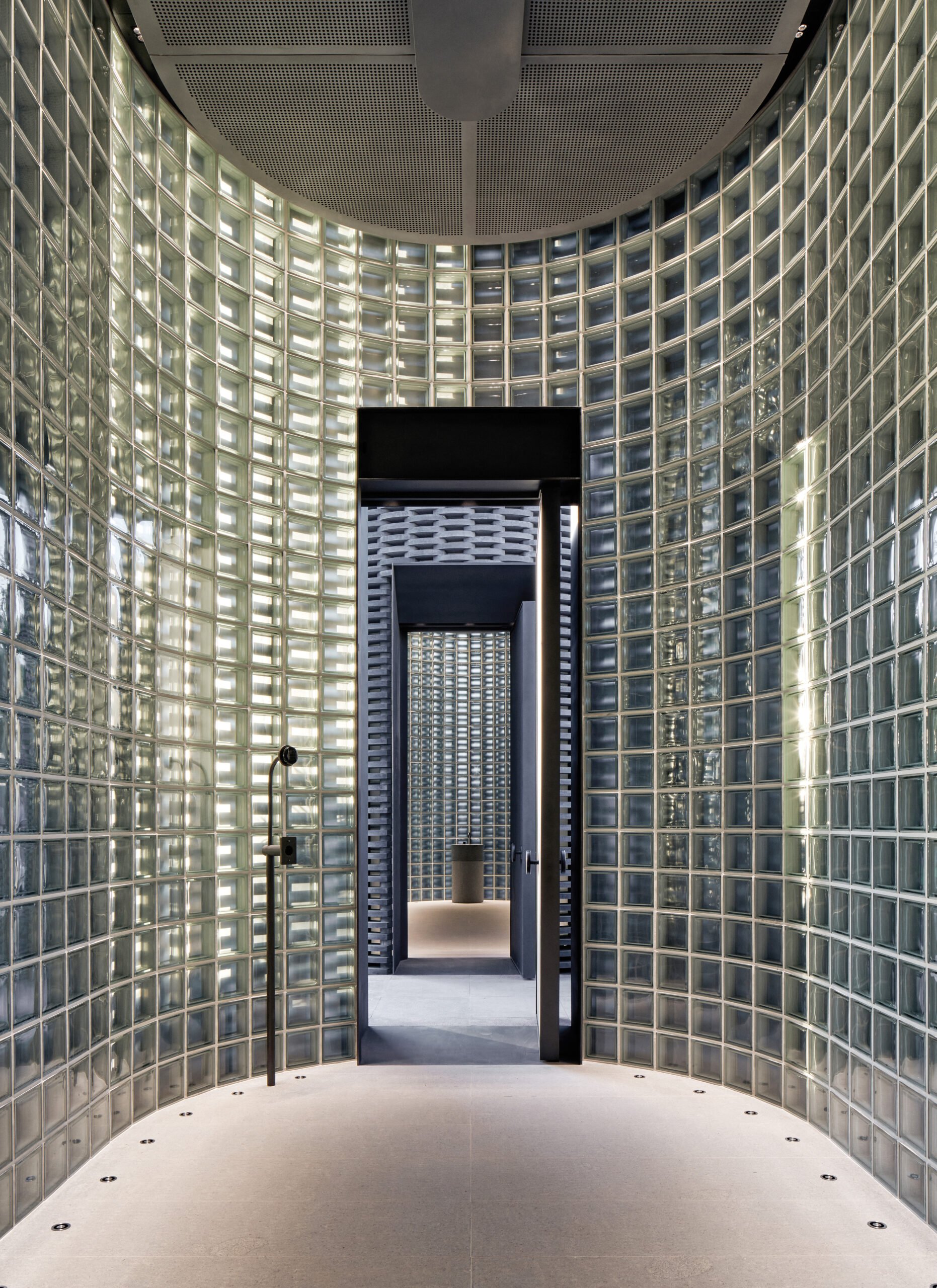
Inside, curved glass bricks offer diffused natural light, minimizing solar heat gain and moderating reverberation. “Due to their age, [the clients] needed a bit more heating and cooling,” Léniz explains. Since the pavilion is windowless, a subterranean mechanical system was used to maintain a stable interior temperature. The ground-coupled air system, buried four feet belowground, leverages the earth’s temperature while reducing overall energy consumption.
Beyond sourcing local materials to reduce transport emissions, the selections for the wellness pavilions speak to the overall sensory experience. There is Chilean basalt flooring and benches, also seen in the garden. The surfacing is slip resistant and stays naturally cool due to its high thermal mass, while a local pink-hued stone provides pathfinding into the pavilion. Additionally, the architects installed perforated metal sheets to eliminate echo and an acoustic absorption material to make the interiors, with their 13-foot-high ceilings, feel spacious yet cozy.
“As architects, we should work with all of the senses. Acoustics are often overlooked, but they shape how a space feels,” Léniz notes. In the end, the result is a pavilion thought of as a sheltering, wellness-focused retreat with a textile-like quality that transforms with the day.
Would you like to comment on this article? Send your thoughts to: [email protected]
Latest
Viewpoints
Reddymade’s Suchi Reddy on the Architecture of Sensation
Growing research in the field of neuroaesthetics gives us a new understanding of the power of design.
Viewpoints
Rediscovering Tile for Sustainable Design
AHF’s Noah Chitty explains how advanced manufacturing and recycling innovation are helping this age-old material meet the demands of sustainable design today.