


July 18, 2025
Chatillon Architectes Redefines Urban Aging with Dignity and Design
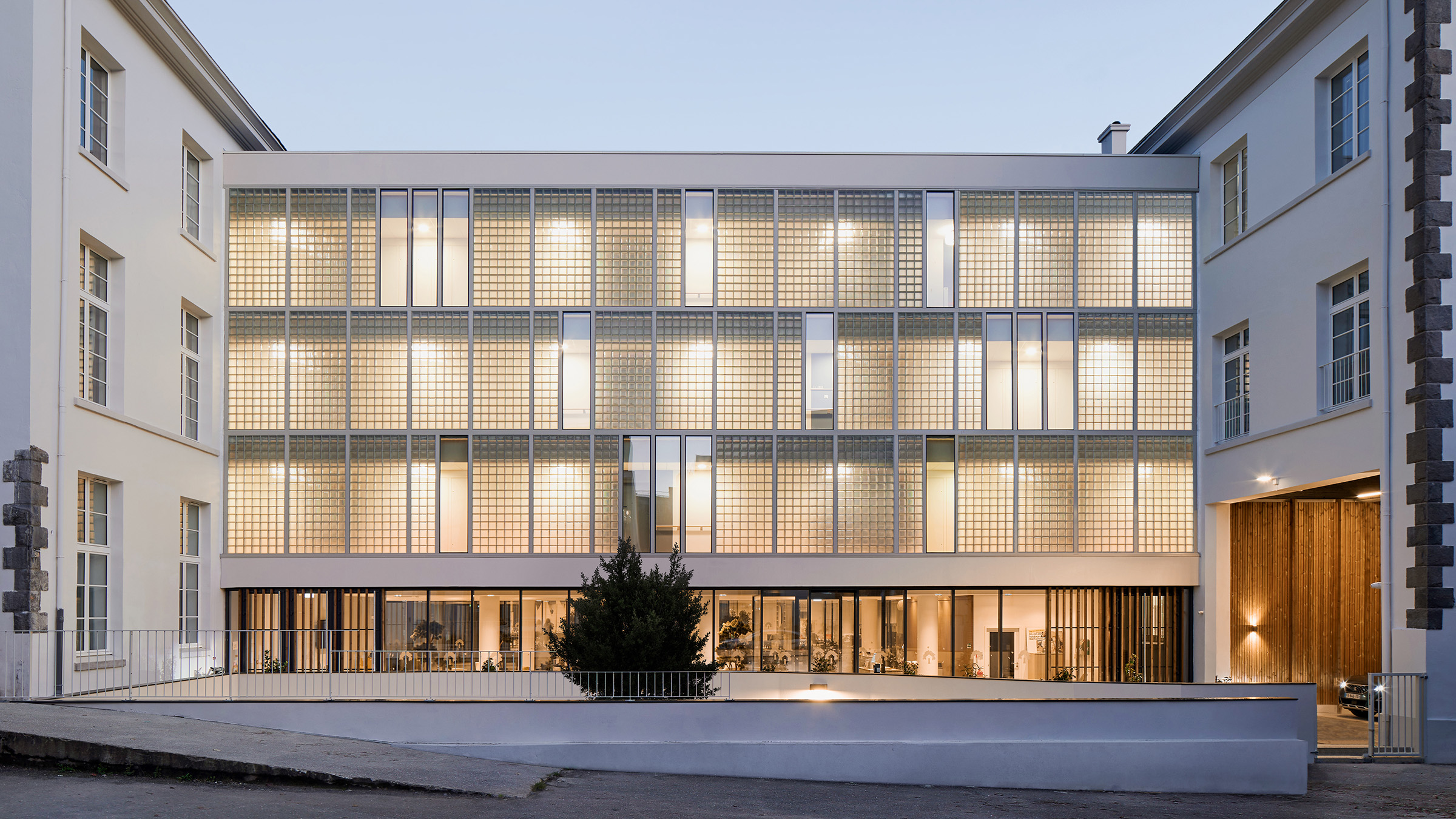
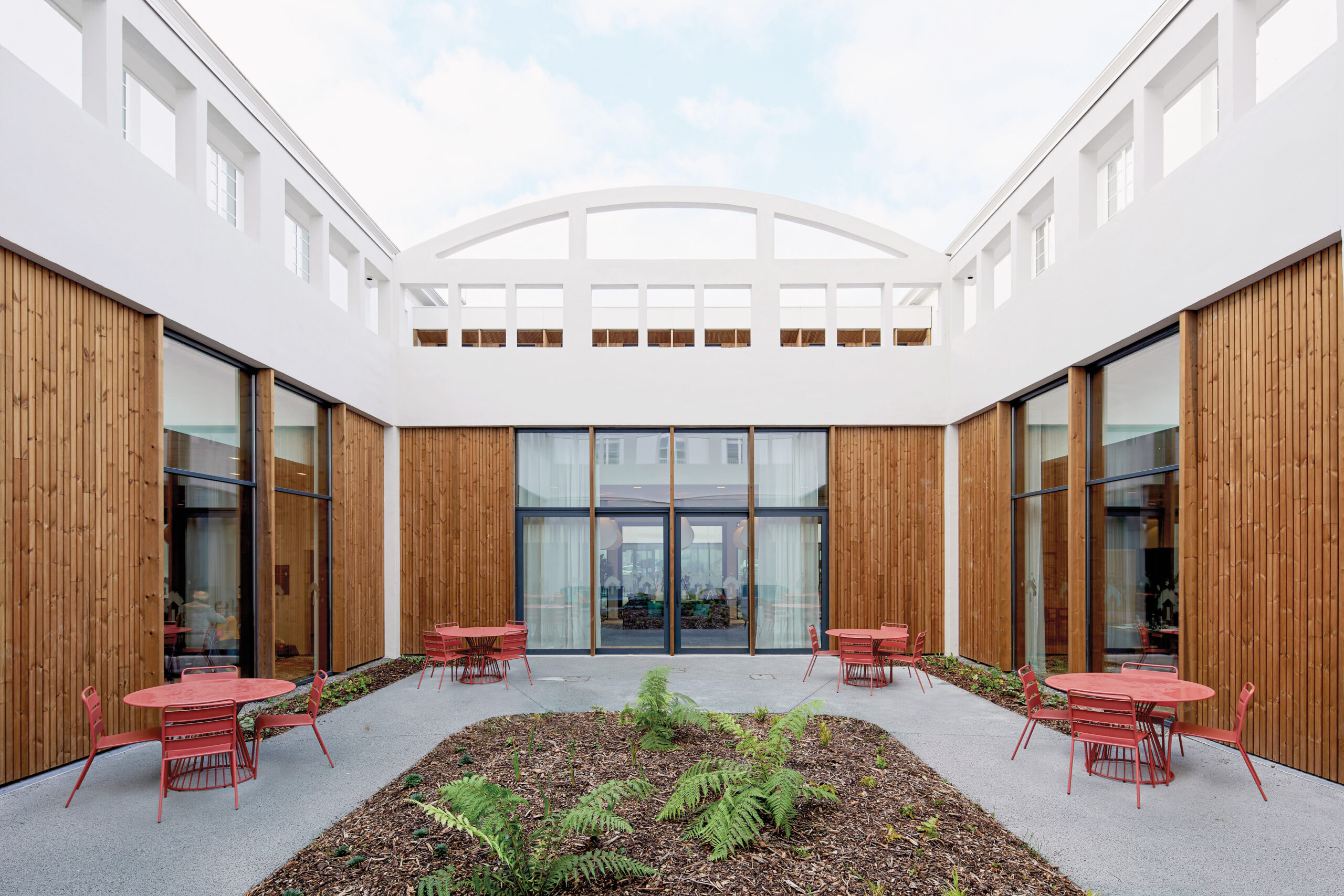
Where a stamp once sealed a letter’s journey, Chatillon Architectes’ imprint on the Brest Post Office in Northwestern France marks not an end but a new beginning—transforming the historic building into a vibrant senior community. The post office was built in 1927 in the Art Deco style. It was reimagined post-WWII in a neo-regionalist fashion, a term used by Chatillon Architectes to describe design that reflects local traditions, cultures, and materials while accommodating modern needs. The designers preserved the building’s original U shape, while integrating a modern wing. “We had to seamlessly integrate a four-story addition with the original three-story building, all while keeping two business spaces operational during construction,” says Simon Chatillon, partner at Chatillon Architectes.
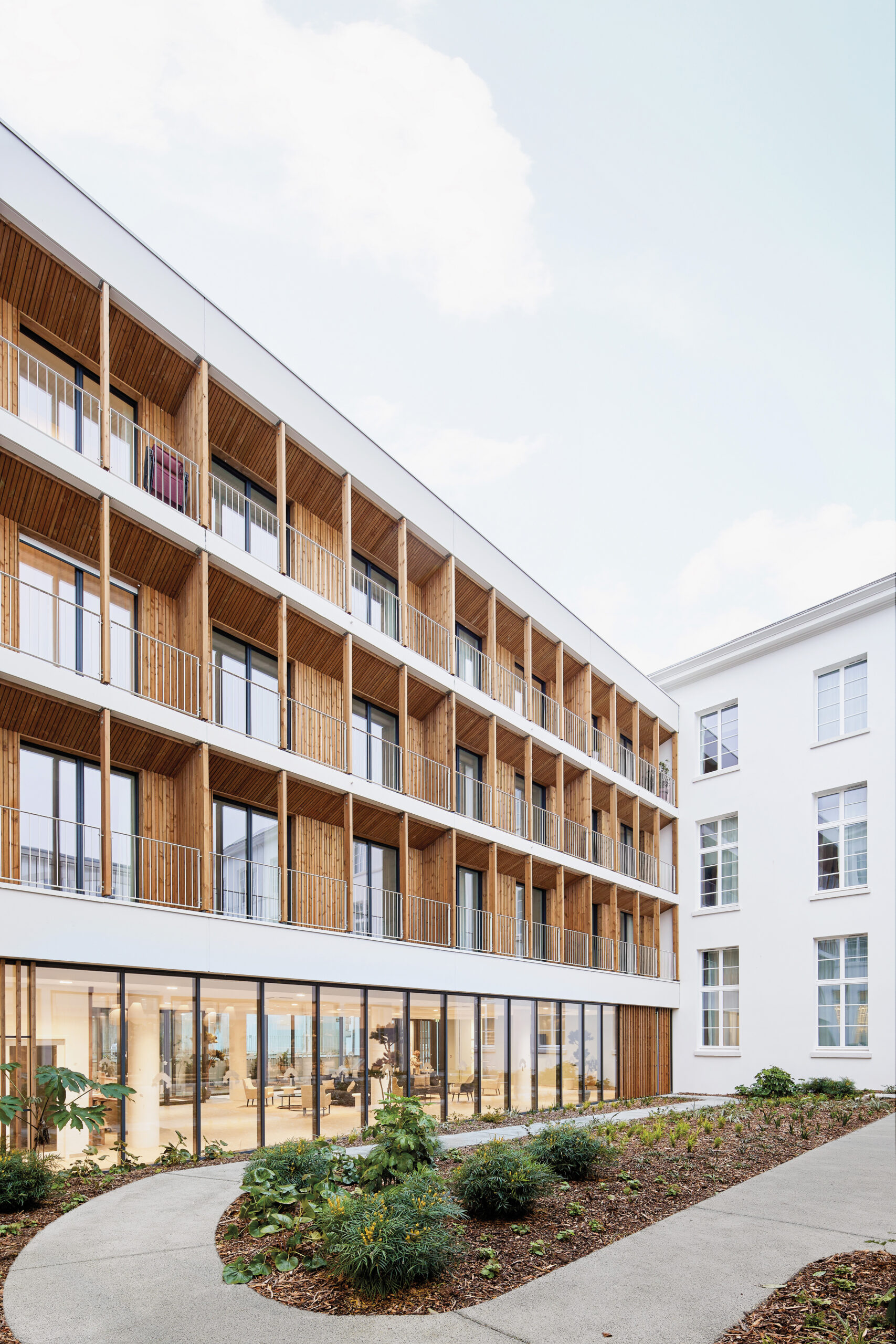
The addition, designed in collaboration with Flamant Interior Design, features concrete and glass brick, complementing the original stone facade, while Douglas fir loggias and balconies soften the concrete structure, adding material warmth. “The addition of greenery, warm wood tones, and a glass brick facade, inspired by a hidden section of the original building, has transformed the once-gray structure into a welcoming residence,” says Chatillon.
An Independent Senior Living with Customizable Comforts
Now home to 93 rental apartments—81 in the historic structure and 12 in the new addition—it offers independent living centered around a courtyard and garden, with amenities like a restaurant, gym, and a hair salon.
Operated by Les Jardins d’Arcadie, a privately held French leader in nonmedical senior housing, the residence provides thoughtfully designed apartments that feature kitchens, built-in storage, and accessible bathrooms, with flexibility for the interiors to be personalized.
Without in-house medical personnel, a concierge service manages medical appointments if needed. Safety is paramount, with a 24/7 on-site staff and a call system, offering peace of mind to residents as well as their families. Dining and recreational activities are available but optional, ensuring autonomy.
Chatillon Architectes Blend Historic Elements with Modern Needs
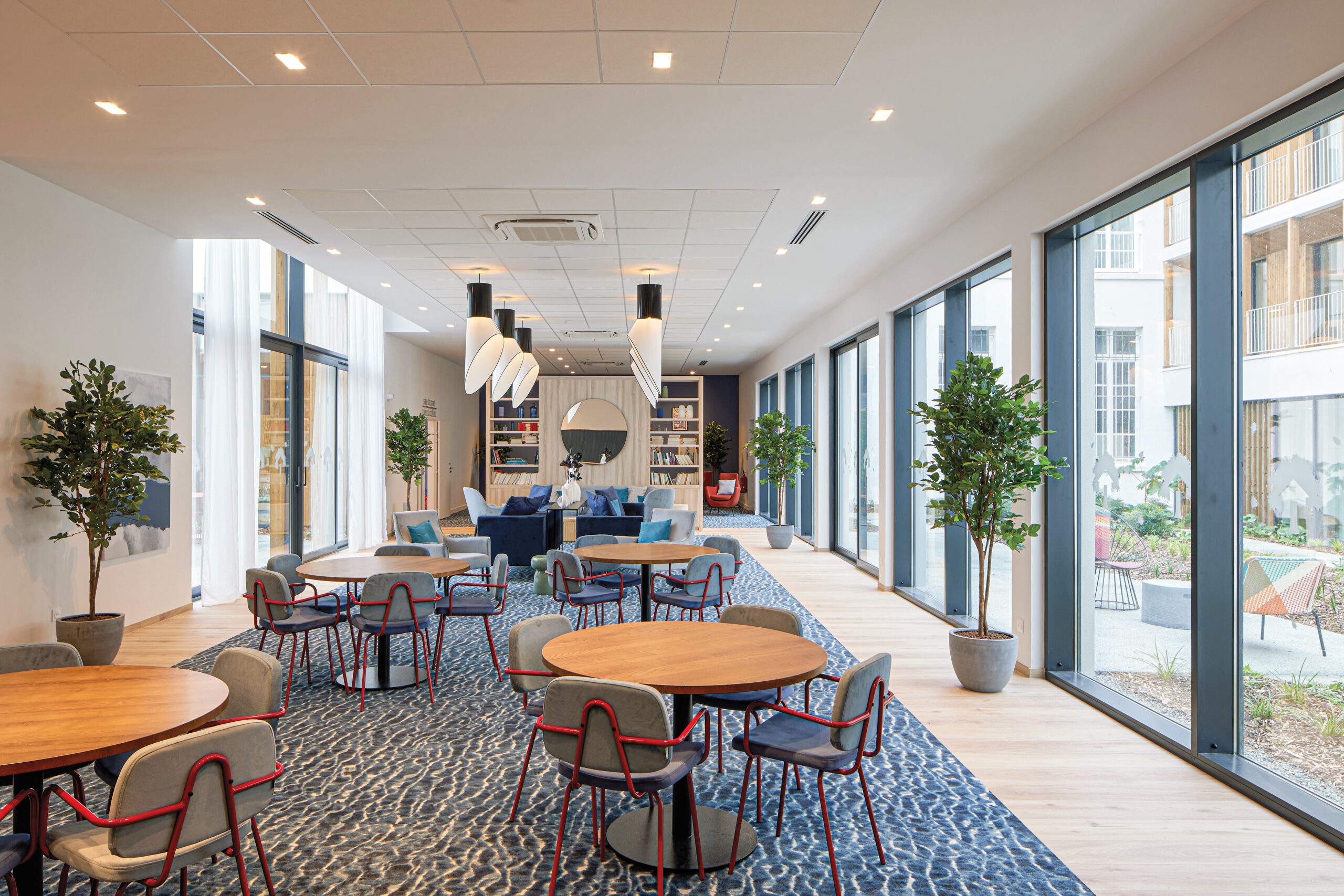
The building’s interior includes open layouts, ergonomic furniture, and slip-resistant, threshold-free floors that enhance mobility, while handrails, support bars, and thoughtful lighting provide the necessary accessibility. “The goal is to preserve autonomy while anticipating future needs,” says Sébastien Flamant, interior designer. The adaptable layout fosters long-term independence, he adds, as furniture arrangements are flexible and can later be adjusted to reduce risks.
To create a calming atmosphere, the designers included soft shades of gray and blue, characteristic of France’s Brittany region. “In corridors, artwork and color changes near apartment doors help aid orientation,” Flamant says.
Acoustic comfort is prioritized with high-performance ceiling treatments, carpeted floors, and upholstered furniture that reduces noise in lively spaces like the restaurant and TV lounge, ensuring a peaceful environment.
The design celebrates the building’s rich history and looks toward the future, honoring both. Chatillon believes that “bringing this generation to the heart of the city in a space that blends the past with the present is a statement that sees the older generation as an integral part of the future.”
Would you like to comment on this article? Send your thoughts to: [email protected]
Latest

Viewpoints
What Is and Is Not Biophilic Design?
The creator of the concept of Biophilic Design explains effective strategies that keep us healthy by bring us closer to nature.
Products
5 Smart Designs That Boost Brain Function
Discover products that blend neuroscience and biophilic design to boost focus, reduce stress, and support brain health.