


July 10, 2025
Regenerative Design as a Response to the Water Crisis in Mexico
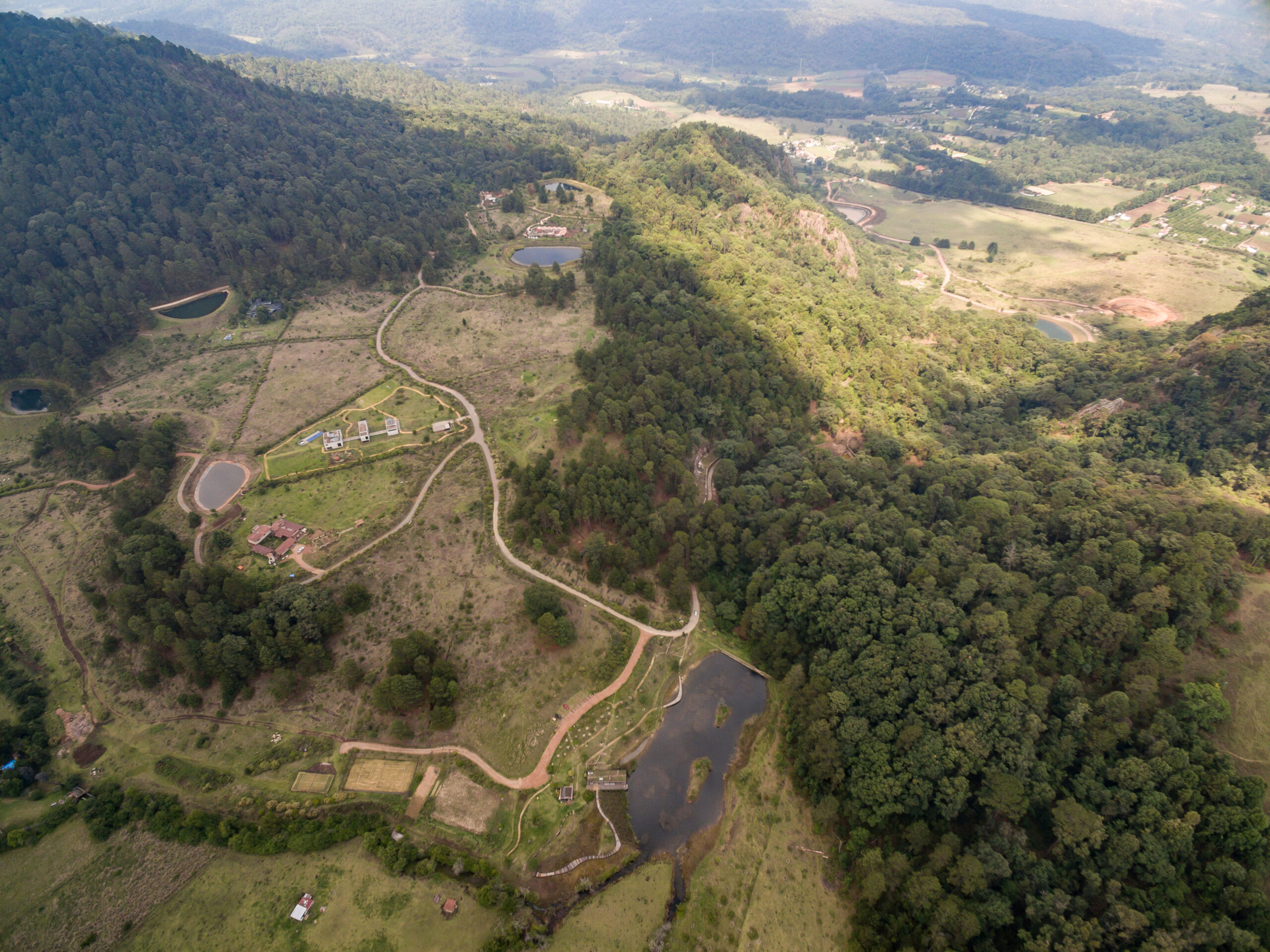
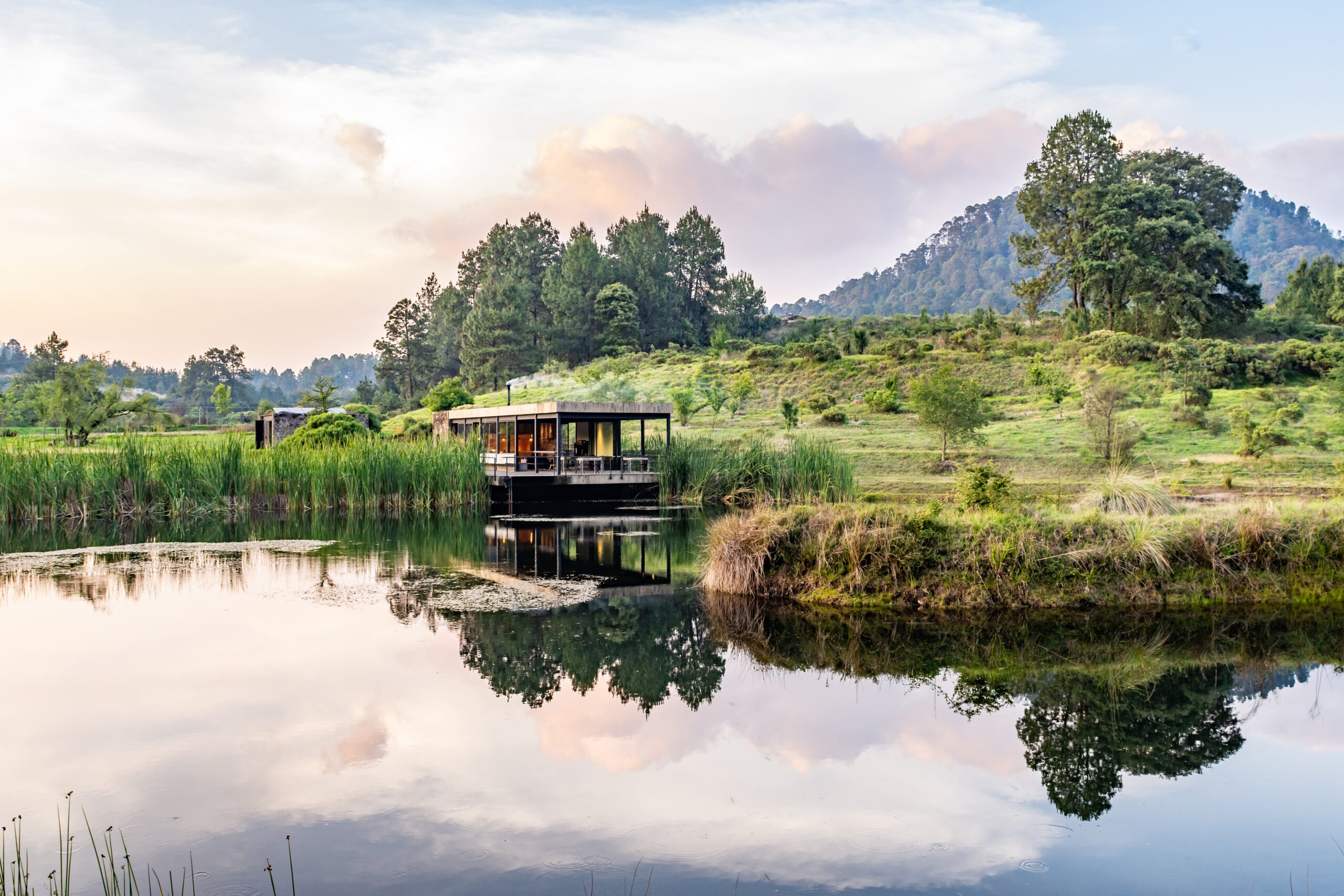
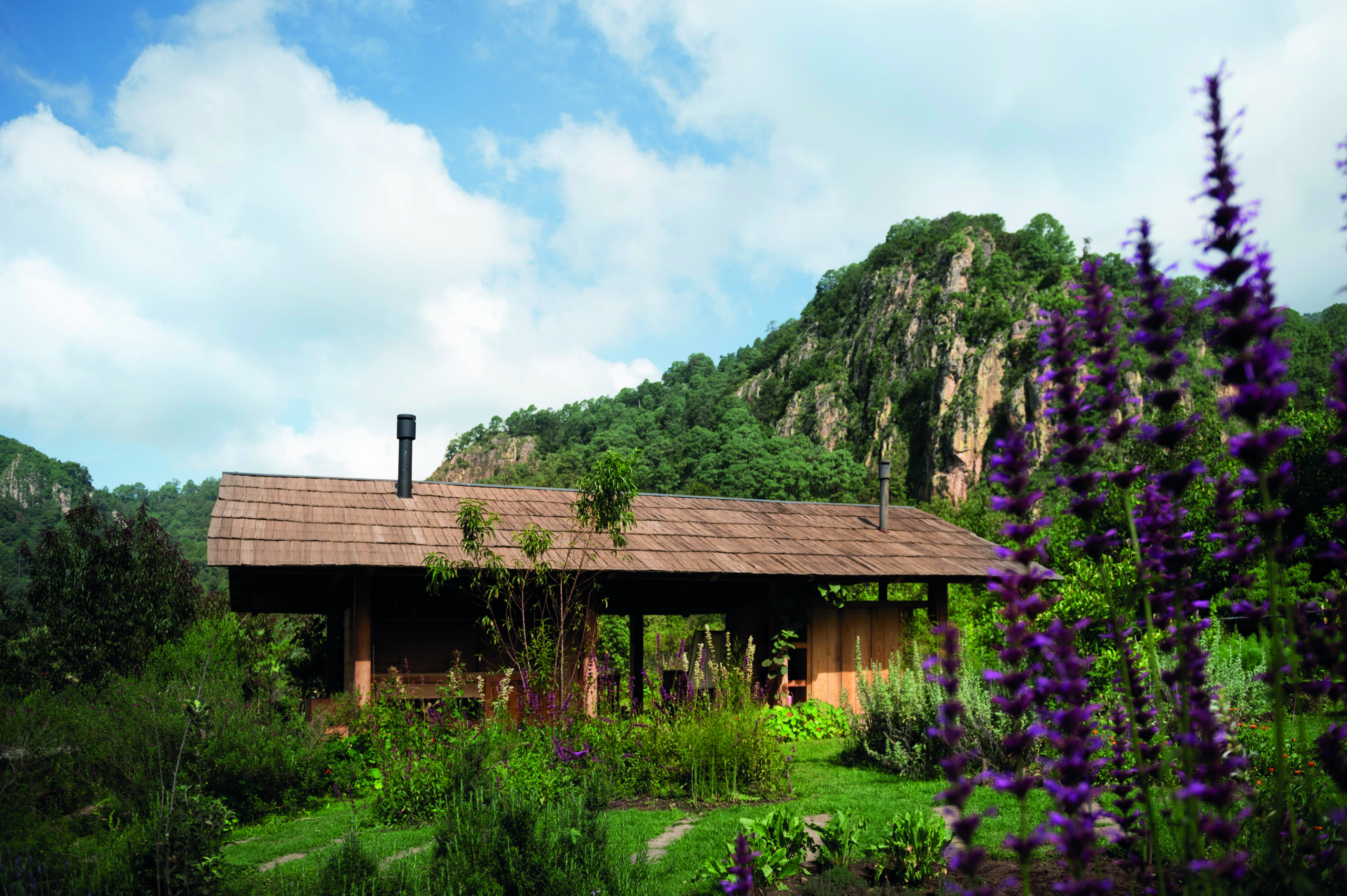
Located in Valle de Bravo (State of Mexico), just a few hours from the nation’s capital, the Reserva Peñitas is a cooperative community founded 15 years ago with the mission of restoring and developing 200 hectares of land, adapting to a geography where water resources had been drained and its areas were overexploited. Now, this community of 80 families more closely resembles an unexplored, pristine, yet diverse landscape. It includes dense pine and oak forests, wetlands interspersed with lagoons and rivers, as well as meadows with flowers, fruit trees, and orchards. Currently, the Reserve combines conservation with low-density residential planning, with each ranch occupying two hectares, and homes using a maximum of six hectares of the land. Some houses have been designed by renowned studios such as Rozana Montiel, Fernanda Canales, Gabriela Carrillo, and Javier Sánchez, but all of them are sheltered behind living fences and resemble experimental pavilions more than conventional country houses. The architecture not only lacks a central role but is also subordinated to the landscape and the environment.
For Alberto Kritzler, developer, professor, and one of the Reserve’s founders, this site is more than a real estate project: it represents a unique opportunity to create a model of ecological, community, and environmental regeneration, centered on water management and permaculture as a multiplying tool. According to Kritzler, it is essential to understand the project in three “layers”: the existing territory and its environmental condition; the imagined design and regenerative intervention on the site; and community and governance, that is, how to inhabit a living system in community and with respect for the environment.
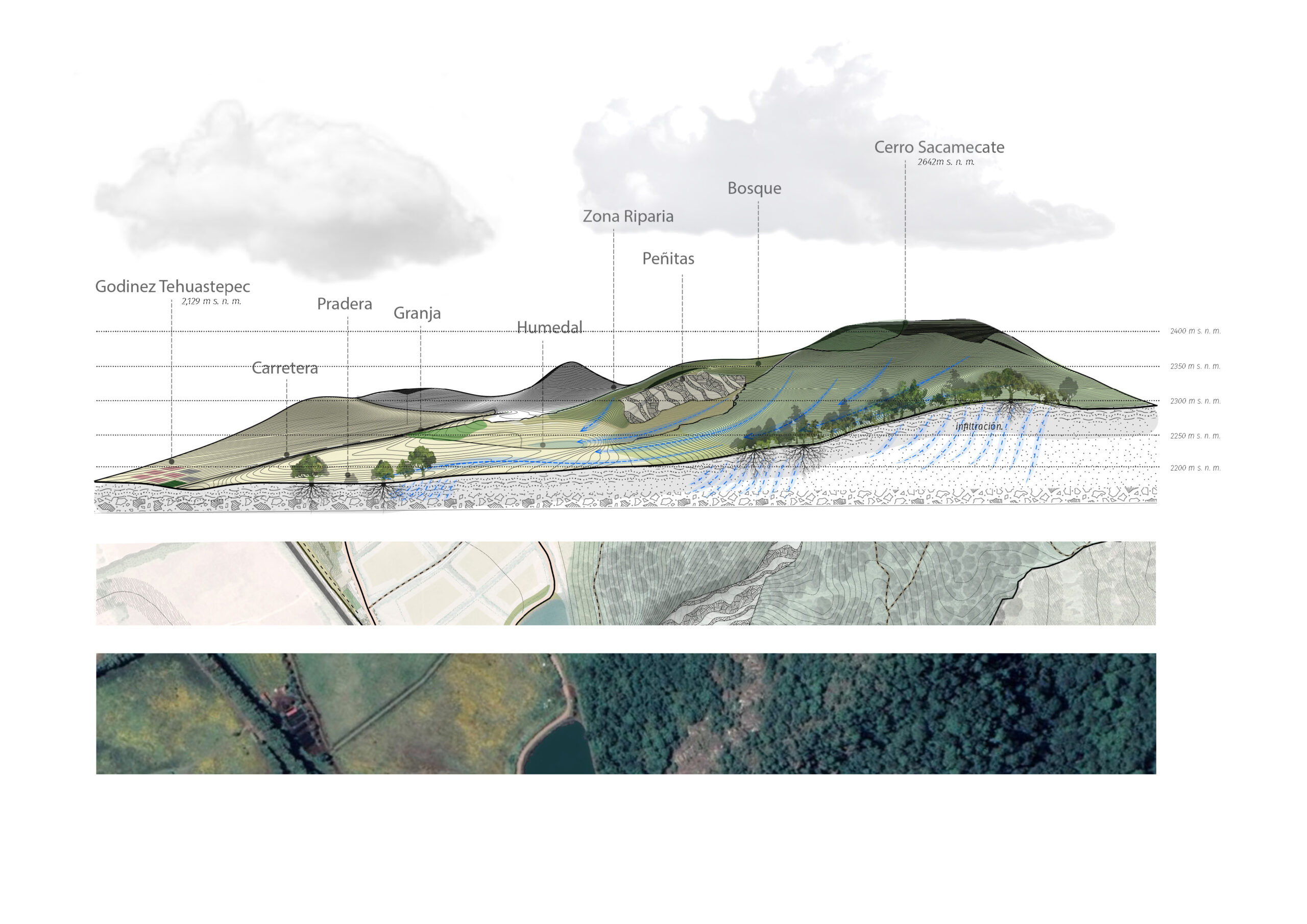
The Existing Land and the Environmental Conditions
The Reserve project began in 2009, when the landowner envisioned a traditional development model with a golf course and 500 luxury homes. However, Kritzler and his team proposed a different approach: turning human presence into a regenerative force and, why not, a regional case study to learn from. Furthermore, they found that maintaining a golf course could cost up to $1.5 million a year, which reinforced the team’s belief that ecological regeneration is not only viable but economically sustainable.
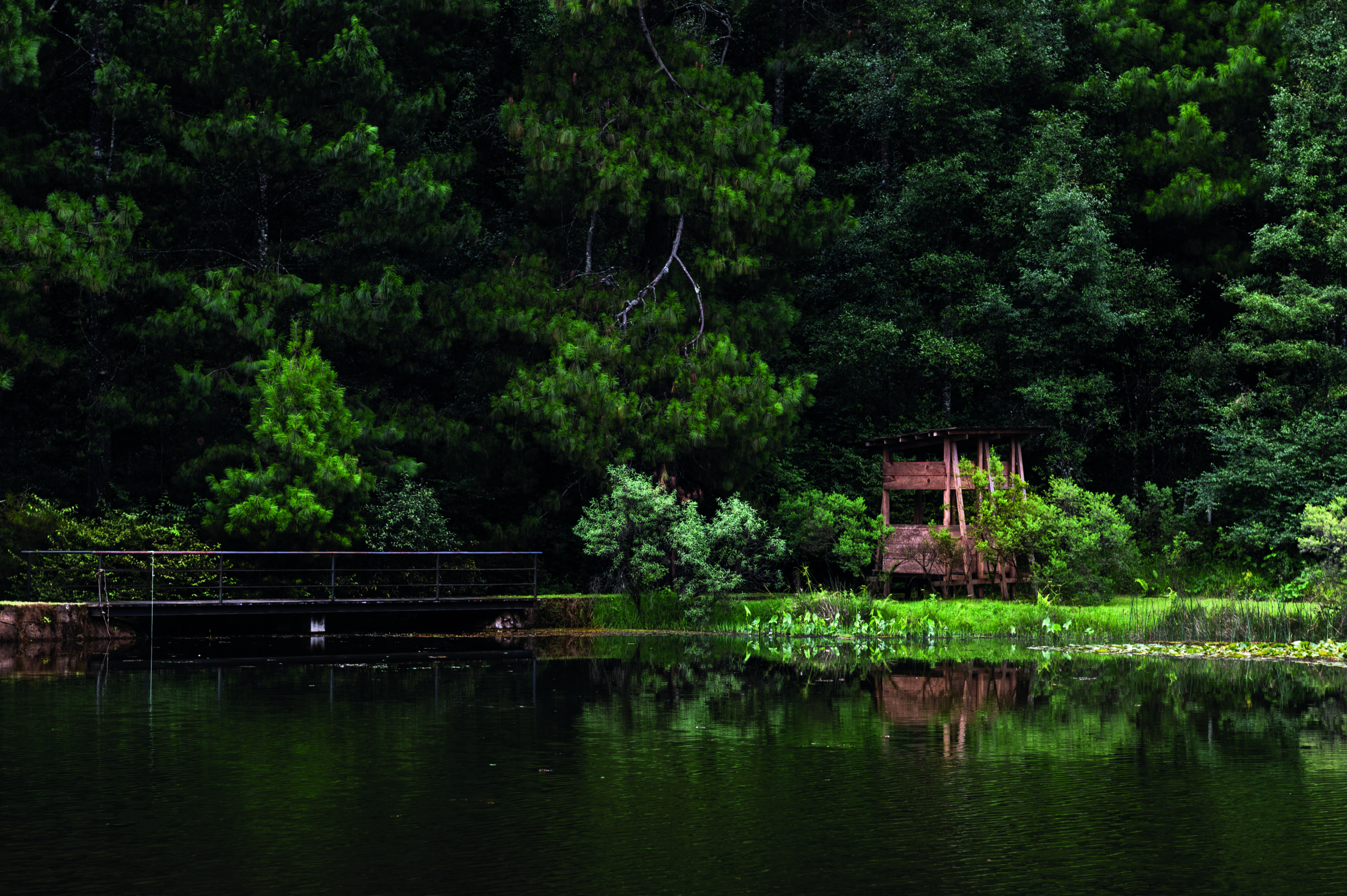
The land was severely degraded by overgrazing, which impacted water systems due to the compaction of soils in the low-lying areas. “Creating an ecosystem like the Reserve can cost the same or less than a conventional real estate development in Mexico, which involves paved streets, concrete sidewalks, and fences that disrupt natural flows,” explains Claudia Rodriguez, one of the landscape architects in charge of the project. According to the team, what is needed is a willingness to listen and understand the territory and its inhabitants, as well as the time necessary for the project to “grow from the ground up.”
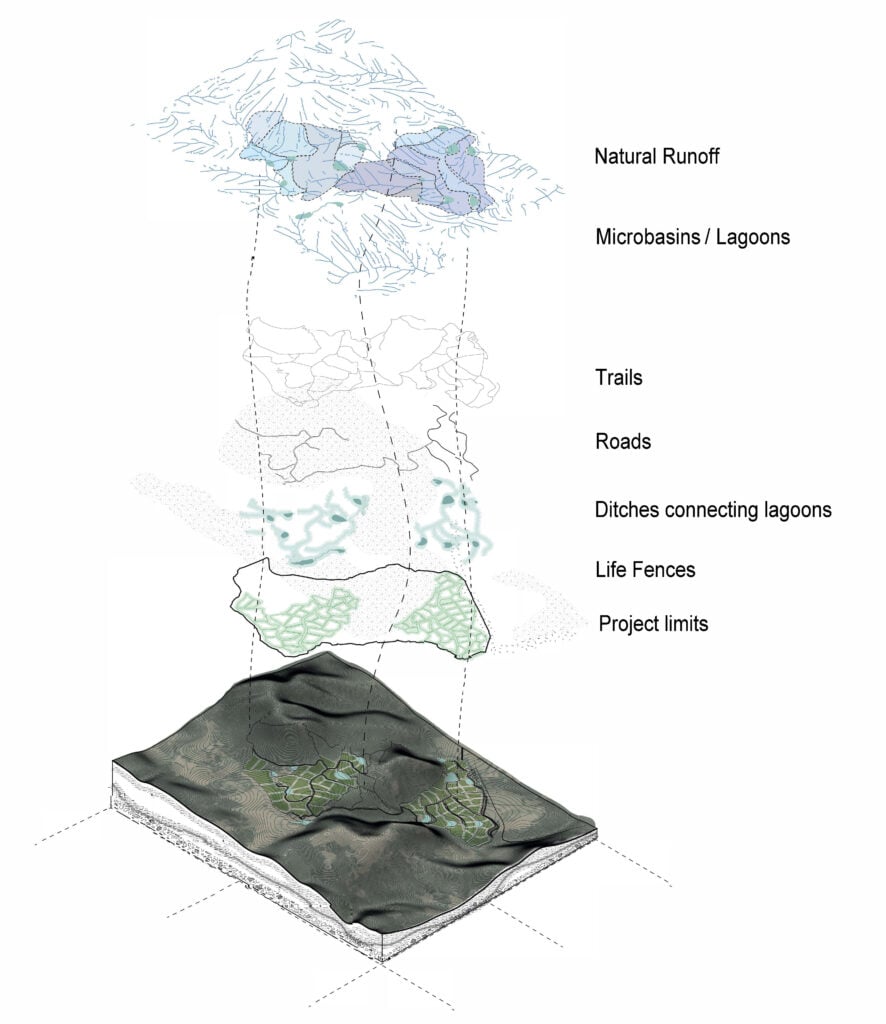
Water is the central element of the Reserve. To achieve this, an interdisciplinary team of architects, biologists, agronomists, landscape architects, and forestry engineers was assembled, redefining the project’s development with a holistic approach. It is worth noting that the Reserve is part of the Cutzamala system, one of the largest networks of dams and canals in the world, which supplies 27% of Mexico City’s water. The Valle de Bravo Dam, one of its primary sources, has reached 20% of its capacity, which last year prevented the pumping of water to the capital. Therefore, it is more crucial than ever to focus on water in every project. Having understood the logic and behavior of water, the Reserve can now store 161 million liters of rainwater in 13 reservoirs, enough to provide water to the community for a year.
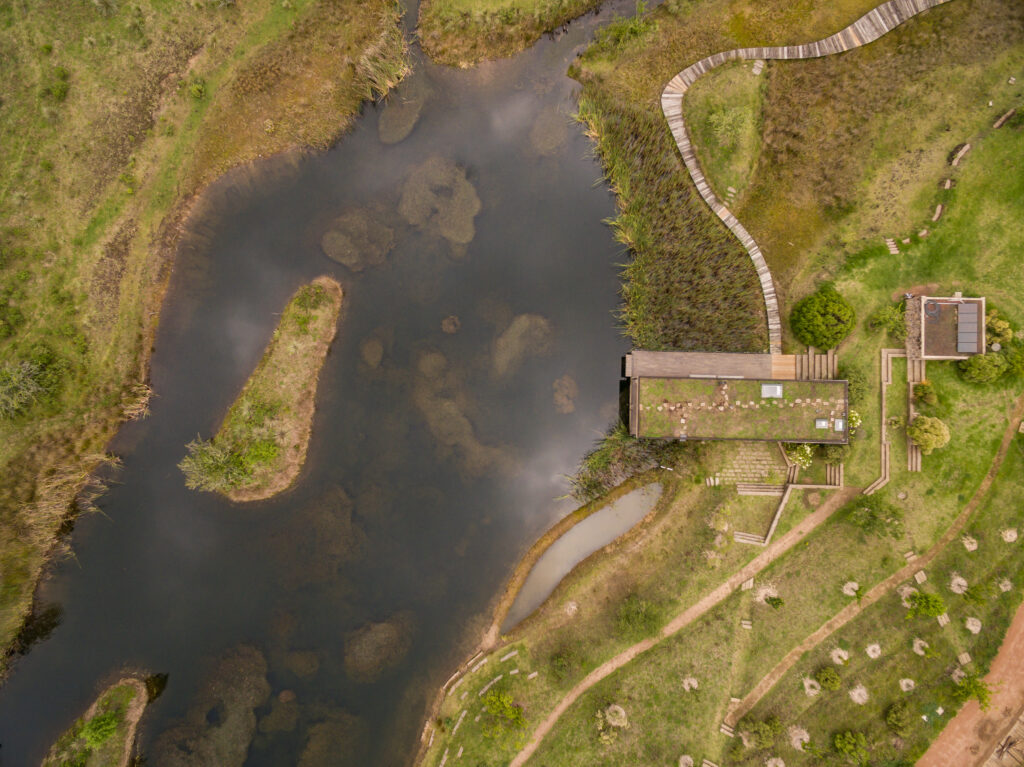
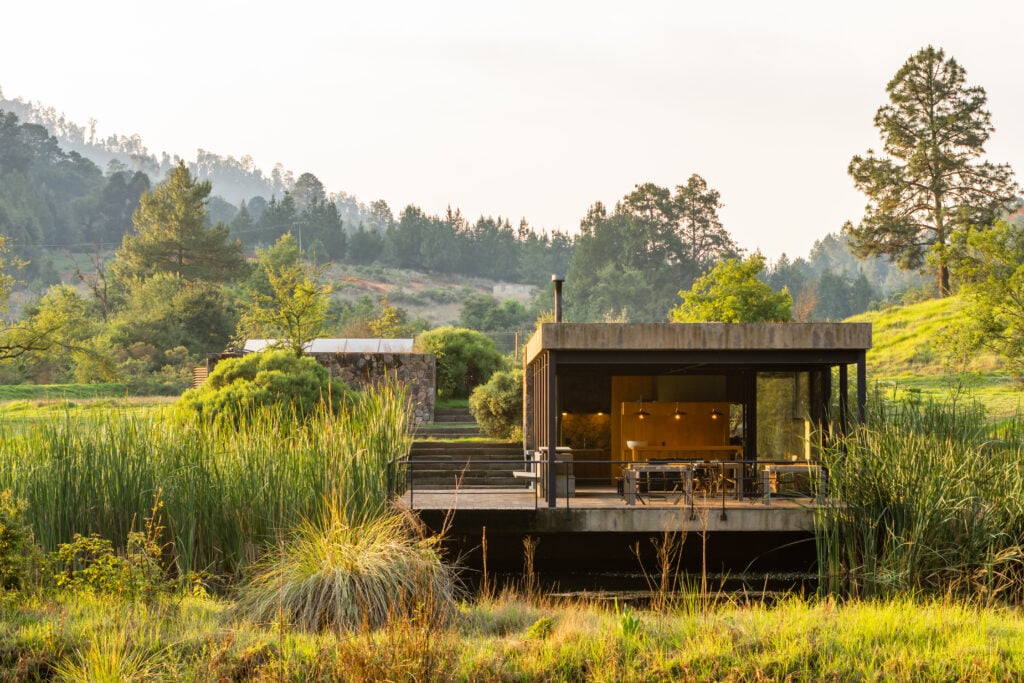
Imagined Designed and Regenerative Intervention on Site
The Reserve’s master plan was developed from various perspectives: landscape design and architecture, ecology, botany, and vernacular knowledge acquired from neighboring communities. “From the beginning, we considered the territory as an interconnected system,” explains Rodríguez.
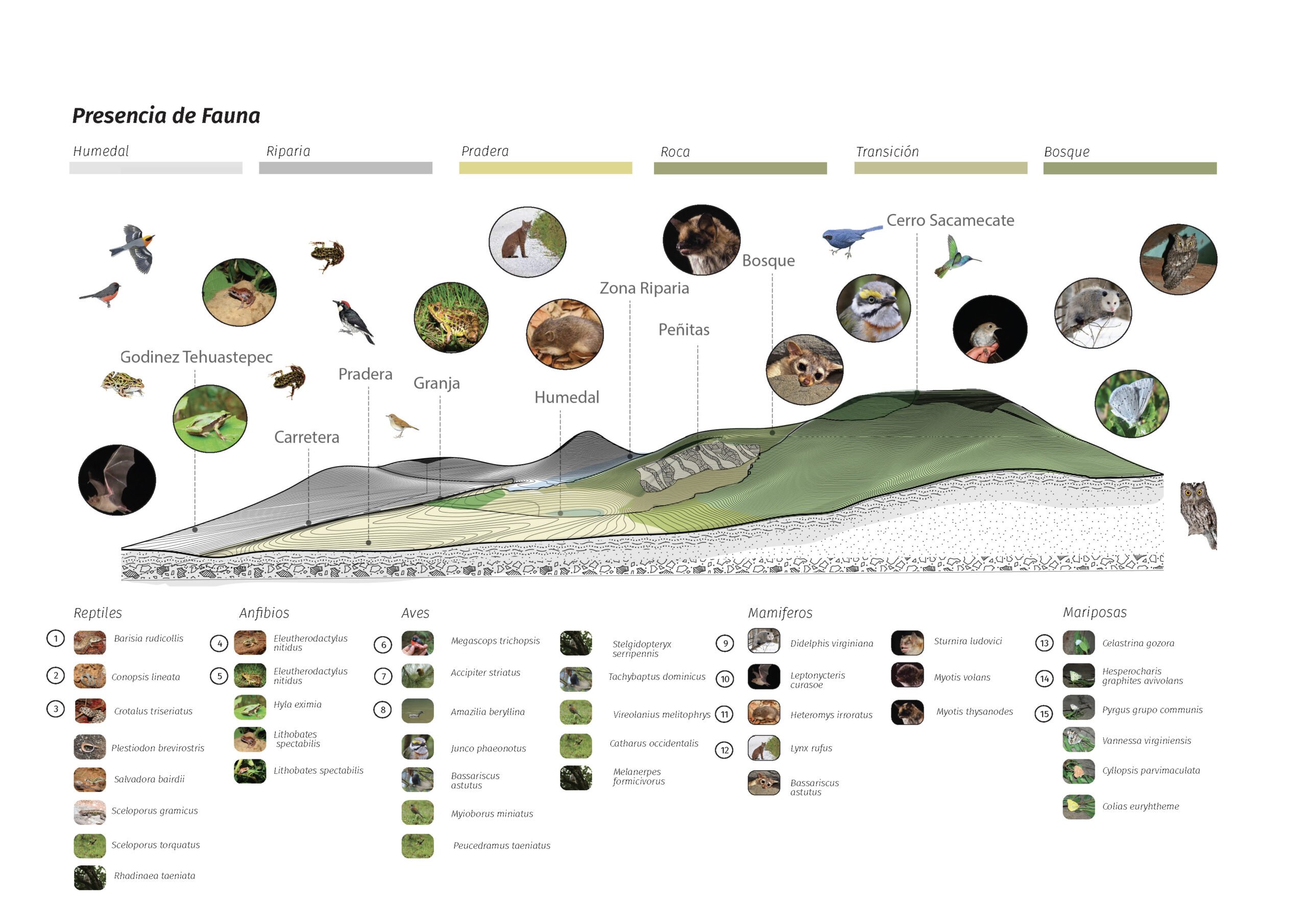
Sun orientation, slopes, vegetation cover, hydrological patterns, forest health, ecological history, the degree of soil erosion, and fire risks were analyzed. Seasonal flora and fauna inventories were also conducted to understand the species that inhabit the site. This led to the creation of a “plant palette” in a native flora nursery, used for living fences and plant infrastructure. This was one of the initial processes, in which 5 million pesos were invested, which was more economical than purchasing the more than one million plants and trees already planted in the region. These native species, being adapted, require less maintenance and provide food for rabbits, eagles, wildcats, and other local wildlife. “Going green is also logical and economical,” Kritzler reflects.
The methodology that guided most of the process was permaculture, which establishes the multiple functions that each element must fulfill and how different elements must fulfil these functions. “Redundancy is key to ecosystem resilience, as it decentralizes essential functions and distributes them in a balanced manner,” Kritzler added.
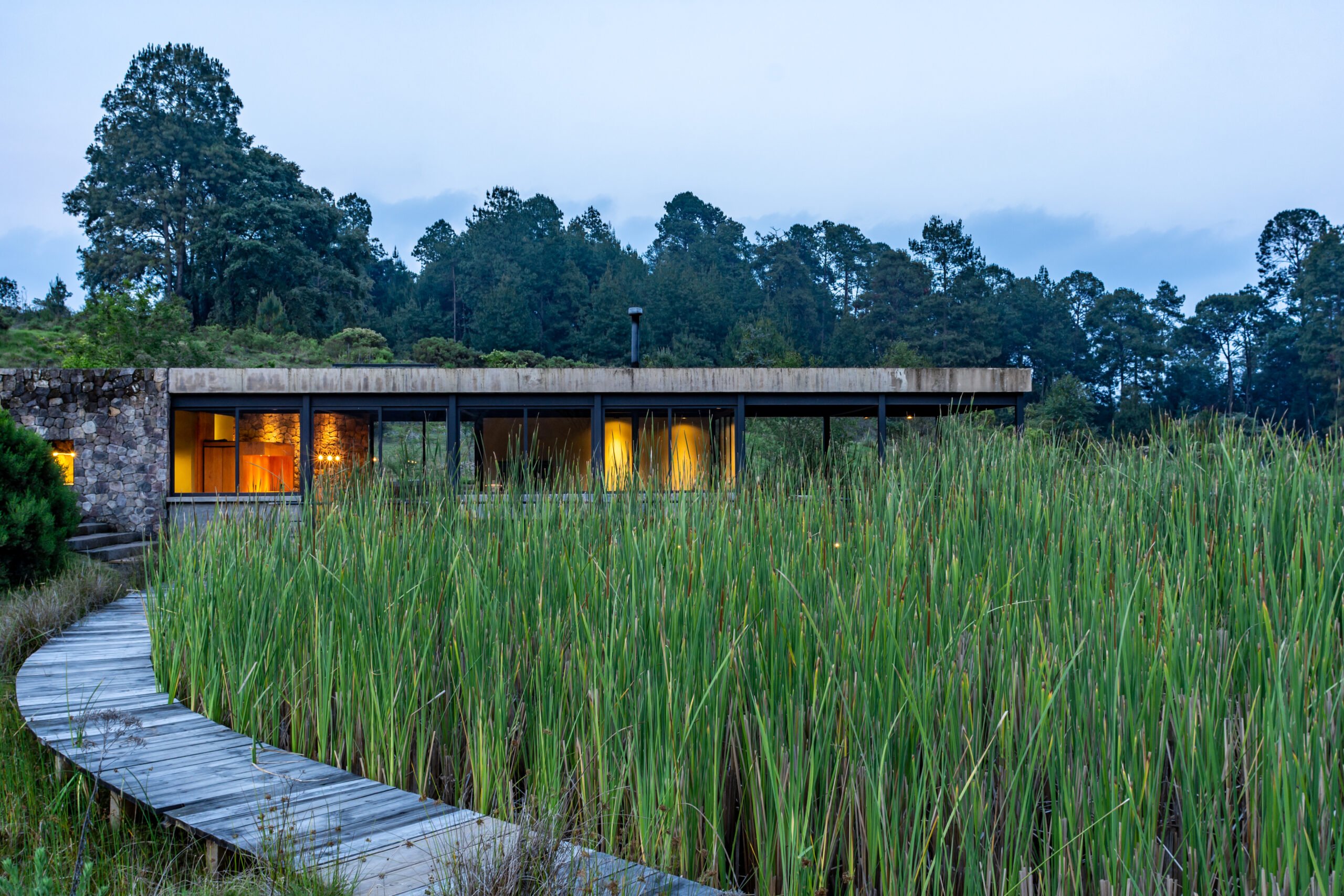
Community and Governance
The Reserve is governed by a trust that operates as a cooperative, similar to a community land trust. This enables participation by residents and fosters collaboration with neighboring communities. Educational workshops have also been held on carpentry, mushroom picking, and wildlife identification, fostering a sense of belonging and environmental responsibility for the area.
However, the design team and the Reserve’s residents are clear that much remains to be done to connect with neighboring communities. The economic and social distance between the residents of this idyllic Reserve and their neighbors is a reflection of the nation’s inequities and a growing issue for the Reserve’s residents. The workshops have played a crucial role in fostering connections with neighbors.
The Reserve’s ecological impact is evident: in the last decade, 70 hectares of forest and 25 hectares of grassland were restored, and the project has directly and indirectly employed dozens of families. Furthermore, according to the biology group Nantlalli Ambiental, the number of migratory birds visiting the Reserve has quadrupled in the last decade. There is no better indicator of positive impact than the increase in visits by this class of animals, which, instinctively, choose where best to be. This confirms that a regenerative design is not only possible but also offers a viable model for addressing the environmental crises of the present and the future.
This story was published in Spanish on Arquine Magazine No. 111 on spring 2025.
Would you like to comment on this article? Send your thoughts to: [email protected]
Latest
Profiles
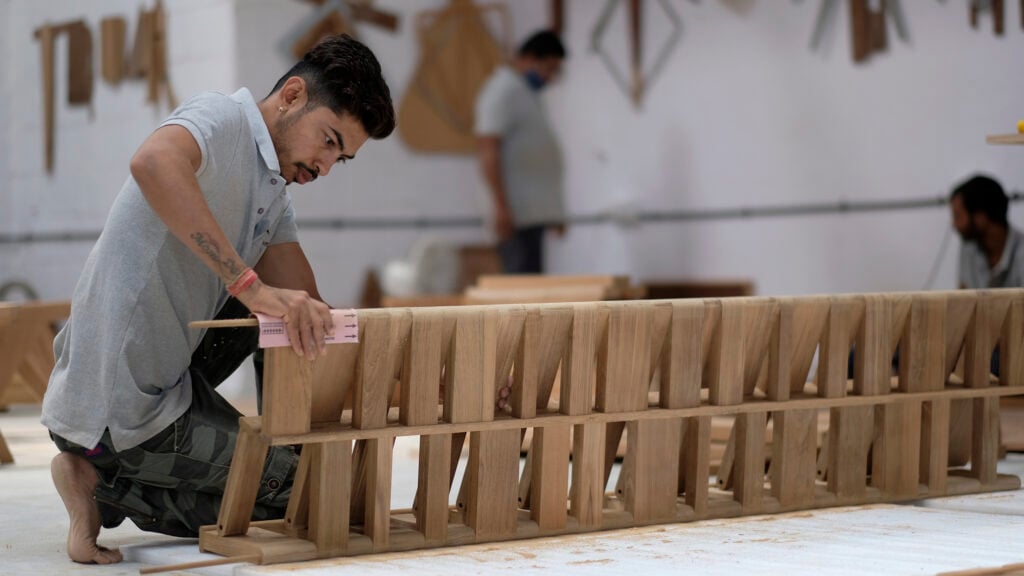
This Studio is Reworking Indian Modernism by Hand
In Bangalore, Phantom Hands builds a model of sustainability that merges tradition, technology, and ethical design in a living workshop.
Products
Lighting That Lets Shape Shine
From sculptural forms to fixtures inspired by nature—these three lighting trends reimagine how we shape space, mood, and meaning with light.