


July 10, 2025
Yeonhan Architects Creates a Tranquil Postpartum Care Center in Seoul
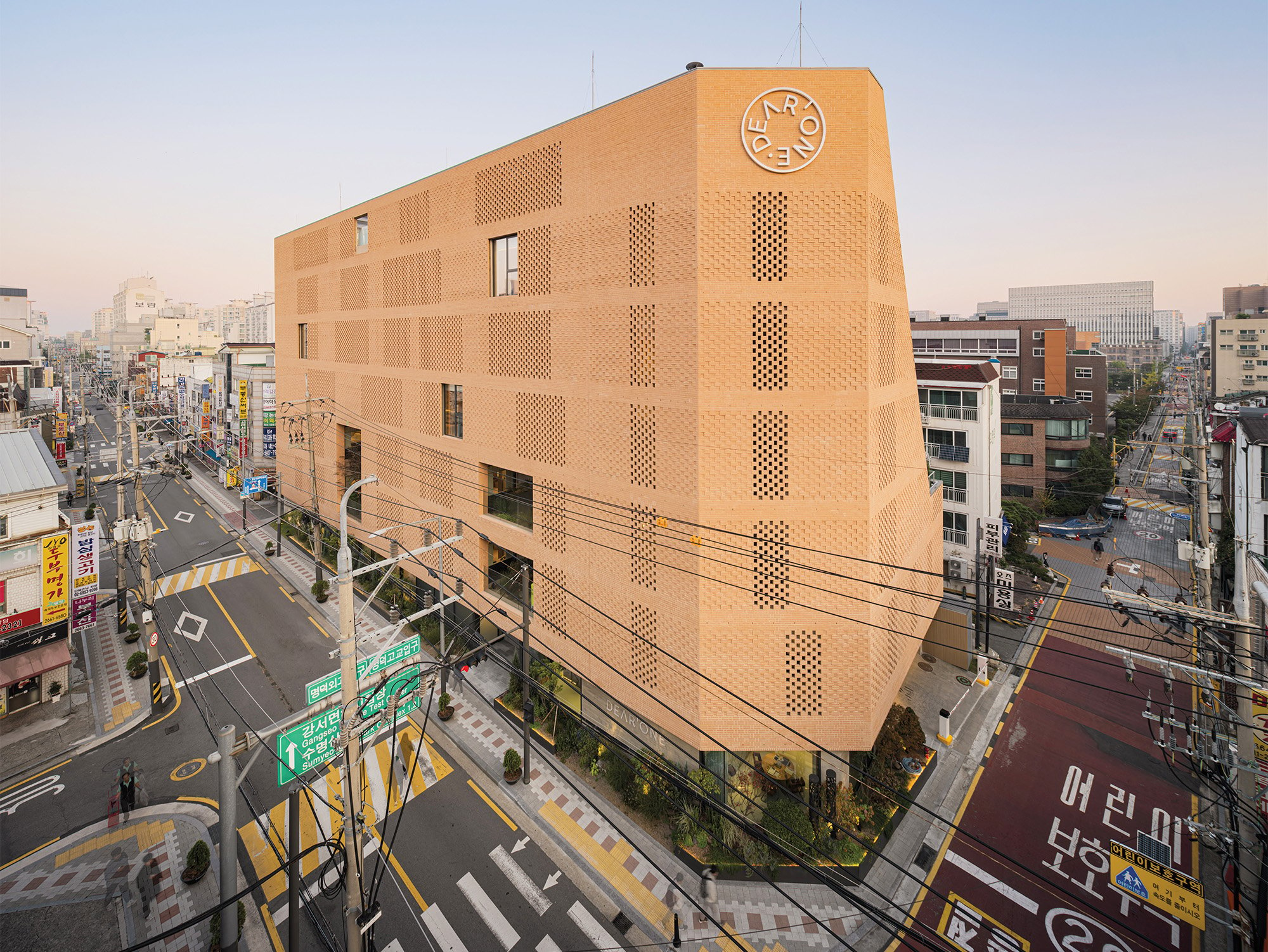
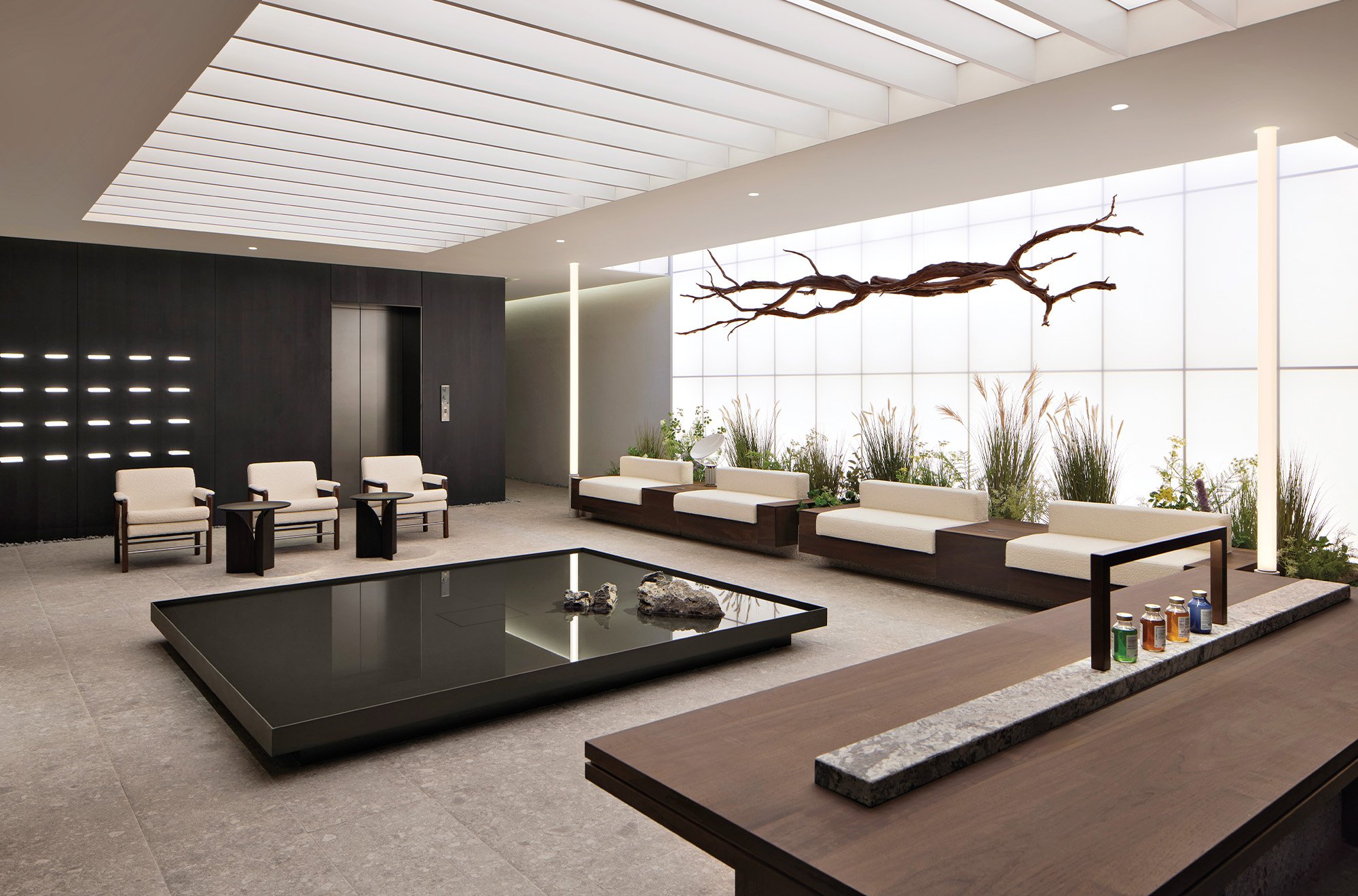
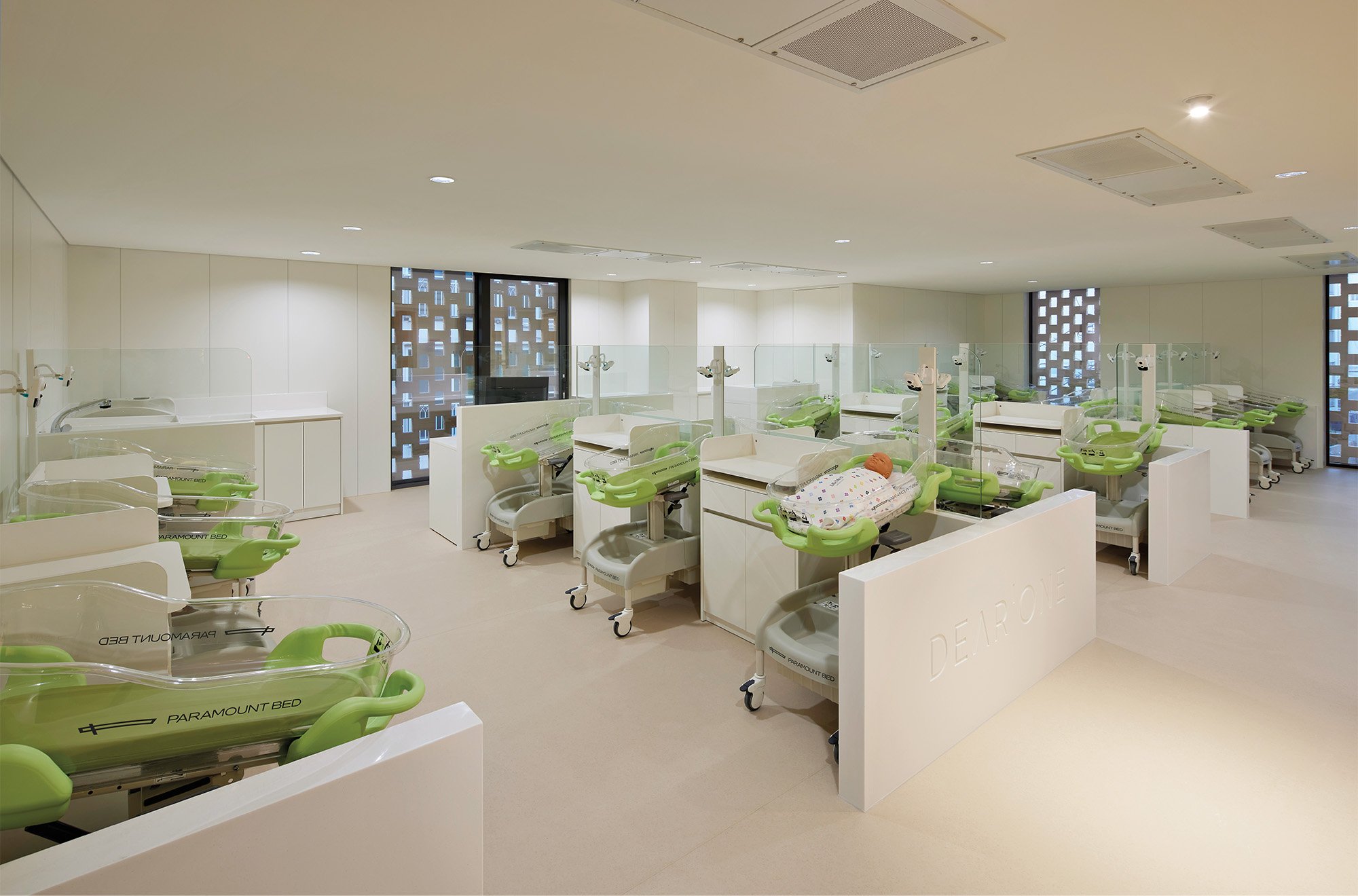
Against the backdrop of a busy street in Seoul, women can now receive postpartum care in a tranquil facility complete with terraced gardens and light-filled interiors. The MizMedi DEAR’ONE, designed by Yeonhan Architects, is a 162,900-square-foot center constructed on a former parking lot between a high-traffic street and a residential neighborhood. Architect Seokcheon Kim was inspired by the proverb about it taking a village to raise a child, noting that typical postpartum care in Korea focuses on individual service in private spaces.
“My goal was to create an environment where mothers can use the entire building as if it were a village—recovering naturally, connecting with others, and experiencing a relaxing, retreat-like atmosphere,” Kim says. “To achieve this, I introduced the concept of a vertical retreat village, allowing mothers to freely access and utilize all spaces, from the basement to the rooftop, throughout their stay.”
Yeonhan Architects Balance Privacy, Comfort, and Nature
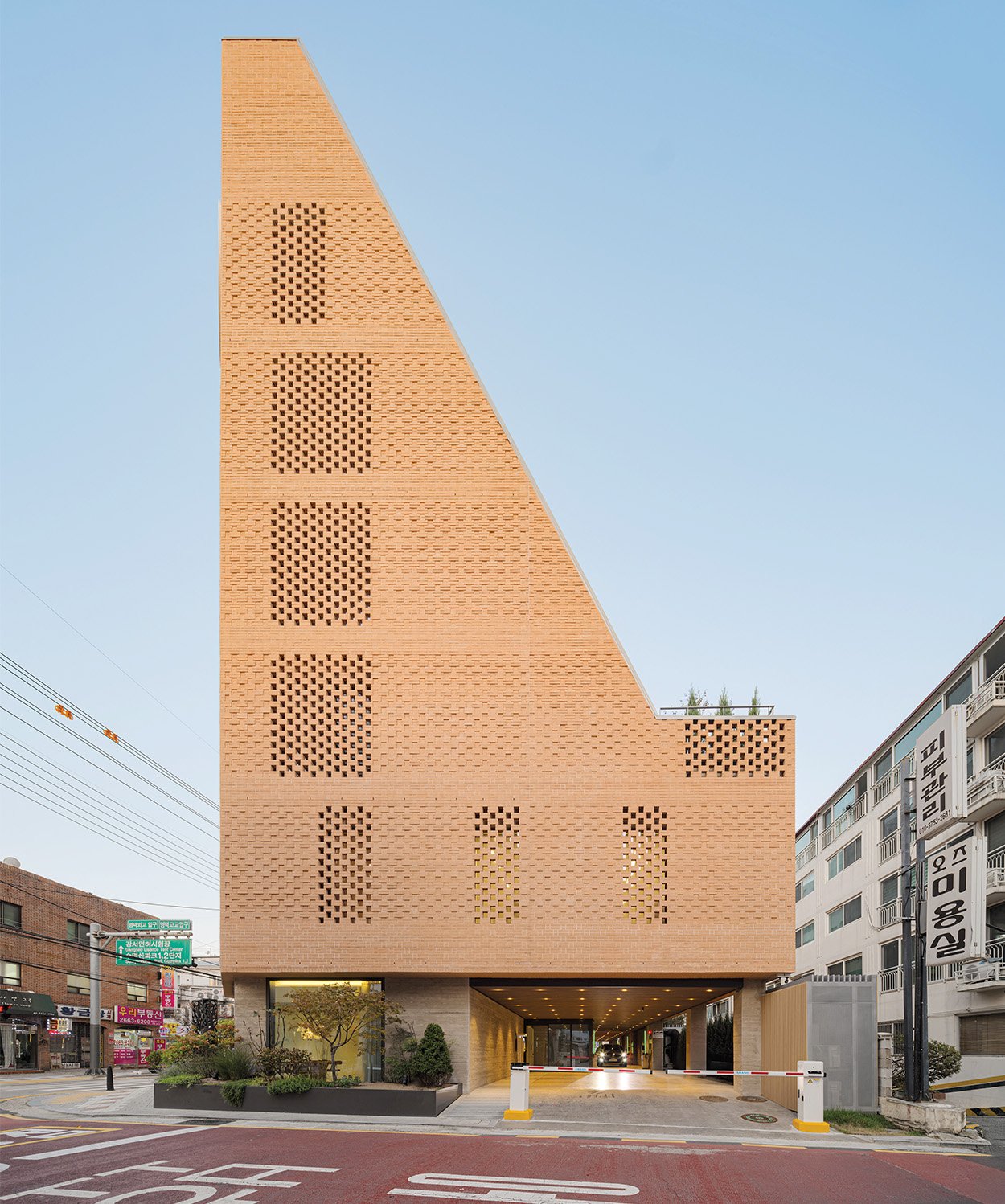
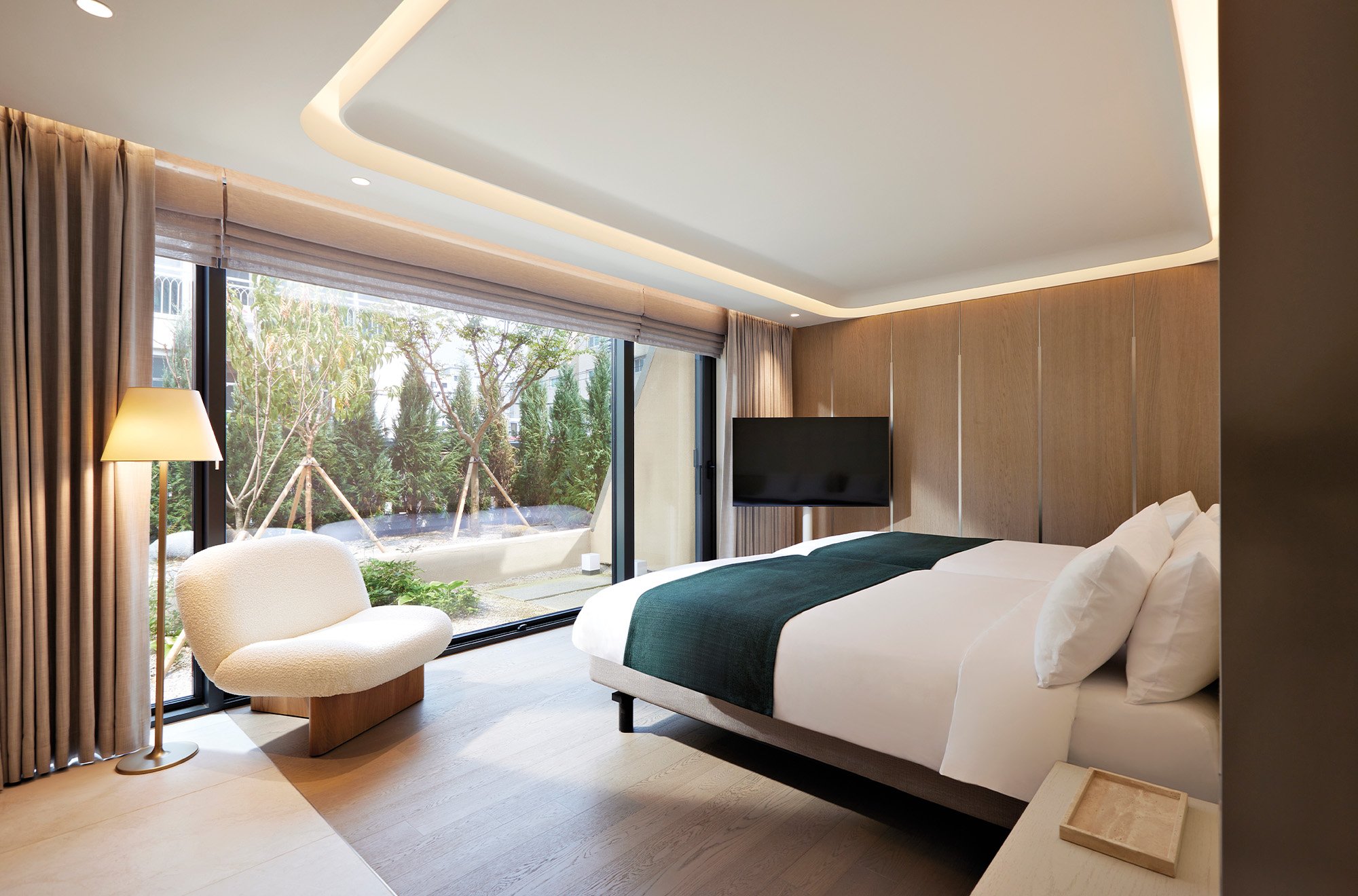
The narrow, roughly rectangular building has six aboveground floors and three subterranean levels of parking and service space. “To ensure a comfortable postpartum recovery, we needed to minimize exposure to the chaotic roadside environment and direct sunlight while also maintaining privacy for both the mothers,” Kim notes. To protect the recovery rooms from the noise of the busy street, the team arranged the corridors and vertical circulation cores along the long southern facade and placed the majority of the postpartum suites along the slanted northern edge. As the levels rise, the floor plates become narrower, giving way to a series of planted terraces that rake the steep roofline.
“These landscaped terraces naturally secure mutual privacy between the postpartum center and the residential apartments while creating an environment where both mothers and apartment residents can enjoy and relax in the presence of nature,” the studio’s chief architect says.
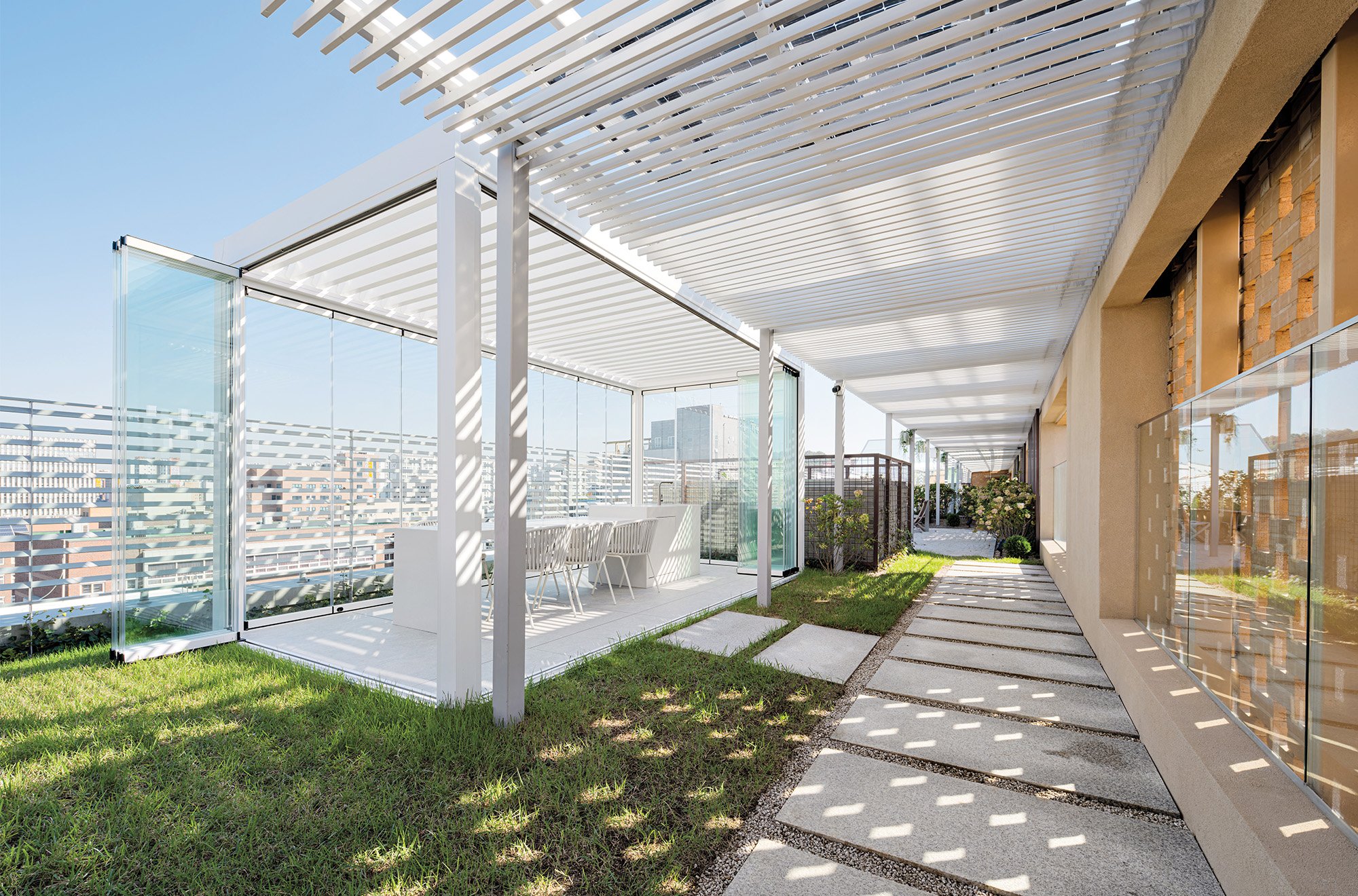
The building is topped by a garden for outdoor rest and relaxation in the dense urban environment. Louvered shading devices keep the rooftop cool, while providing a support structure for a solar array that helps the facilities meet Korea’s Green Building Certification System regulations.
Building Community and a Haven for Mothers
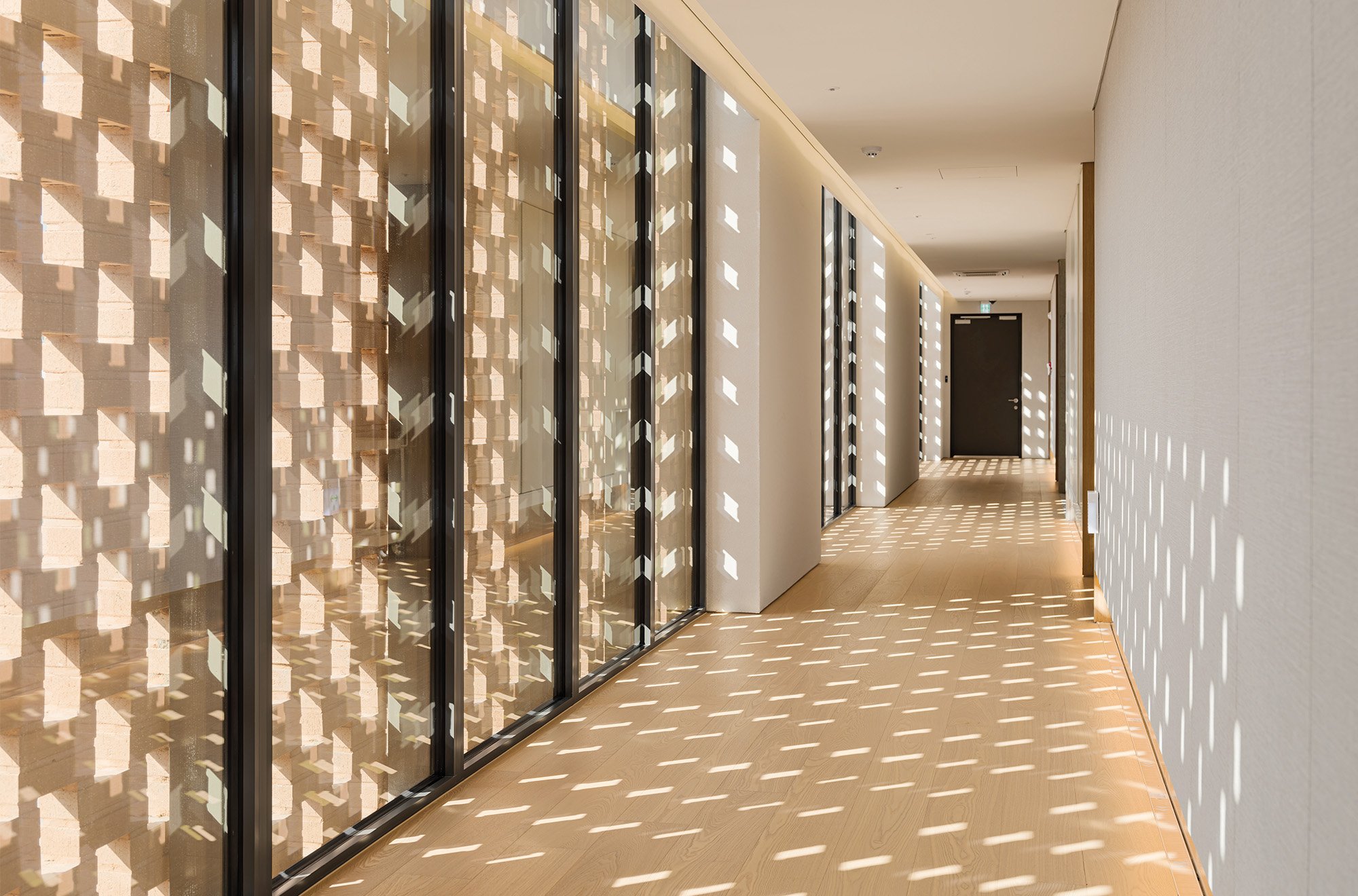
Yeonhan Architects selected a salmon-colored brick to clad the building as a reference to the neighborhood’s residential architecture. A combination of protruding and recessed brick techniques creates a patterned screen that provides both visual interest on the exterior and creates the dappled light and shadow on the interior.
“The brick screen facade on the southern side adopts a spatial stacking method, creating an effect reminiscent of a delicate curtain,” Kim explains. “This approach was designed to cast shadows along the corridors, evoking the feeling of walking along a path where light filters through the leaves.”
Kim notes that a two-layered stacking method—as opposed to a single layer—increases light permeability for the screened areas and forms horizontal bands on the exterior, helping the 164-foot southern facade avoid the impression of a monotonous mass, while still creating a cohesive design. A glazed curtain wall system wraps the ground floor “to ensure openness and add rhythm to the pedestrian environment.
For Kim, “this postpartum care center, opened after much hardship, aspires to be a haven for mothers, offering a positive experience and a beacon of hope amid the social challenge of low birth rates.”
Would you like to comment on this article? Send your thoughts to: [email protected]
Latest
Projects
Inside and Outside Johns Hopkins’ New Bloomberg Student Center
Inside the New BIG and Rockwell’s Bloomberg Student Center At Johns Hopkins, a new student center reconnects the university to Baltimore and redefines how students gather, collaborate, and unwind.
Viewpoints
Archtober and the AIA Center for Architects Invites You to Share Space
Archtober 2025: Sharing Spaces, The 15th edition brings together architects, artists, and the public for a month of events exploring how New Yorkers share and shape their city.