



March 28, 2025
HDR Wraps Mayo Clinic Lab in a Dynamic Double-Layered Facade
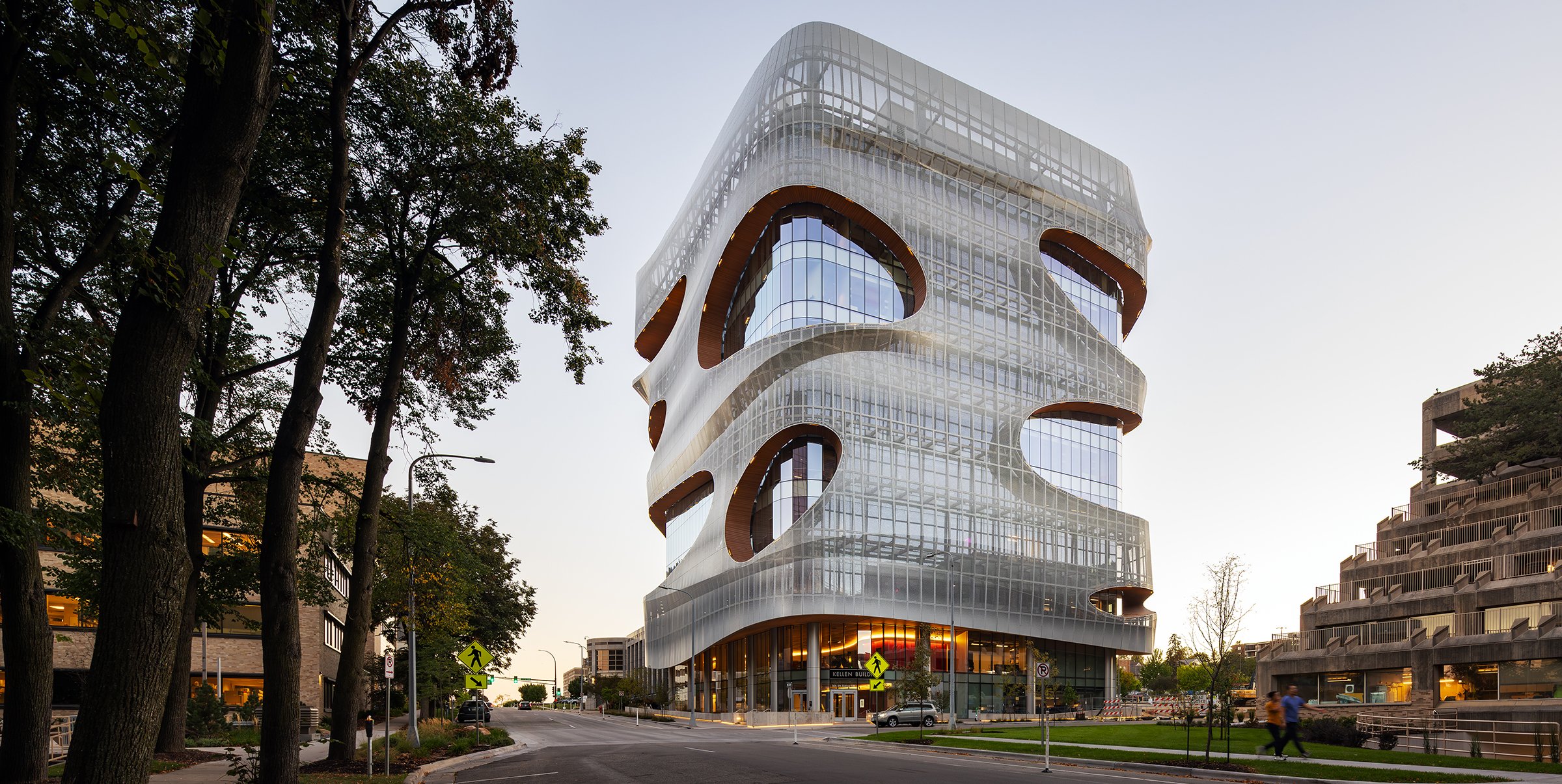
Standing on the corner of Third and Fourth Streets in Rochester, Minnesota, the 174,000-square-foot Mayo Clinic Anna-Maria and Stephen Kellen Building serves as a dynamic “symbol of the hope that the research within brings to life,” Scott Elofson, HDR design principal, says.

Advancing Research in Architectural Facades
The building holds the southwestern edge of the research district, with an undulating, high-profile facade rising 11 stories in curtain wall glazing and aluminum scrim. Featuring a perforation pattern inspired by a tessellation of Mayo Clinic’s three-shield logo, the double-layered facade opens the interiors to light and views, while reducing mechanical loads through strategic shading.
“The carefully placed, large circular cutouts in the scrim, or oculi, correspond to collaboration zones throughout the building and deliver visual connectivity, putting research on display and allowing the building to pulsate with life well after the sun goes down,” Elofson says.
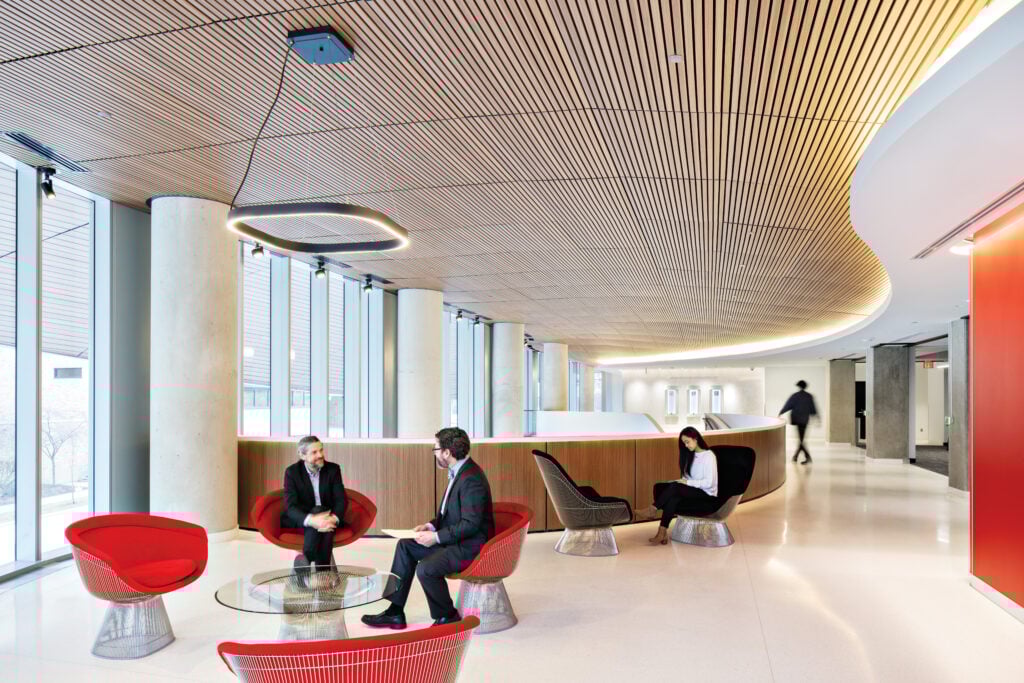
The wavelike scrim filters light into dappled patterns throughout corridors and shared work areas and creates unity across the building’s eight prototypical and three specialty floors, which form a rectangular plan with gently rounded corners.

Optimizing Floors for Energy Efficiency
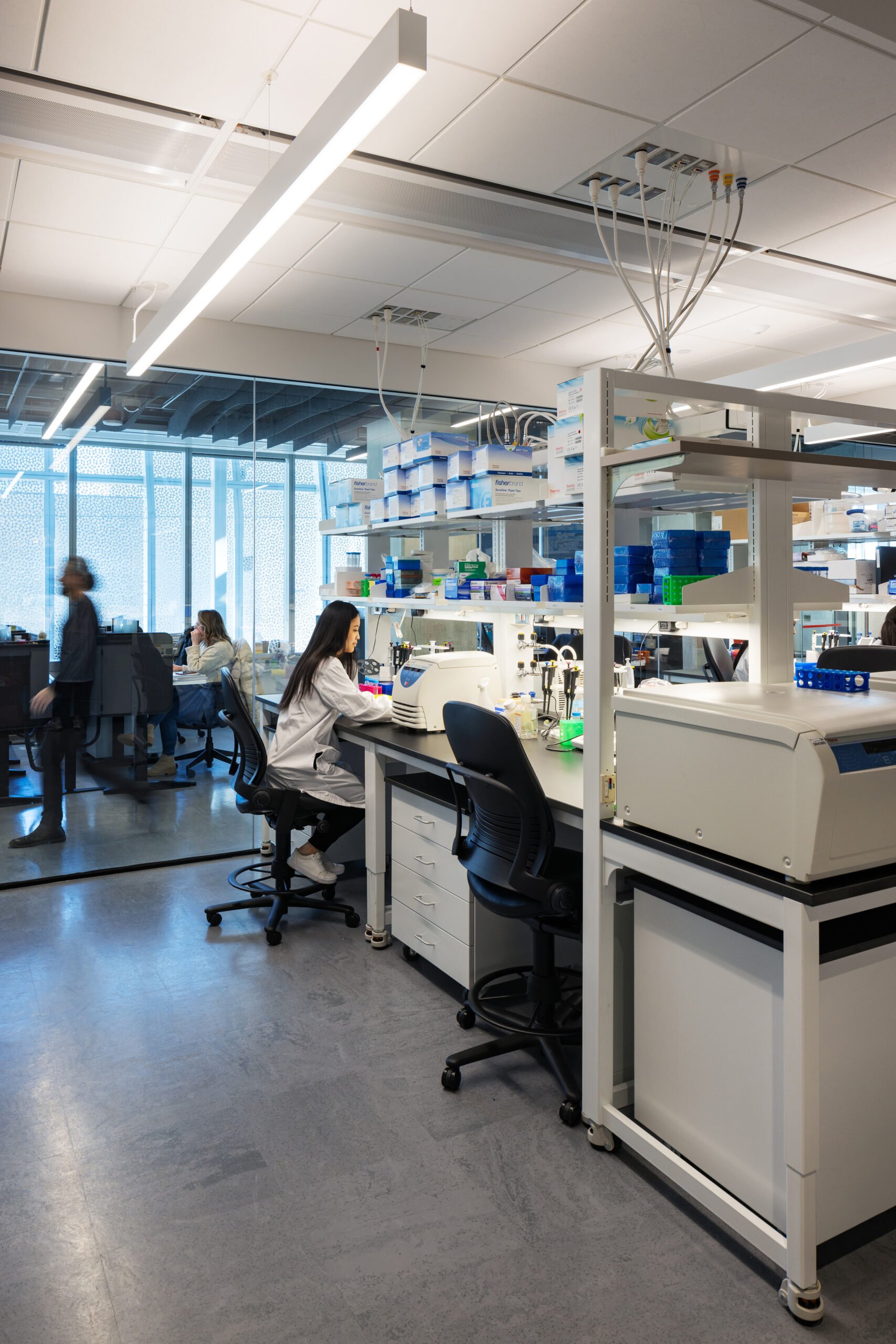
The floors employ a programmatic strategy known as risk-based zoning, in which each floor plate forms its own unified research environment with a once-through air system, rather than relying on traditional wet and dry lab classifications.
“By minimizing the risk of contaminant circulation, a once-through air system plays a crucial role in safeguarding occupant health,” says Anisha Kothari, HDR principal of laboratory planning.
The research floor plates are segregated into three zones. Low-risk zones house computational and collaborative areas, as well as ideation spaces along the perimeter; moderate-risk zones contain traditional open lab space for research; and high-risk zones are enclosed at the core for heightened safety and environmental control. The high-risk zones can accommodate elevated heat output, noise levels, and containment within a compact footprint.
The mechanical system introduces outside air at a low flow rate in the lower zones and cascades it to the higher zones, supplementing as needed and contributing to energy efficiency across work areas.
Combined with the solar heat gain reduction of the facade, the risk-based zoning works to address Mayo Clinic’s goal of reducing the building’s energy use intensity by 30 percent compared with baseline buildings of the same size.

Would you like to comment on this article? Send your thoughts to: [email protected]
- No tags selected
Latest

Products
5 Smart Designs That Boost Brain Function
Discover products that blend neuroscience and biophilic design to boost focus, reduce stress, and support brain health.

Profiles
This Studio is Reworking Indian Modernism by Hand
In Bangalore, Phantom Hands builds a model of sustainability that merges tradition, technology, and ethical design in a living workshop.