



August 26, 2025
3 Companies Giving Office Furniture a New Life
Every year, millions of office chairs, desks, and furnishings are discarded, with less than 2 percent of contract furniture granted a second life or properly recycled. The rest goes straight to landfills. In response, manufacturers are rethinking their role in the circular economy, creating programs that transform yesterday’s workplace waste into today’s sustainable solutions.
Haworth
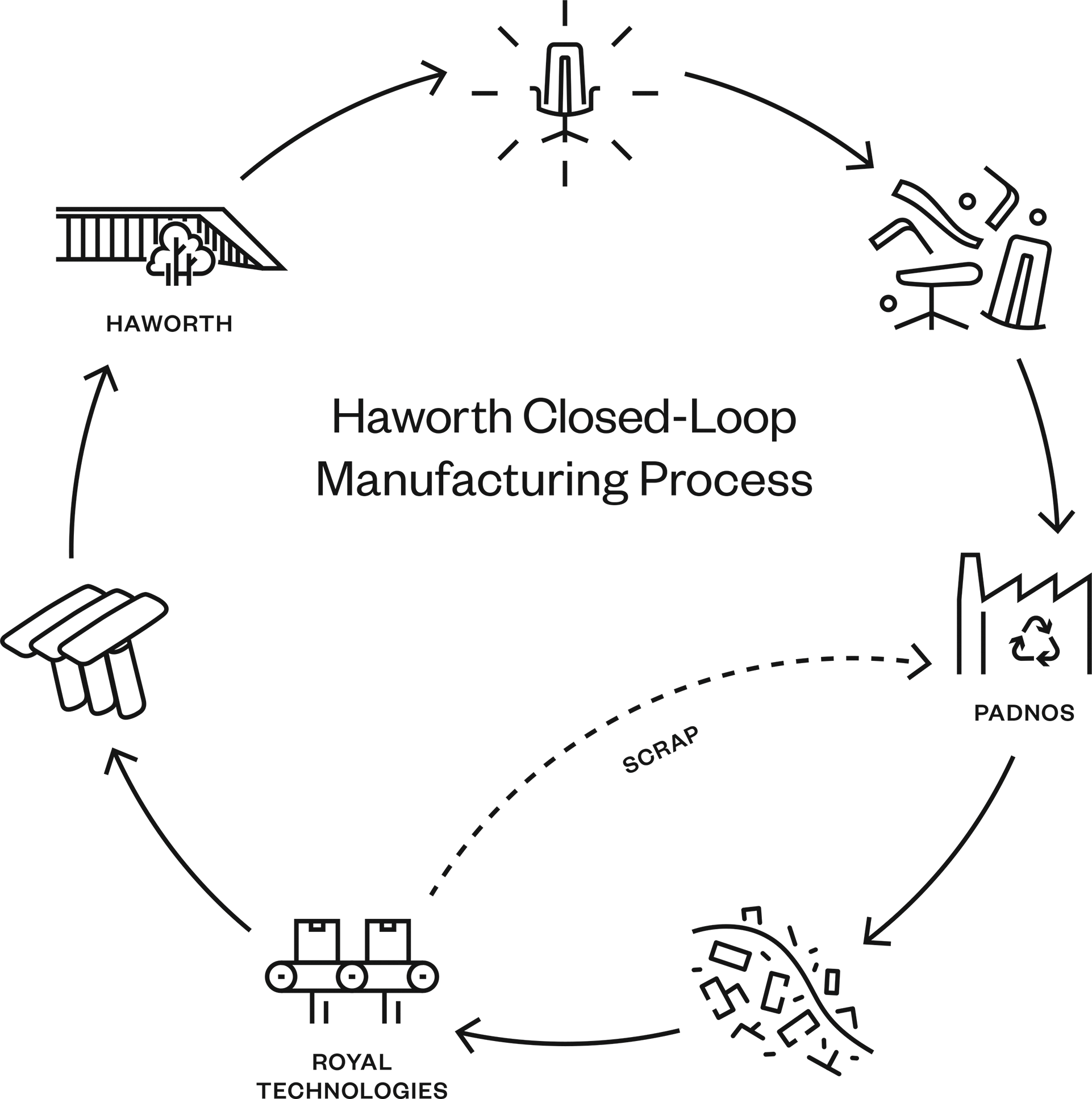
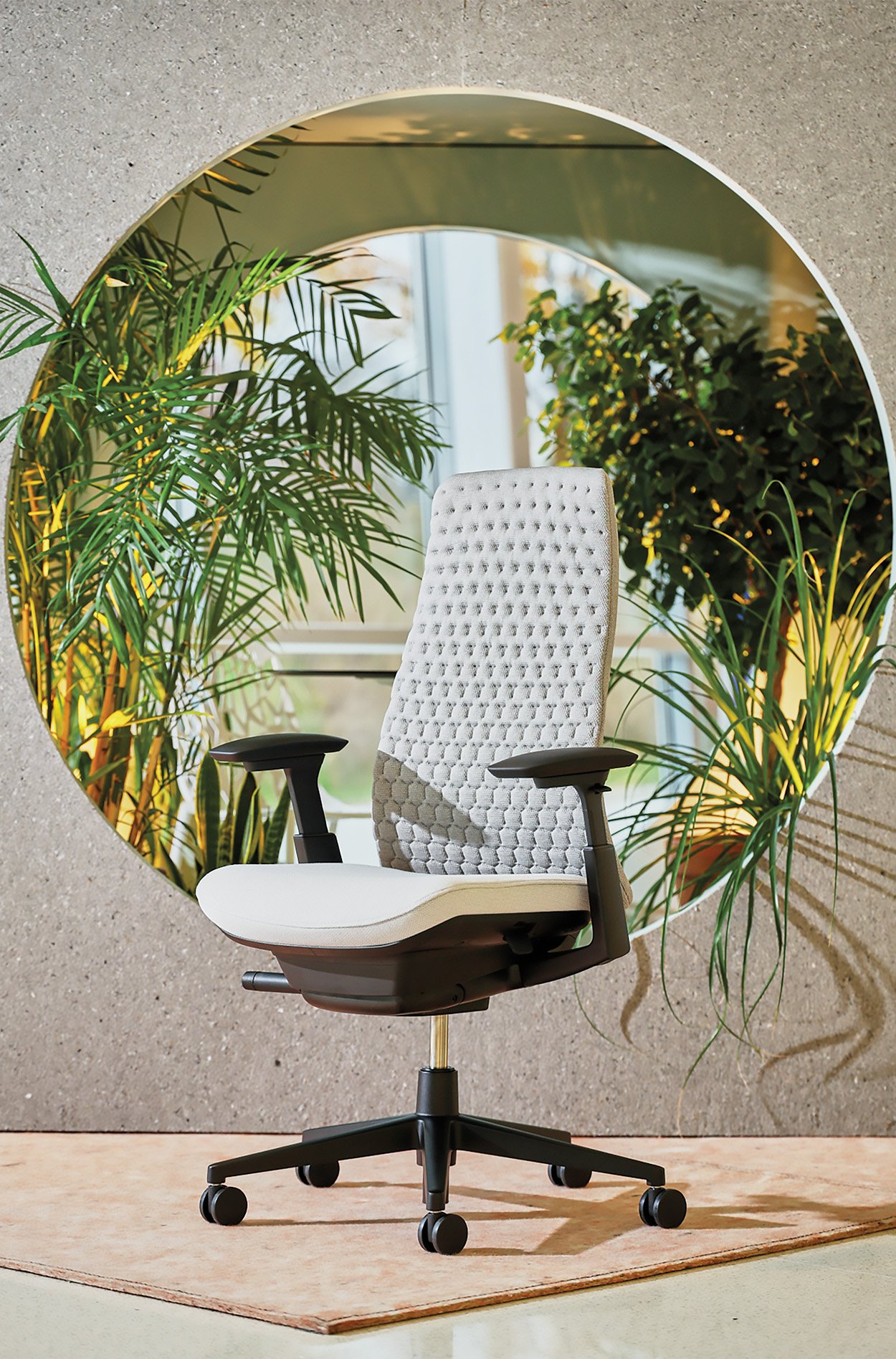
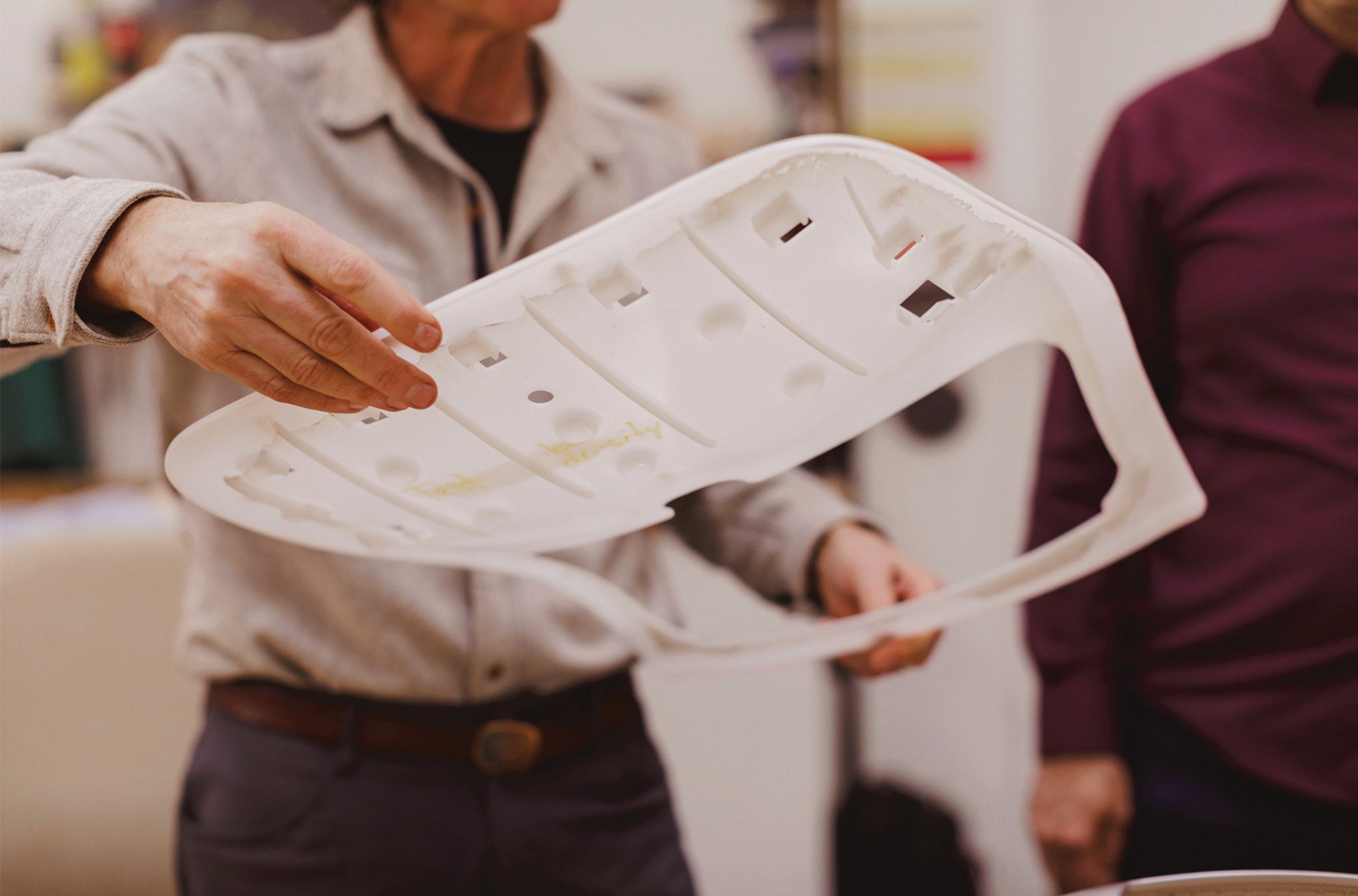
With the Fern chair as its first product to fully achieve closed-loop manufacturing, Haworth is proving that environmental responsibility and ergonomic excellence go hand in hand. The process reuses plastic generated during production stages and from end-of-life chairs to create new Fern models, optimizing existing resources and reducing waste to deliver brand-new products without sacrificing quality or increasing costs.
But Haworth’s closed-loop process goes beyond smart manufacturing—it reflects a broader vision of forging lasting business collaborations. “It’s important for others to understand our sustainability journey. It’s not just about Haworth. It’s also about bringing our suppliers and community along with us,” notes Katie Chapman, senior sustainability engineer. One breakthrough, for instance, was connecting injection molded plastics manufacturer Royal Technologies with recycler Padnos, so that scrap plastics could be processed. “This was a great step in the direction of involving the rest of our supply chain and partners in Haworth’s sustainability journey to help them advance theirs as well.”
By embedding closed-loop principles into its core offering and then expanding these practices across more products, Haworth is not only reducing its carbon footprint but also empowering its entire network to move toward a more sustainable future.
Steelcase
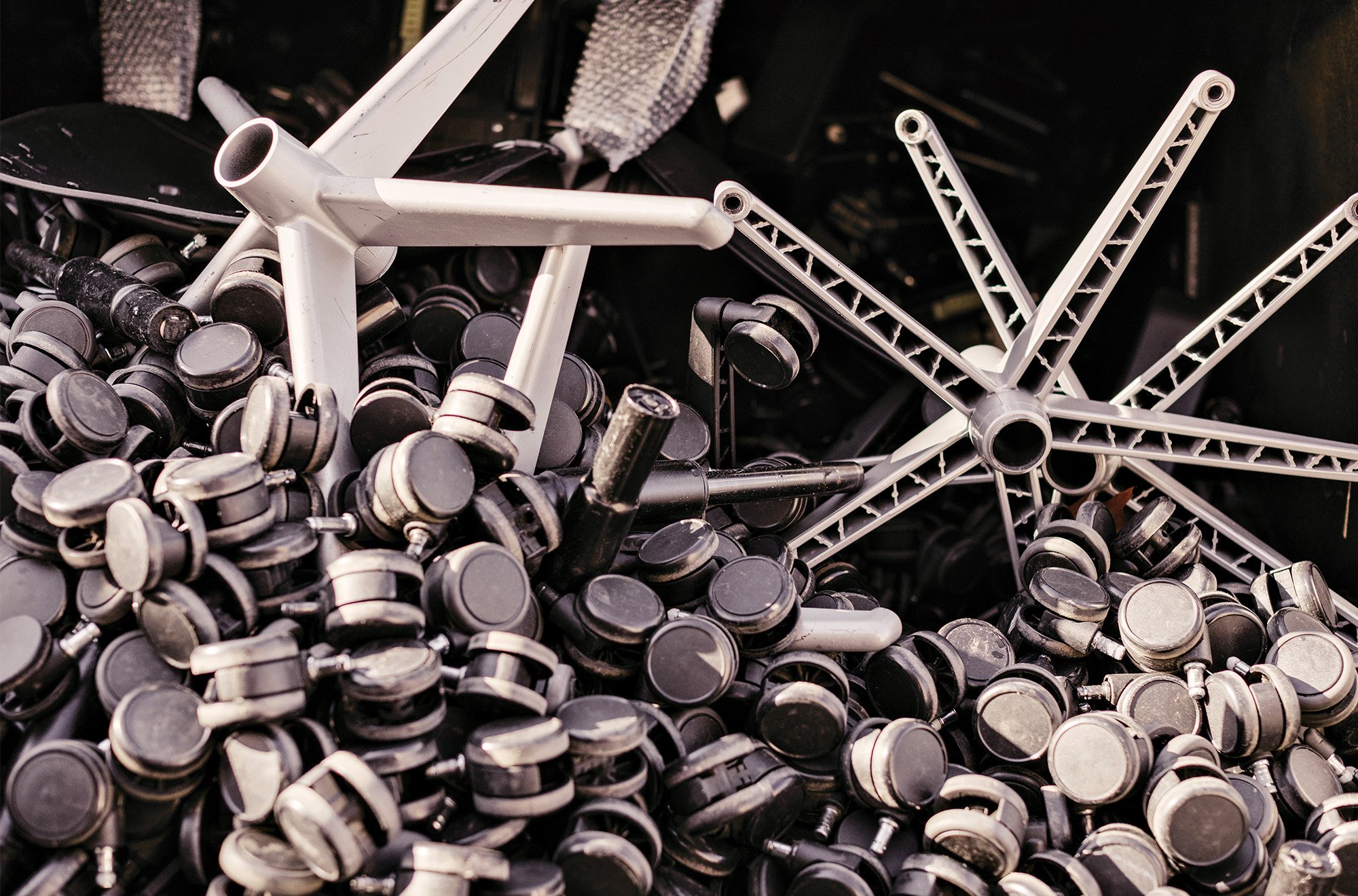
A pioneer in design for disassembly, Steelcase is taking the next step with its bold Circular by Steelcase program. This initiative aims to give products a second life and redefine sustainability in the workplace. Instead of conforming to industry norms, Steelcase is designing for longevity, repair, remanufacture, and recycling at every stage of a product’s life cycle. Through this program, worn or damaged chairs—from lines such as Gesture, Leap, and Amia—are disassembled, refurbished, and returned to clients with less than half the carbon emissions of a new product, plus a full 12-year warranty.
But this shift is more than operational—it’s a new way of collaborating with clients and industry partners. “Circular by Steelcase provides our customers with a range of solutions when it’s time for a change,” says Kaila Bryzgalski, product sustainability marketing manager. “Just like it extends the life of our products, Circular by Steelcase is helping us extend the life of our client interactions! It’s a way to find new value.”
The company’s commitment to circularity is also central to its path to net zero by 2050. “Designing for circularity is critical to our future success and an area to focus our innovation efforts right now,” adds Michael Held, vice president of global design. In a world where the carbon impact of repeated interior renovations can eclipse that of a building’s structure, Steelcase’s approach signals a necessary industry change—one that values reuse, recycling, remaking, and a future where furniture never becomes waste.
Flokk
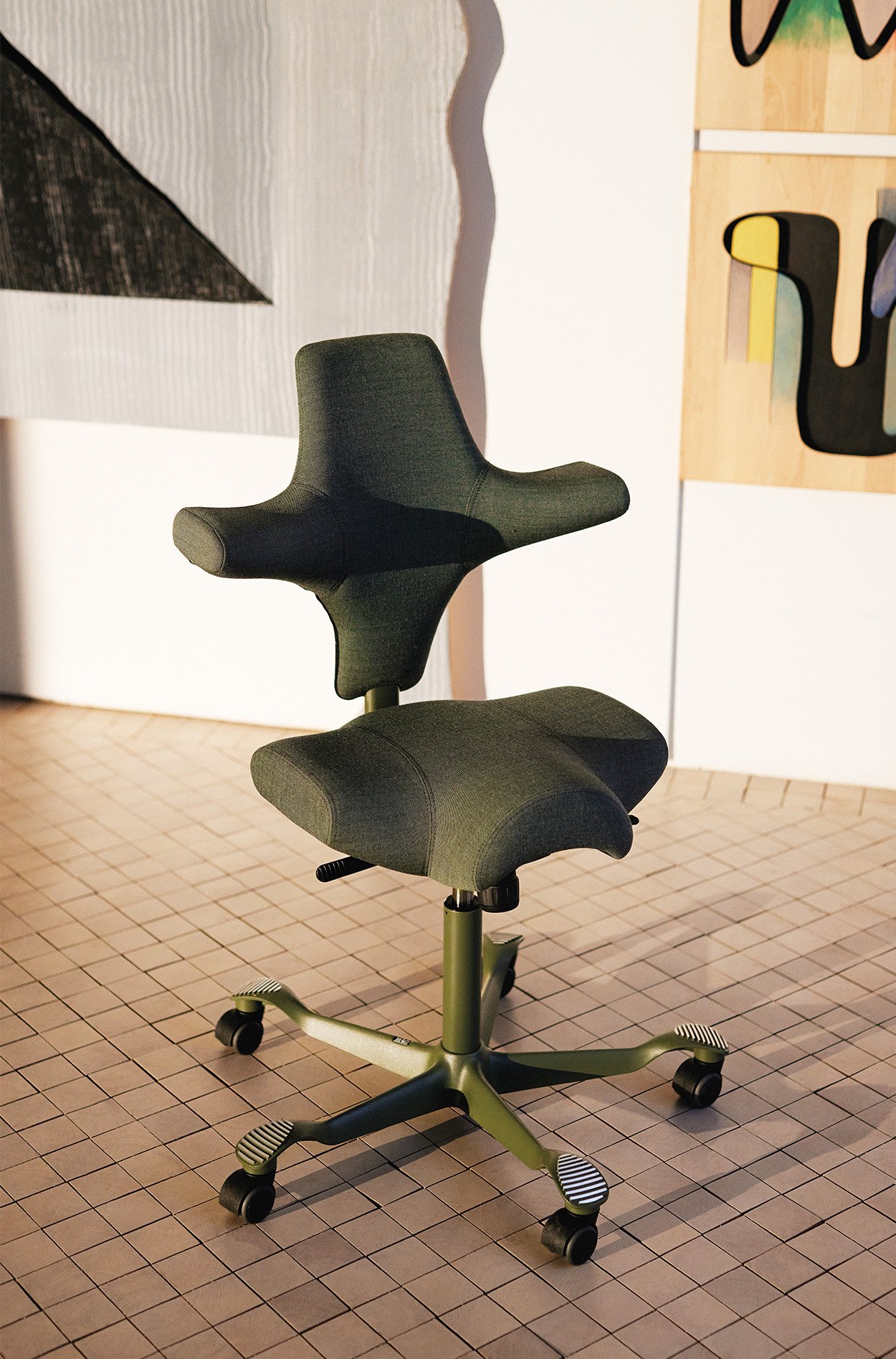
Flokk, the parent company behind the renowned HÅG Capisco chair, has reimagined its design icon in a limited-edition collection made entirely from recycled materials. “By including recycled components in such an iconic product, we are signaling that sustainability and high performance can coexist,” says Henning Karlsrud, CEO of Flokk. “It sets a precedent for other product lines and reinforces our internal sustainability culture. This move also serves as concrete evidence that it is possible to facilitate the change from virgin to recycled materials in existing designs.”
This shift has also deepened Flokk’s relationships with supply chain partners, sparking new collaborations to develop new sourcing methods and enhance material traceability. By keeping production close to key markets and prioritizing local suppliers, Flokk is cutting transportation emissions while building resilience and transparency throughout its value chain. The result is a chair that’s as sustainable as it is iconic—and a business model that’s paving the way for a circular future.
Would you like to comment on this article? Send your thoughts to: [email protected]
Latest

Viewpoints
The End of Net Zero as We Know It
Architect and climate strategist Anthony Brower explains how the current language of Net Zero is a “good idea worn thin by its own optimism.”
Products
Feria Hábitat València 2025 Exhibits the Best of Spanish Craft and Sustainable Design
Despite a delayed opening due to weather, the Valencian community’s annual furniture show returned with record numbers.