


August 19, 2025
For Tallulah D’Silva, Architecture Is an Ecosystem
Materiality as Method
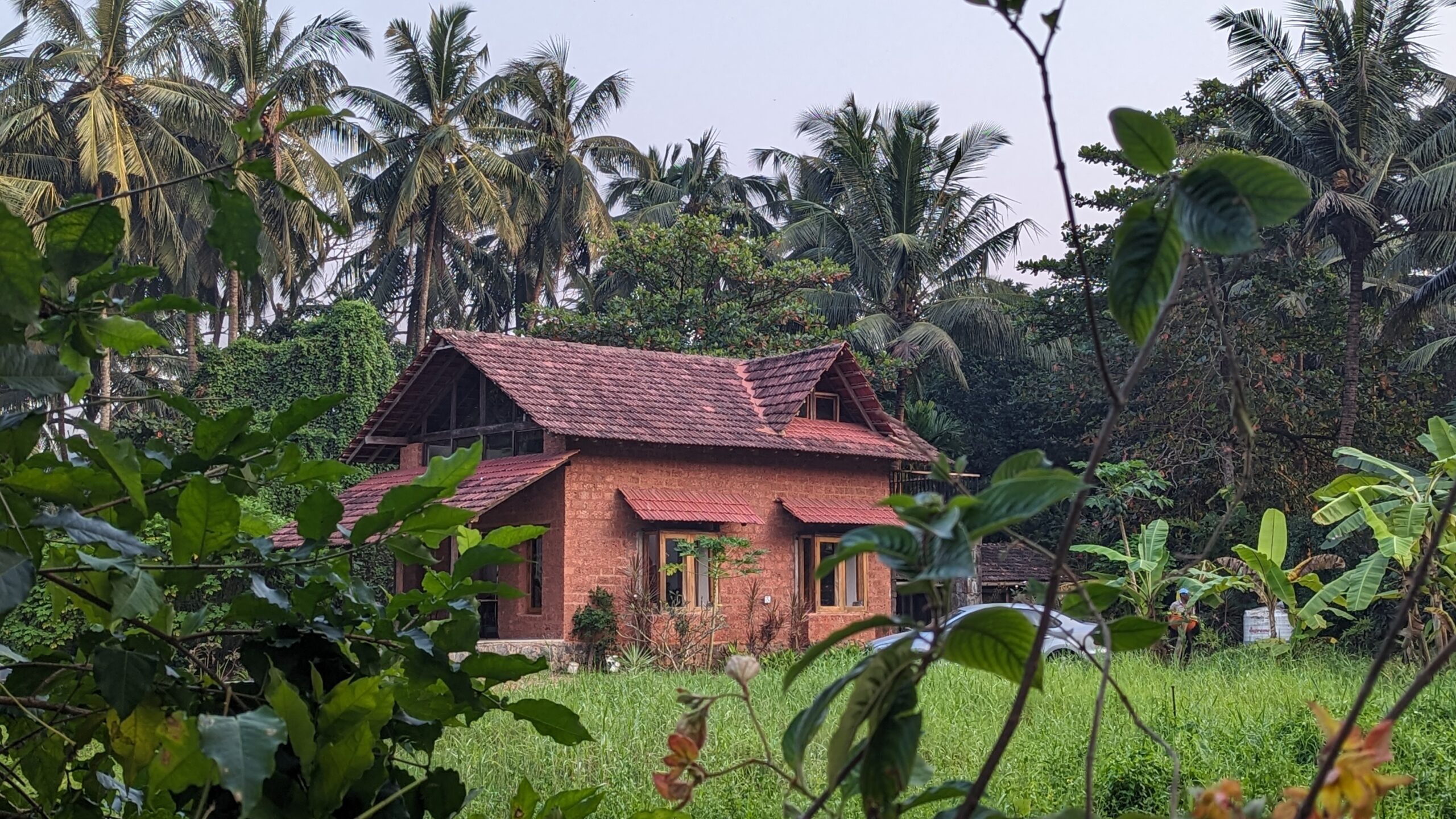
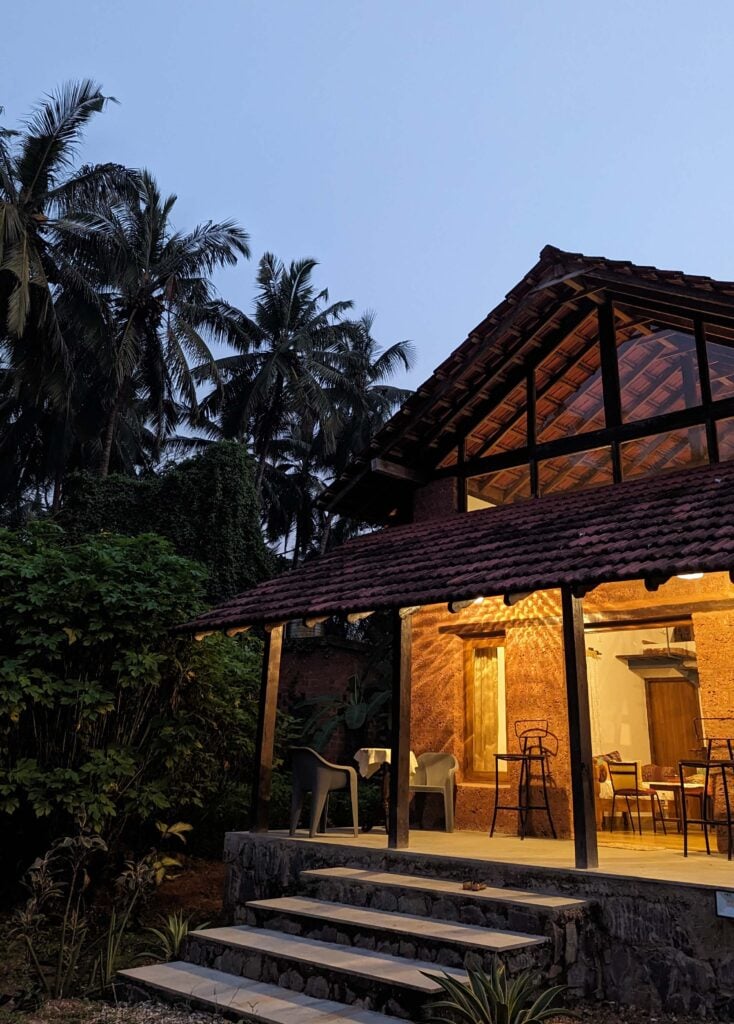
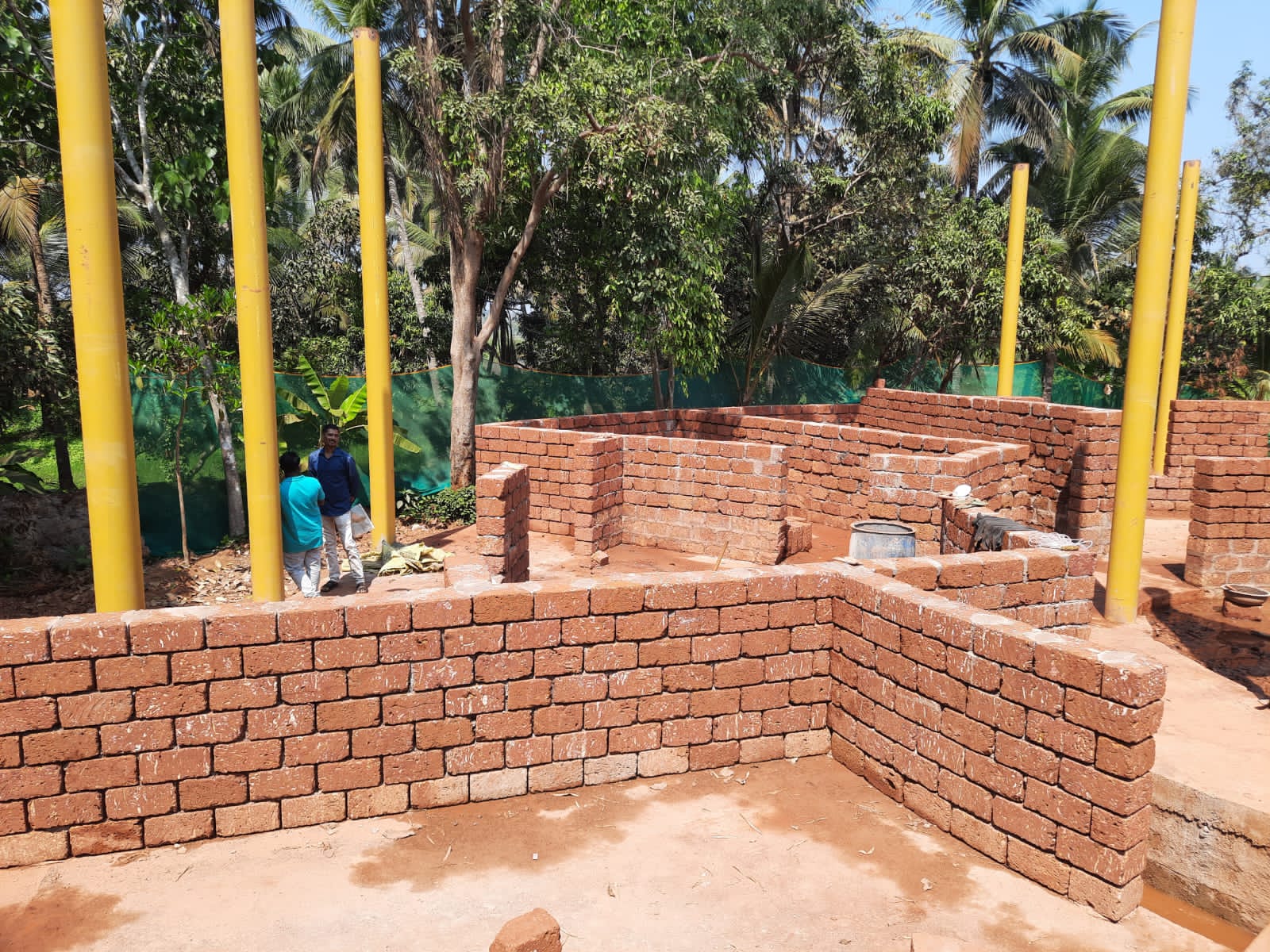
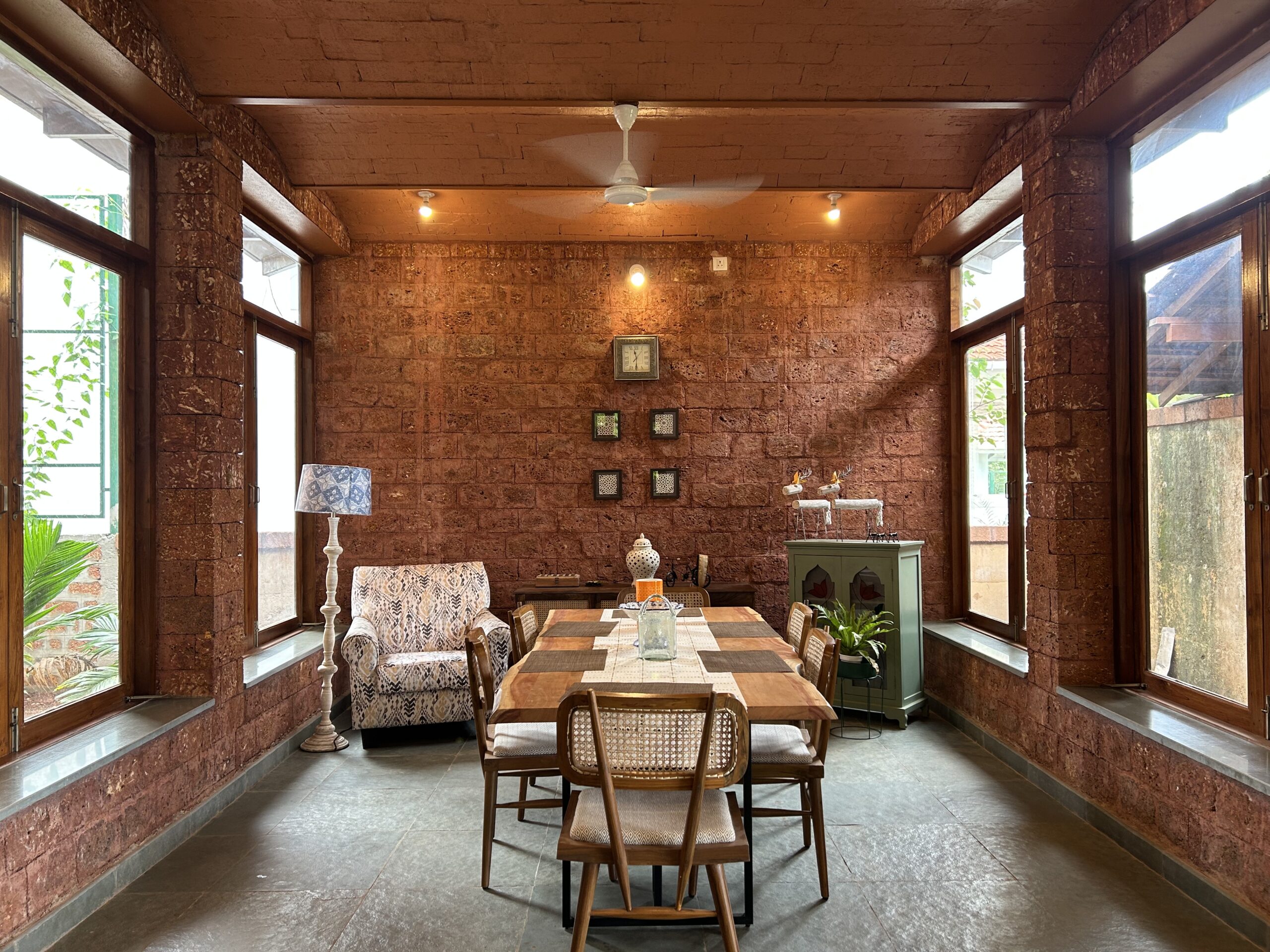
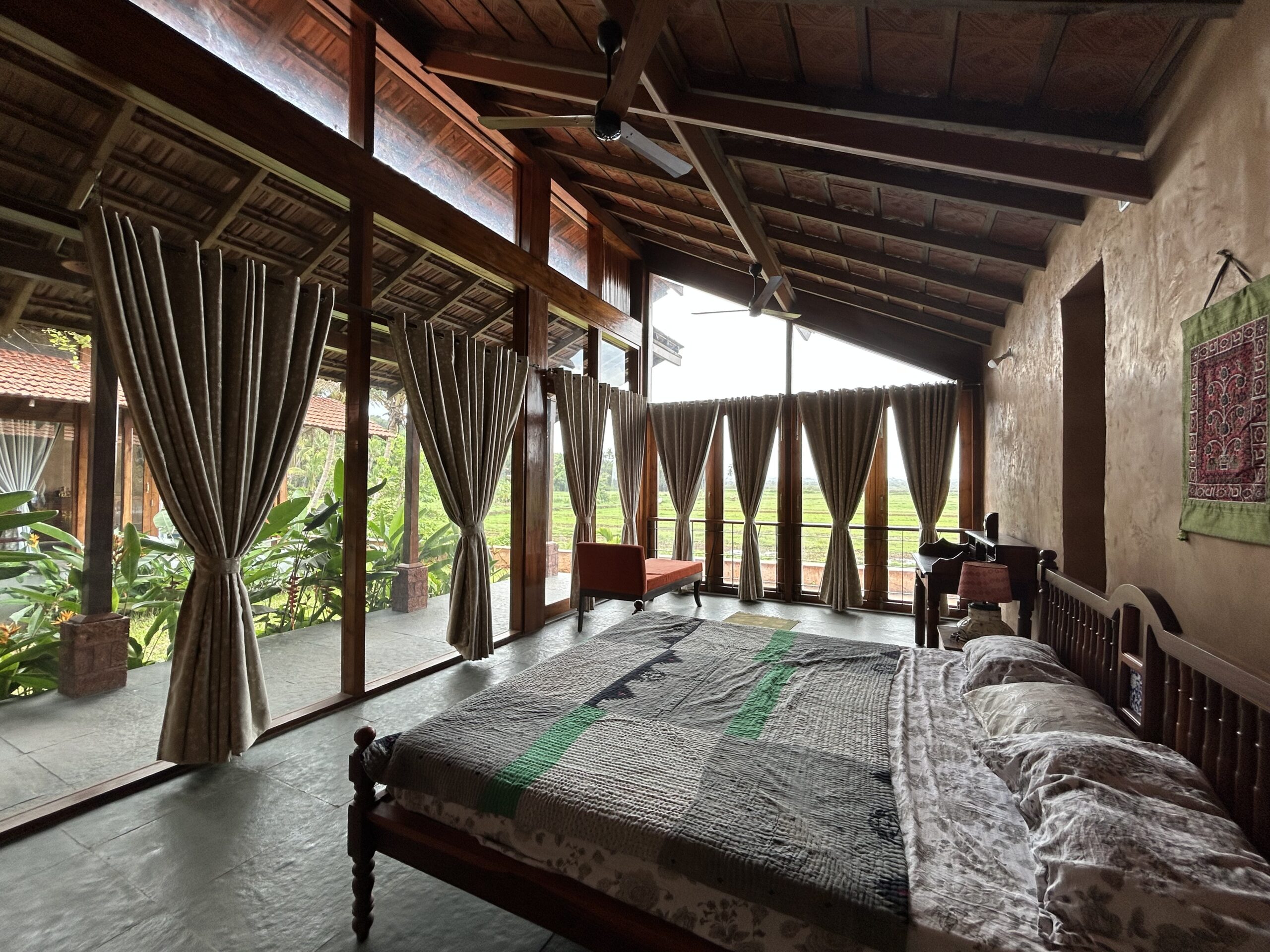
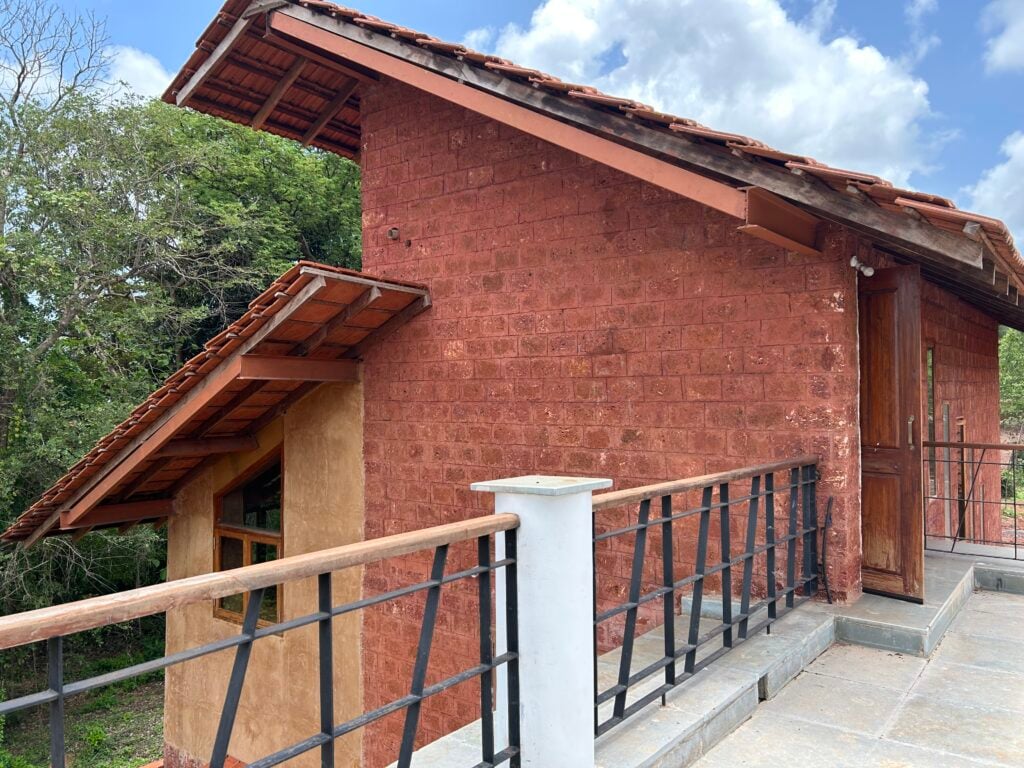
D’Silva harvests her palette from the ground itself. To her, material is never a moodboard—it’s an ethical and ecological imperative. To build a home in Panjim, she used reddish laterite that was quarried meters from the build site. By cutting it parallel to its natural grain, she revealed porous textures that allow the material to breathe and cool interior spaces through humid summers. A coconut tree, too venerable to fell, becomes the house’s structural pivot—its fronds forming a living canopy. There is no false ceiling or mechanical cooling: linear arched vaults made of brick support a load-bearing structure, deep overhangs redirect sun, and sloped roofs channel monsoon torrents into recharge pits.
At a narrow riverbank plot in Mapusa, local stone and stabilized earth blocks snake along the water’s edge, their apertures aligned not to a grid but to the river’s shifting light. Ventilation channels lined with vetiver and Tulsi guide breezes across living rooms, turning daily rituals into climatic strategy.
Iteration as Care
While many studios rush from CAD to concrete, D’Silva’s office is a living lab. “The site is a living-breathing canvas, its survey must include technical study across hours of the day and if possible also changing season. When possible, to understand long-term seasonal patterns of wind, rain, sun, vegetation, flooding, it becomes essential to talk to people who have witnessed and navigated these shifts,” she explains. “Survey means surveying the topography and its people. There is a lot of wisdom in lived experiences”.
D’Silva redraws constantly. When seasonal soil tests reveal unexpected clay swelling, she revises footing depths. When wind tunnels through open courtyards more fiercely than calculated, she adjusts screen patterns.
“Architects get too attached to their lines on paper, reluctant to revise and redo, let alone discard and start over,” D’Silva says. “Each revision is proof that a place remains alive: time itself becomes a design tool, and change is a sign of fidelity, not failure.”
As a professor at the Goa College of Architecture, D’Silva translates her field methods into pedagogy. Render-heavy presentations give way to material labs: students dig earth pits, test its porosity, and sketch sections on site. Modeling precedes modeling, hands make before computers render, and in-situ experimentation triumphs all other methods. The takeaway is unambiguous: build less, build slower, build with care. In unlearning the fetish of novelty, young architects discover that reduction can be more radical than reinvention, and to reduce with critical care is an innovative method in itself.
Architecture as Commons
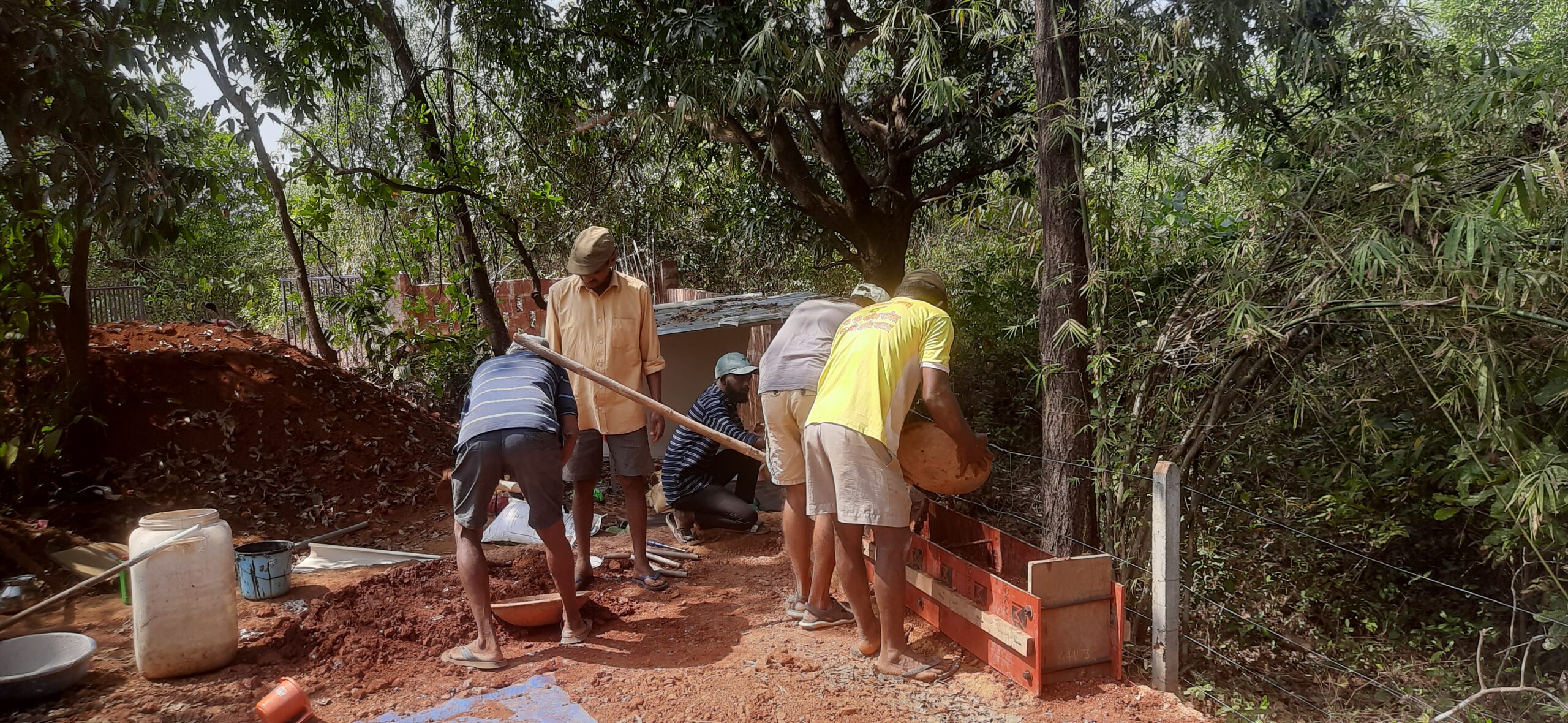
D’Silva decouples design from the solitary architect myth. Her studio operates less like a siloed practice and more like a traveling laboratory. Clients, local masons, ecology students, and curious neighbors gather for on-site workshops. She notes, “Anyone interested in building eco-resilient spaces can and should have a way to be part of the practice.”
In participatory builds, novices learn to read stone strata as design data, artisans share ancestral techniques, and children plant indigenous saplings for shade and soil health. This decentering of the “star architect” disrupts caste-class hierarchies that render vernacular knowledge invisible, while reclaiming building as a shared cultural practice.
Reverence and Refusal
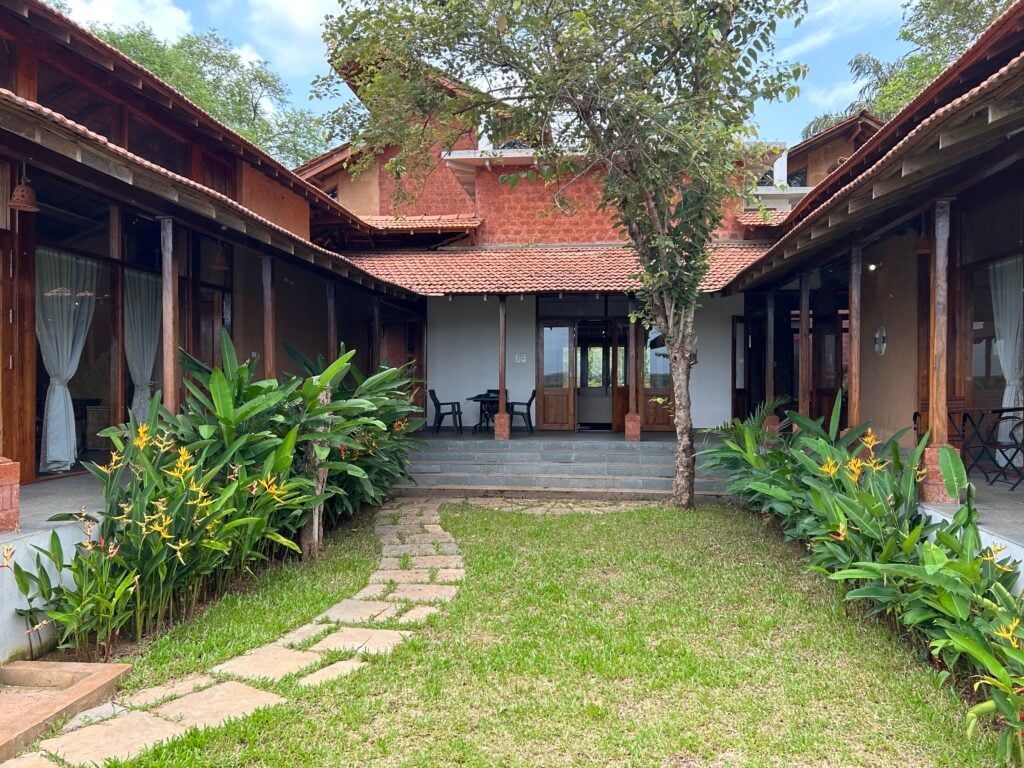
At the heart of D’Silva’s work lies reverence—for soil’s subtle resistance, for community knowledge, for climate’s force. And refusal—a refusal to overdraw, to dominate, to extract without reciprocity. She does not promise to reverse Goa’s ecological decline. Instead, she asks how harm might be minimized, how accountability can be an imperative, and how buildings can belong materially and culturally. Each home remembers what came before and makes room for what may follow.
In an era that crowns architectural sustainability with certificates, tech-heavy interventions, and newness (in material, production, systems) as a solution, D’Silva reminds us that innovation often arises from constraint. When every material is local, every beam hand-sourced, and every line redrawn in response to earth and wind, architecture becomes less object than ecosystem—an eloquent testament to the radical potential of restraint.
Her work demonstrates a radical truth for global design audiences: real sustainability begins not with grand gestures, but with deep, iterative engagement with place.
Would you like to comment on this article? Send your thoughts to: [email protected]
Latest

Viewpoints
The End of Net Zero as We Know It
Architect and climate strategist Anthony Brower explains how the current language of Net Zero is a “good idea worn thin by its own optimism.”
Products
Feria Hábitat València 2025 Exhibits the Best of Spanish Craft and Sustainable Design
Despite a delayed opening due to weather, the Valencian community’s annual furniture show returned with record numbers.