



August 13, 2025
Can Rarify Revolutionize the Design Industry?
As a child, Rarify cofounder David Rosenwasser spent hours searching eBay for good deals with the cash gifted to him on Hanukkah and birthdays. He quickly understood that by flipping his finds and becoming an expert in the secondhand market, he could gain an edge. Growing up in rural Pennsylvania, he encountered an Eames Lounger, which shaped his interest in furniture design. He saved up enough money to purchase his first LCW chair at age 11.
As he got older, Rosenwasser began borrowing his parents’ car to scour the surrounding region for midcentury American designs. With resale profits, he purchased more and more, slowly but surely amassing a robust collection. By the end of high school, he had secured a deal with a Filipino purveyor seeking out pieces in this canon that brought in enough seed capital to establish a business. This was the genesis of the original vintage-only collection, called “D Rose Mod.” That collection grew over the years and is now part of the Rarify ecosystem—an independent, education-oriented e-commerce platform that would eventually take the industry by storm.

The Inspiration Behind Rarify
Cofounder Jeremy Bilotti came at it in a slightly different way. His creative interest—matching a proclivity for science and technology—stemmed from taking painting lessons with an artist whose “modernist oasis” home became a vital source of inspiration.
While both studied architecture at Cornell University, the kindred spirits found every excuse to collaborate. It was a time when new digital processes were beginning to challenge traditional practices. “We were learning about modernism during the day and publishing research papers on computational design and fabrication technology at night,” Bilotti says. Through this self-initiated transdisciplinary approach, the pair cultivated an appreciation for research and education, principles that would become essential to Rarify’s business model.
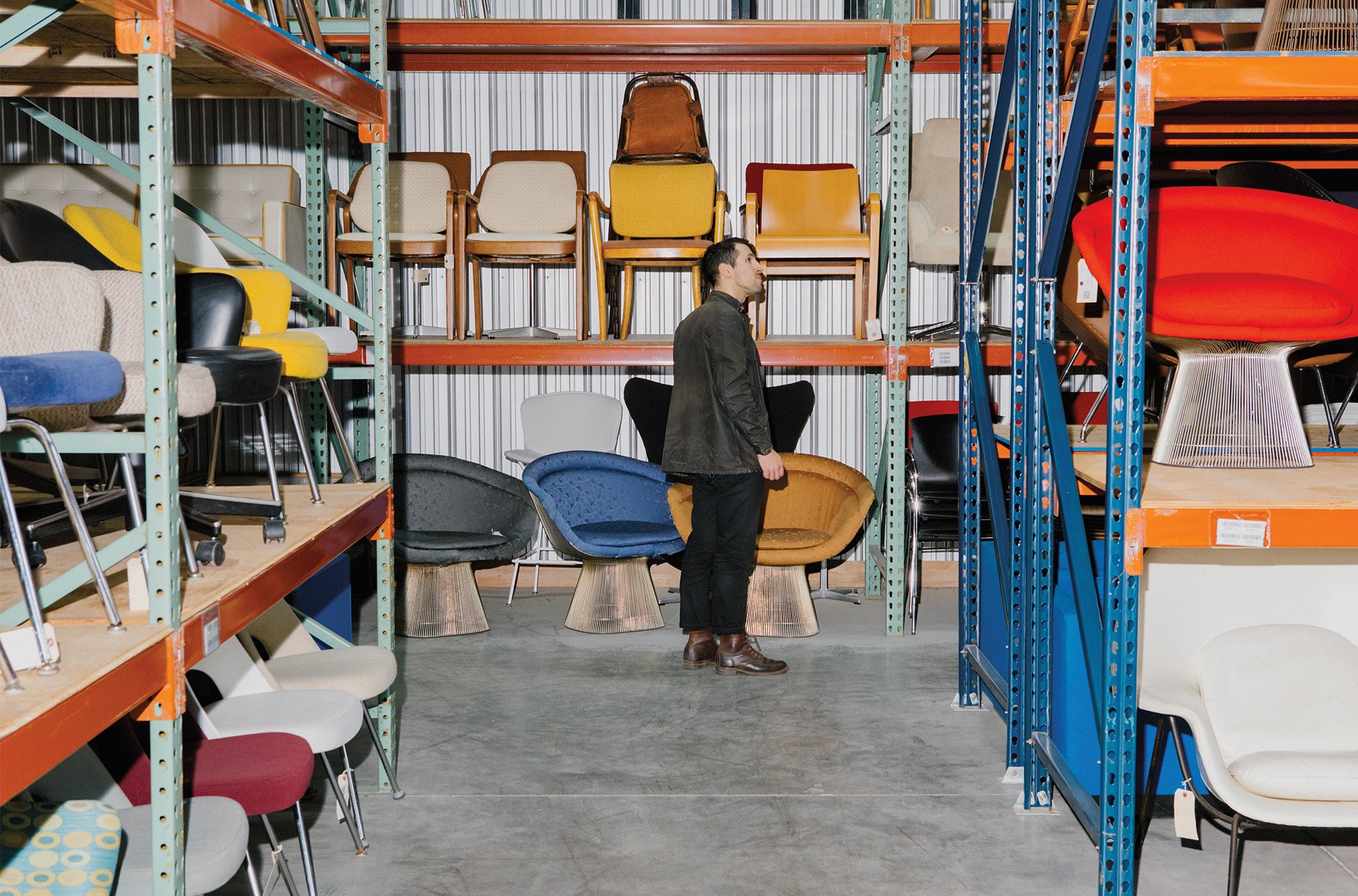
During grad school—Rosenwasser at the Harvard Graduate School of Design and Bilotti at MIT—the collaborators garnered recognition for their praxis-based endeavors, exploring the intersection of history, commerce, computer science, and emergent manufacturing. A suggestion by designer Stephen Burks—guest critiquing at Harvard at the time—solidified the duo’s next step: establishing Rarify as a fully fledged e-commerce platform.
“We wanted to translate David’s expansive collection—which continued to grow in the background and expand beyond just American design—through a technological and commercial lens,” Bilotti adds. “It was never about nostalgia but rather investigating and communicating the innovations that defined the field throughout the 20th century and how they led to the designs we have today.”


Rarify’s Organic Rise & Traction
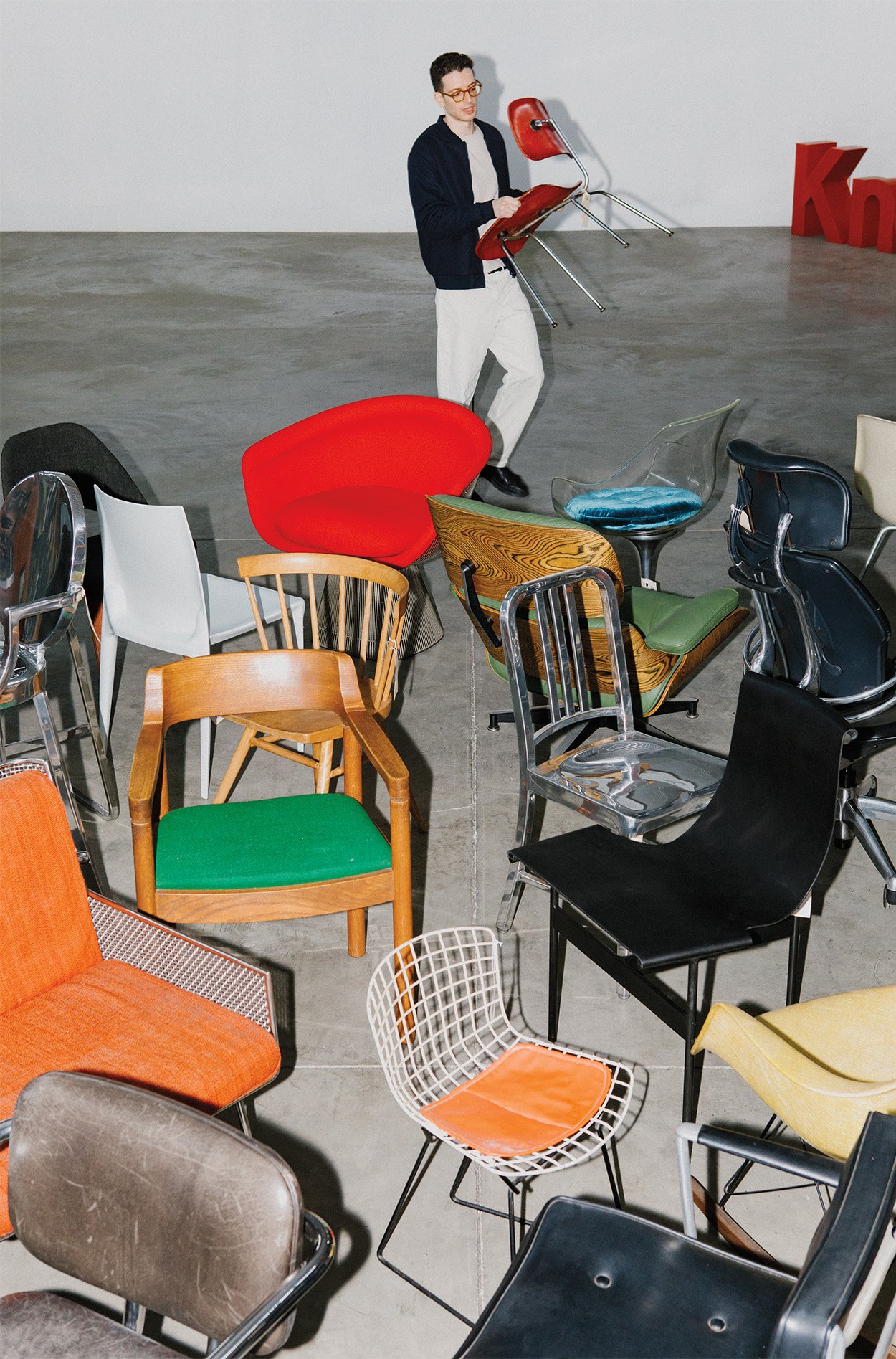
Instagram became a powerful platform for attracting a younger audience and standing out. Rarify organically generated a following of over 200,000, with its account featuring reels that explore design, cultural significance, and technical innovation. Rosenwasser delves into 20th century design, while Bilotti highlights more contemporary pieces. This free, intuitive form of marketing reflects the duo’s quality-oriented mindset. “By prioritizing documentation as well as refurbishment and repair, we’re comfortable with the idea that a piece could be with us for months or years until it finds the right project or home,” Rosenwasser says.
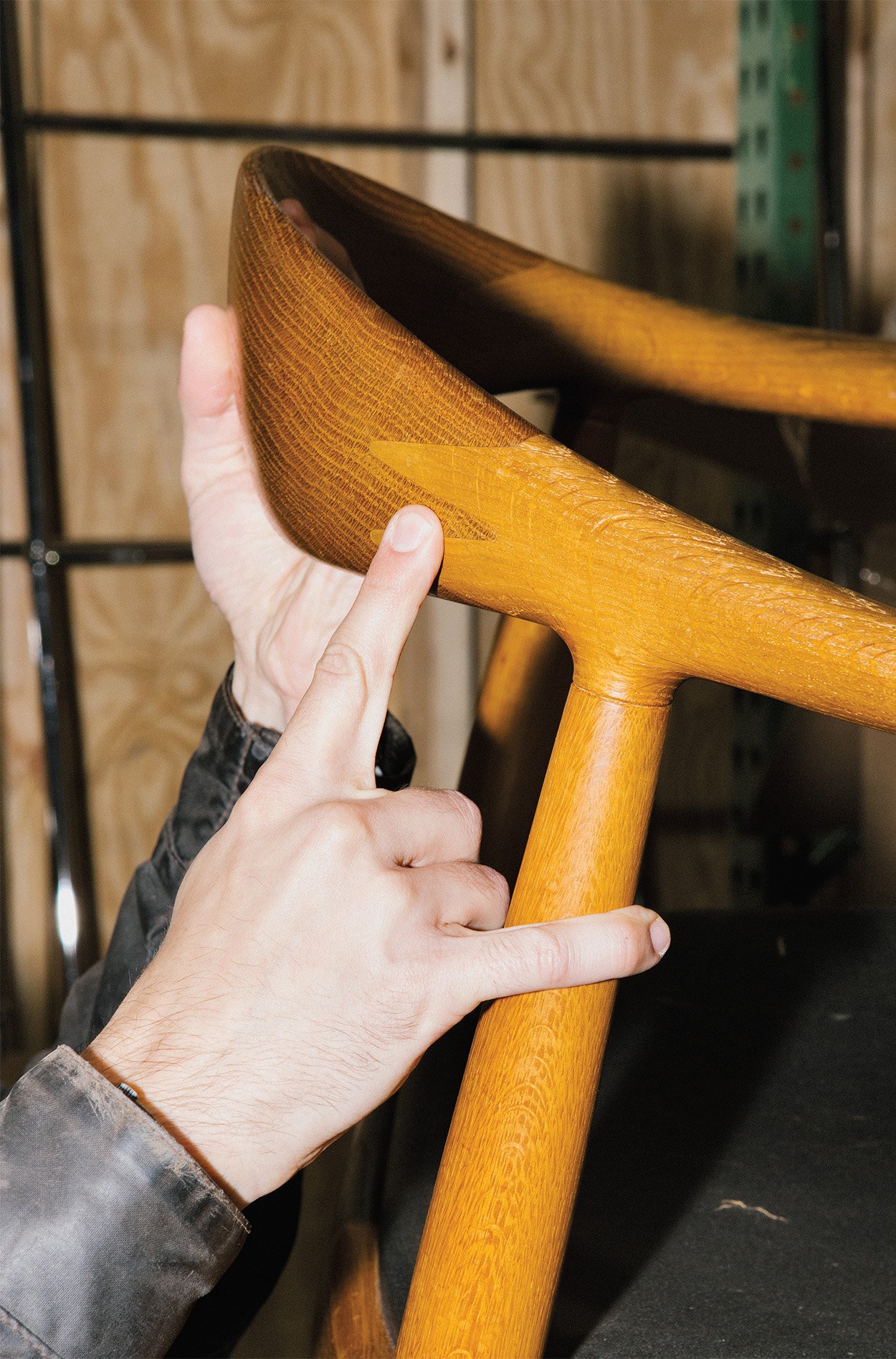
Restoration is a big part of the equation and is enacted on a case-by-case basis. Value, collectability, and the cost involved in carrying out such interventions factor into the decision-making, as does the longevity of a piece and whether it has the potential of becoming a sought-after classic in the future. The repair process might simply consist of steam cleaning upholstery. It might also require much more labor-intensive refinishing of various wooden and metal components.
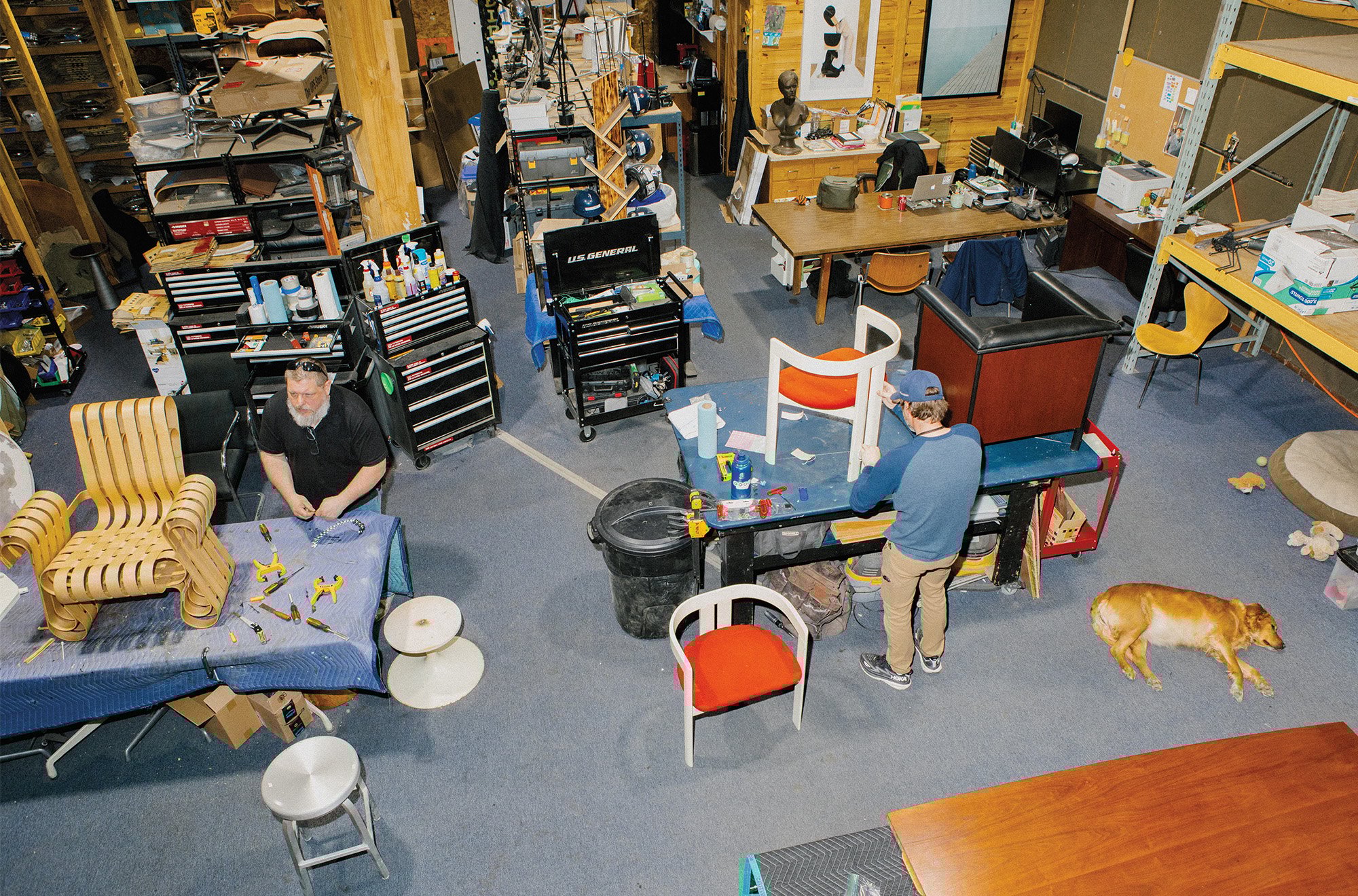
“Since most of what we work on was originally manufactured in a factory environment, there is a beauty to the consistency of the original production,” Rosenwasser adds. “This means that we can become experts in particular products after we deal with dozens or hundreds of them. Rarify acts as a curator, collector, and perhaps tastemaker in the pieces we purvey.”
Rethinking Restoration for the Modern Market
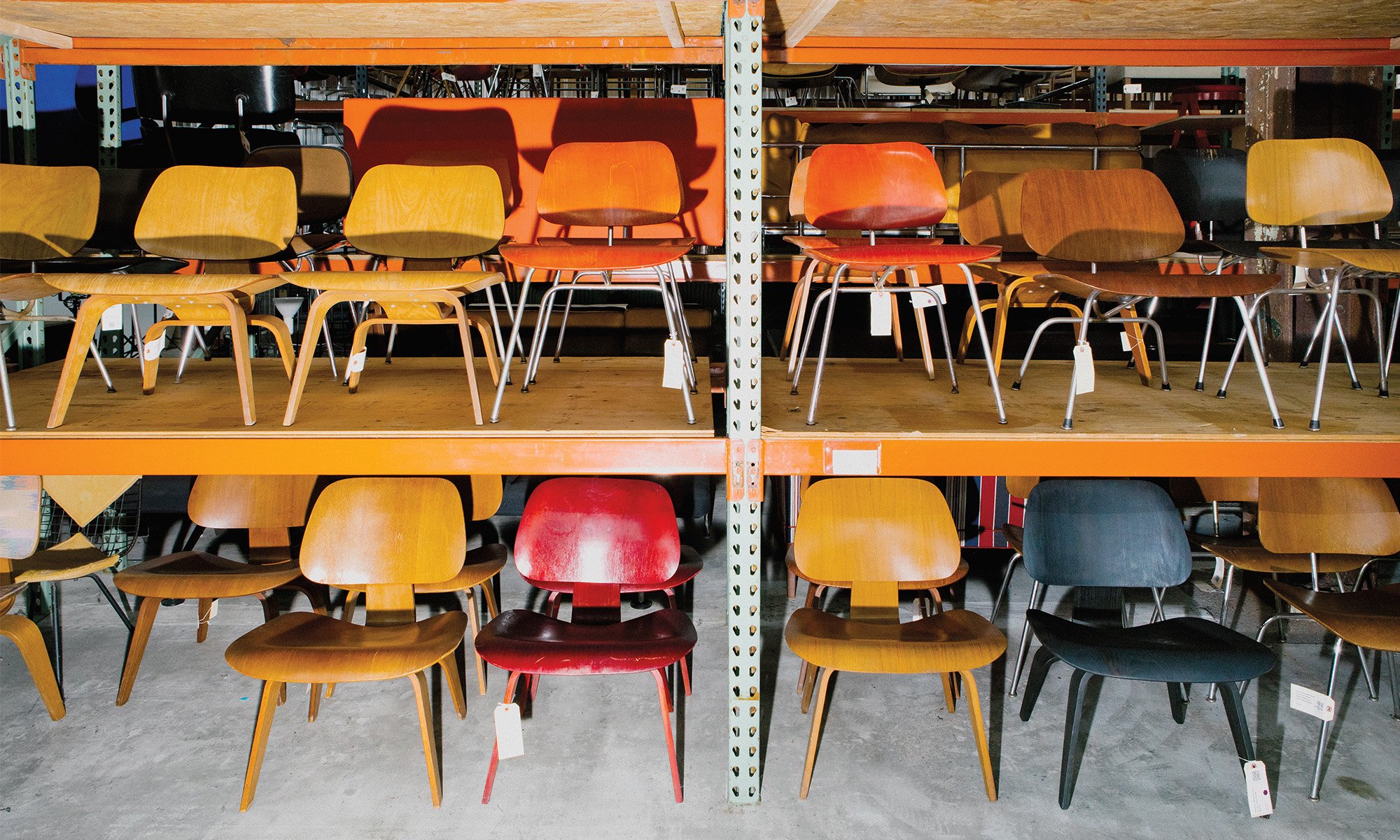
One area in which the company specializes is in the work of Ray and Charles Eames. Across 80,000 square feet of workshops, warehouses, and a recently opened Philadelphia flagship (established to meet the demand of a growing market in the city), Rarify holds 1,150 Aluminum Group chairs. These count among thousands of pieces by other historic and contemporary designers, such as Naoto Fukasawa, Sabine Marcelis, and Konstantin Grcic.
For the cofounders, quality and quantity are by no means mutually exclusive. “In a given quarter, we take in multiple tractor trailer loads of material—incoming pieces are inventoried, assessed for cleaning or restoration when applicable, and professionally photographed on-site,” Rosenwasser explains. “Then we build out listings digitally and make sure that our information is accurate. For outgoing pieces, we have hundreds of shipments going out during that time as well.”

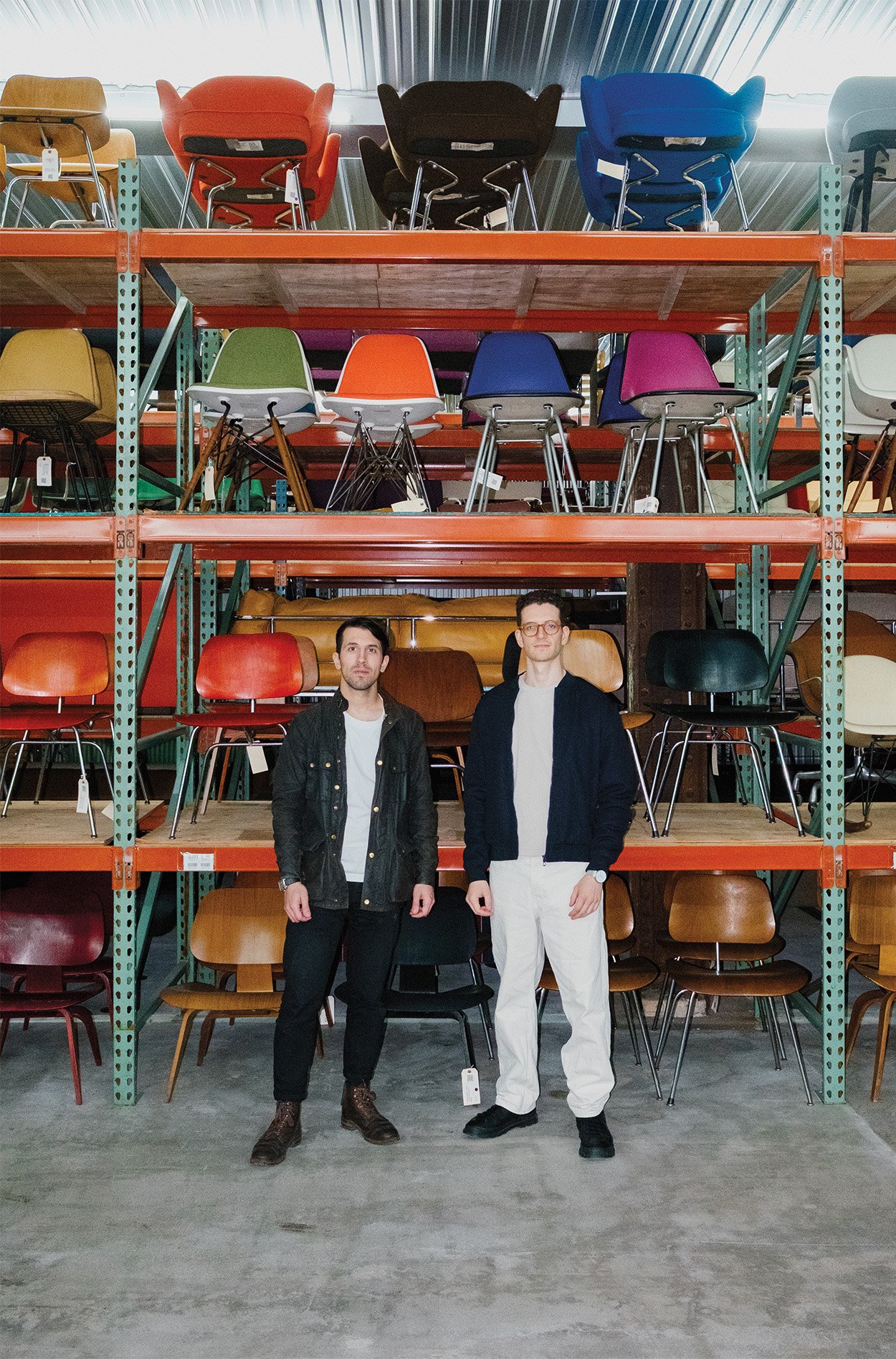
In just a few years of operation, Rarify has also built a formidable digital archive—an expansive network of more than 5 million interconnected data points, including details about the use of certain materials, specific hardware, and unique manufacturing techniques. Bilotti and Rosenwasser plan to make this resource public in the near future.
From a sustainability standpoint, the cofounders hope to demonstrate how this sheer volume of revamped and repurposed items could have a larger impact. “There’s a growing appetite to not see this material go to waste,” Bilotti says. “Architects, interior designers, and developers need to realize that it’s not ‘impossible’ [to outfit] an entire office building or home with used and vintage pieces. There are so many floors of corporate towers around the U.S. with two- to ten-year-old furniture that gets tossed out,” Rosenwasser concludes. “The beauty is, most clients could end up with higher quality products if they consider the alternative.”
Would you like to comment on this article? Send your thoughts to: [email protected]
Latest

Products
5 Smart Designs That Boost Brain Function
Discover products that blend neuroscience and biophilic design to boost focus, reduce stress, and support brain health.

Profiles
This Studio is Reworking Indian Modernism by Hand
In Bangalore, Phantom Hands builds a model of sustainability that merges tradition, technology, and ethical design in a living workshop.