



August 26, 2025
How Humanscale Is Navigating the Rocky Shoals of Sustainability
The path to circular design isn’t easy—but it’s essential. In this Q&A, Verda Alexander and Jon Strassner revisit their recent conversation on their Break Some Dishes podcast with Humanscale’s Jane Abernethy. The co-hosts share lessons on circularity, take-back programs, and the bold thinking needed to drive lasting change in sustainable design.
Verda Alexander: Wow, Jon, I’m still buzzing from our conversation with Jane Abernethy from Humanscale. What a fantastic episode! Six seasons into our podcast, and I think this one really stood out.
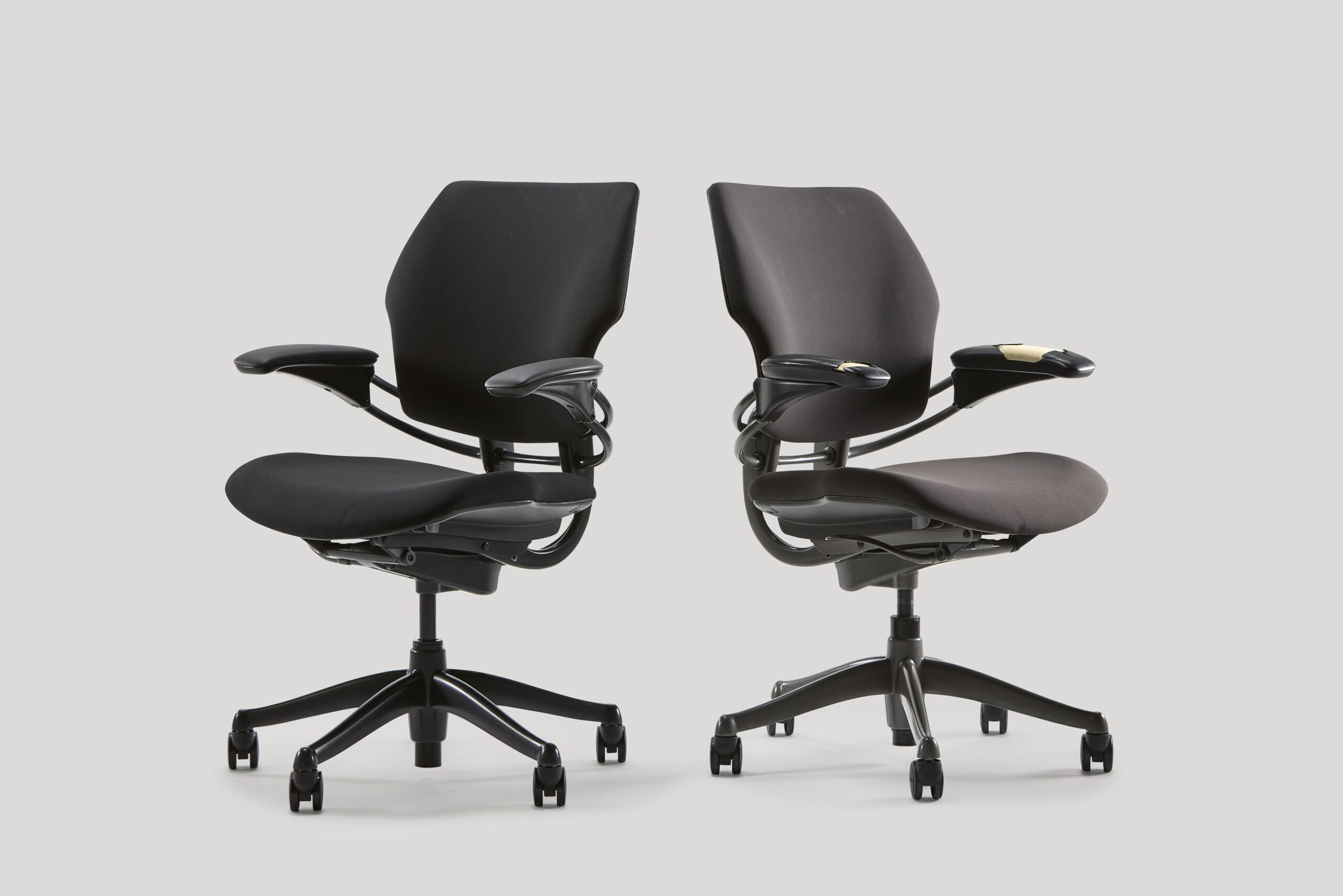
Jon Strassner: Agreed! And we’re lucky to have Humanscale as a presenting partner this season. They make beautifully designed, user intuitive workspace solutions. That’s my fancy way of saying great chairs, sit-stand desks, monitor arms…anything you need to interact with your technology in a more comfortable and functional way. I’m a big fan! We recently welcomed Jane Abernethy, Chief Sustainability Officer for Humanscale, to the show to talk about what it takes to shift from a linear to a circular model.
A Linear to Circular Shift
VA: Let’s start with that idea of circularity. For me, circularity is nature. In a forest, for example, nothing is wasted. I think of a fallen tree that becomes home to lots of critters, and then as it decomposes, creating nutrients for the soil and for a new tree to grow. Everything is part of a life-death-circle of life. That’s what circularity means to me: a closed-loop system where waste becomes life for something new.
Jon, how do we apply the concept of circularity to our design industry?
JS: I love your definition! You get right to the heart of it. Our current economy is built on a linear approach to consumption. We take resources, make products, and throw them away when they are worn out or out of fashion. Linear is bad, but it’s hard to change because our economy needs constant consumption to survive. In a circular economy, we work to keep products and materials out of the landfill. Consumers go out of their way to repair, refurbish, and remanufacture to extend a product’s life cycle. It takes more work. Manufacturers design products that are easily repairable, recyclable, and long-lasting, to ensure they stay out of landfills. That also takes more work. The journey to circularity is fraught with challenges that require innovative solutions and a shift in market readiness. I really experienced this first-hand at NeoCon this year, where Jenn Chen and I curated an exhibit on circularity called Rewritten.
VA: You worked at Humanscale for years, so I know you’ve seen the commitment firsthand. My first impression of the company was many years ago, when a rep convinced a client not to replace hundreds of monitor arms, and instead refurbish them. A company choosing sustainability over sales—that really stuck with me.
And since then, Humanscale has been leading the industry with Living Product Challenge certifications. But recently, you and I also learned about their leasing and take-back programs….
According to Humanscale’s website: Actually implementing a circular economy in the furniture industry is challenging due to high recycling costs, logistical issues, and inadequate processing infrastructure. The “fast furniture” culture, with its disposable, low-quality products, complicates matters further, requiring significant changes in manufacturing, consumer behavior, and waste management.
Exploring a Leasing Model
JS: Yes! Jane shared that Humanscale has been exploring the option of leasing their products. Under this model, Humanscale retains ownership of the chairs, while customers pay a monthly fee for their use. This ensures the products are returned to Humanscale at the end of their lifecycle, allowing for refurbishment and reuse. This makes it easier to bring the product back at the end of its life, refurbish it, and recirculate it. According to Jane, the ideal scenario would involve on-site repairs, extending the life of the products without the need for them to be returned. This reduces transportation emissions and minimizes customer downtime.
VA: That’s a great way to reinforce take-back, especially since most take-back programs don’t typically get a lot of product returned. But Humanscale also has a takeback program–is this new?
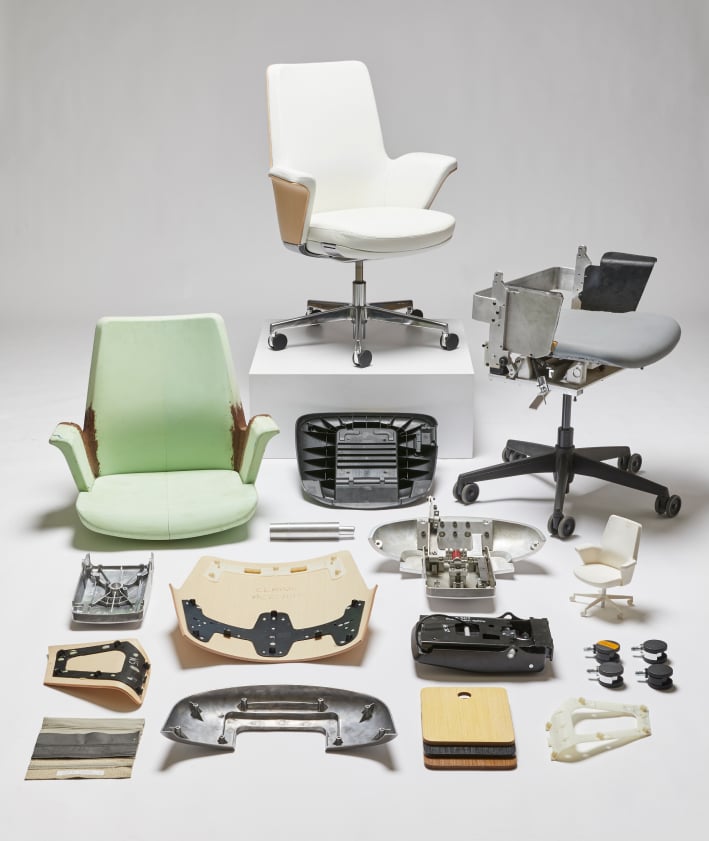
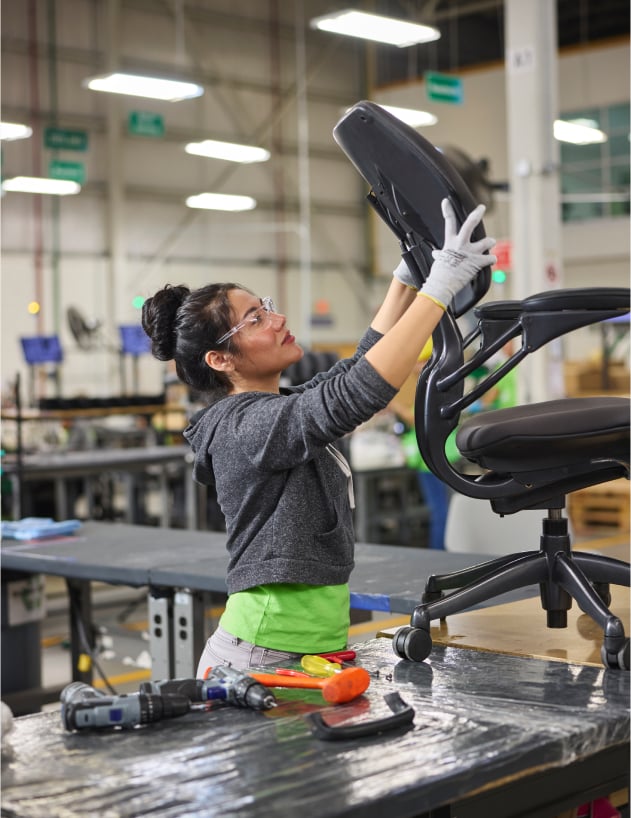
JS: Yup, Humanscale has a product take-back program, accepting used chairs through its Re-Freshed initiative. In this program, more than 80 percent of each chair’s materials are reused. As Jane explained to us, a take-back program is filled with logistical hurdles. Humanscale would sometimes receive chairs that were still in good condition–how does a customer know when it’s time to send a chair back? Today, this happens less frequently, and many chairs have lived a long life. They also received chairs that were not even theirs. But by taking back used chairs, refreshing them, and selling them at a discount, Humanscale is also making their high-end seating solutions much more accessible. Many consumers are drawn to this as opposed to fast furniture seating that lasts one to three years before it finds its way to the curb.
Many companies are talking about circularity. It’s really the next great frontier to manufacturing. Humanscale is committed to figuring it out, and I love them for it.
“It’s not about slapping a recyclable symbol on it and calling it a day,” Jane told us. “It’s really about systems and bigger-picture thinking.”
Humanscale is integrating long-term design, responsible ownership, and end-of-life strategies that work. As they have for years, they’re showing what’s possible when sustainability is built into the business model.
Listen to the full “From Products to Planet” episode on the Surround Podcast Network.
Latest
Viewpoints
Bas Smets on Designing Augmented Landscapes
The landscape architect discusses his design for Notre-Dame, this year’s Venice Architecture Biennial, and what he means by biospheric urbanism.

Projects
Kazakhstan’s Almaty Museum Celebrates Central Asian Art
Designed by London-based Chapman Taylor, the project is the city’s first private museum.