




August 27, 2025
3 Workplaces with Light Carbon Footprints
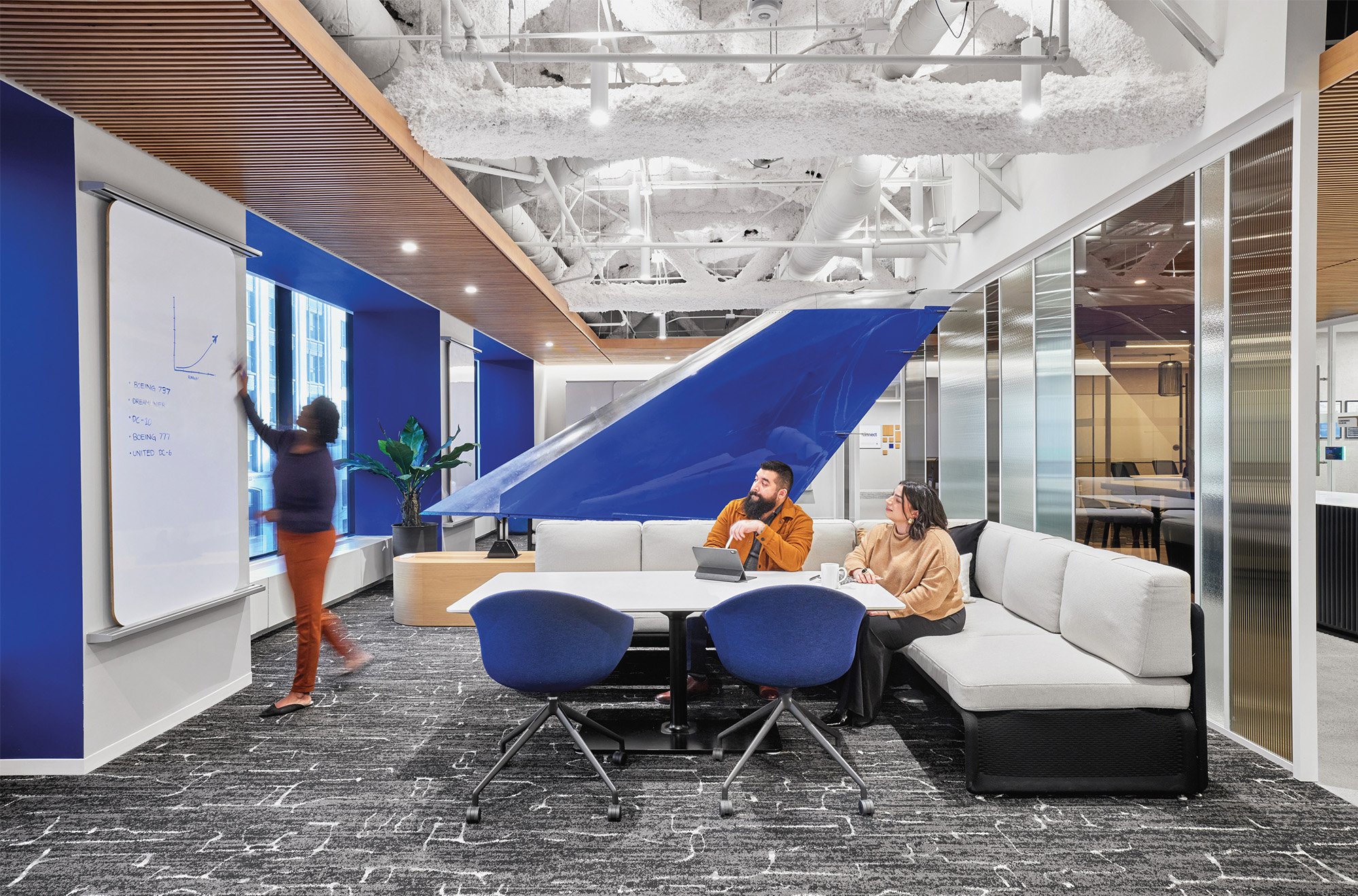
Reclaiming the Value of Materials, United Airlines HQ, IA
As the first airline committed to achieving net-zero greenhouse gas emissions by 2050 without carbon offsets, United Airlines needed the renovation of its Chicago headquarters to embody its values. Housing more than 3,000 employees across 650,000 square feet and 13 floors of the Willis Tower, the office was refreshed by IA Interior Architects with a new lease on circular economy.
“Our goals were to demonstrate United’s commitment to pursuing environmentally conscious design, reducing utility consumption, and implementing resourceful construction practices,” says IA senior director of sustainability Brett Gardner. “We employed circular economy strategies with an emphasis on reuse, recycling, and diverting materials from landfills to reduce the embodied carbon for the project by 3,333 metric tons of CO2e.”
Metal frames and fabric panels of 2,254 existing workstations were used to create new hybrid workstations, diverting more than 500,000 pounds of material from landfills in the process. Another 793,000 pounds of furniture was also diverted by recycling other existing elements like acoustic ceiling tiles. “Reusing existing architecture and furniture is a challenge,” Gardner says. “But it was worth the extra time, as it delivered dividends on both carbon and cost reductions.”
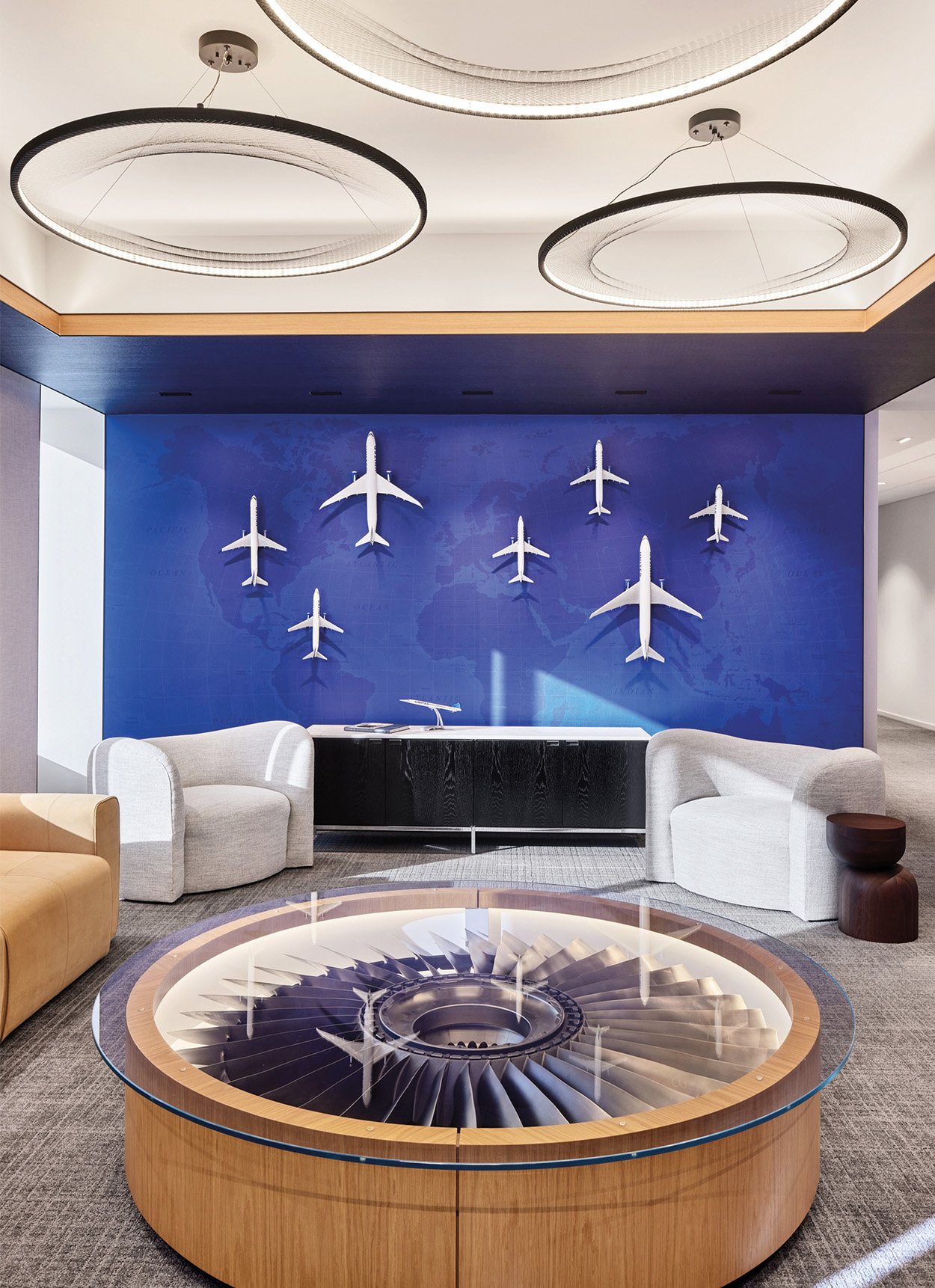
United also looked to resolve its carbon footprint beyond the workplace by integrating out-of-service airplane parts. The most notable appearances include engine-inspired light fixtures, a turbine coffee table, and a winglet room divider. Playful artwork composed of seatbelts and runway batons brings character to a project distilled by Gardner in a succinct phrase: “Keeping materials simple optimizes future reuse.”
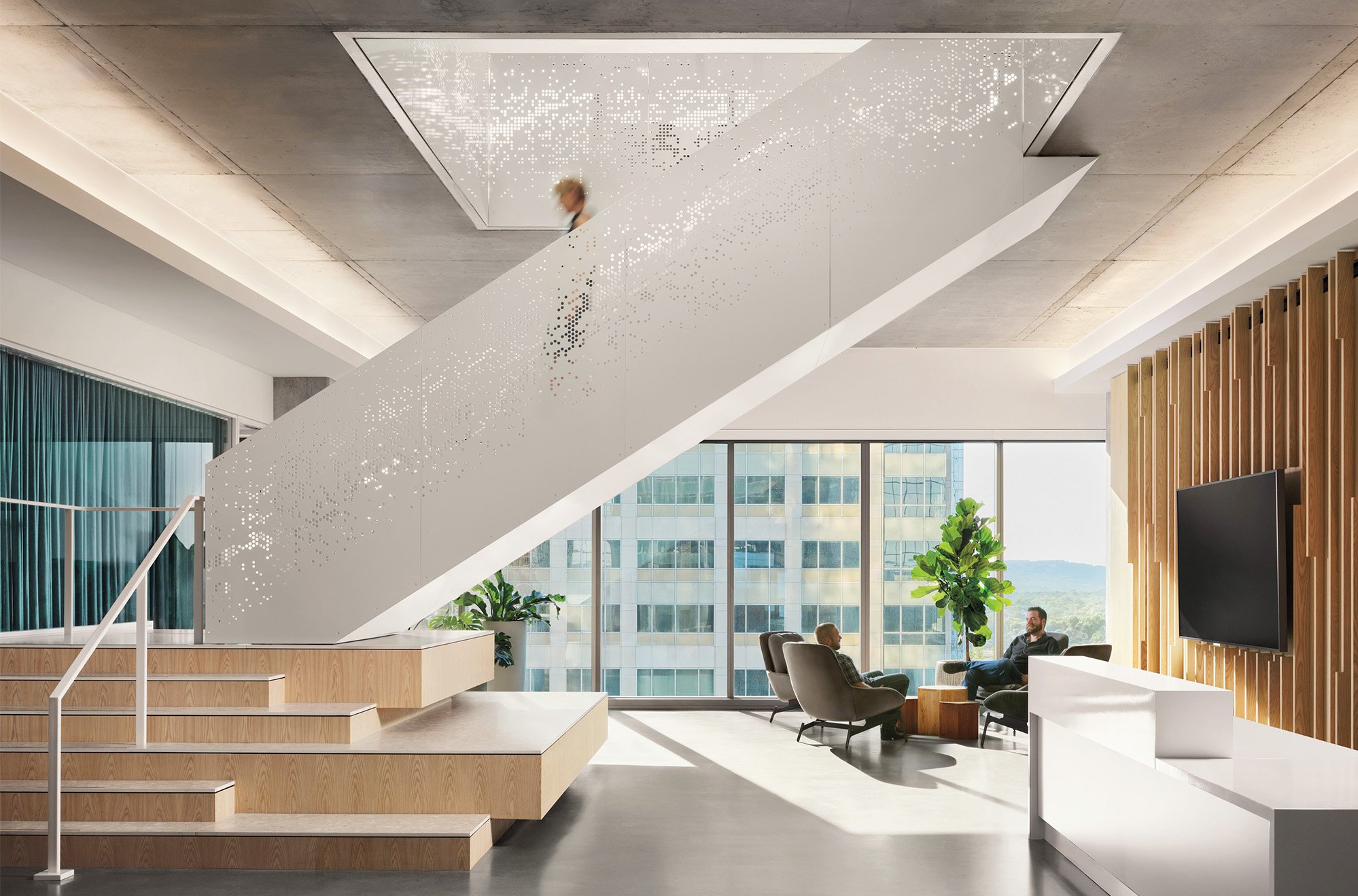
Using Diverse Material Strategies, Austin Office, Page
After more than 20 years at its original Austin address, the architecture firm Page was long overdue for a fresh start. So, when space opened up in a local building from its own portfolio, the firm leveraged its intimate knowledge of the building systems to craft an interior that complemented the LEED Platinum tower. “We knew how sustainability was embedded into the design core and shell. We knew how water was reclaimed, about the green space that was adjacent, about the terraces,” says Wendy Dunnam Tita, Page’s chief practice officer and commercial & mixed-use sector leader.
In the new office, textural concrete ensconces a mix of open studios, quiet zones, private meeting rooms, and communal hubs. Biobased or reused ceiling panels and recycled carpeting dampen noise, as do the renewable felt wall panels. Homasote wraps the exterior of collaboration pods to double as a seamless pinup surface while also absorbing sound. Other highlights of the sustainable materiality include locally fabricated terrazzo countertops and the circulating staircase composed of sustainably harvested wood. Page also opted to redeem some of its existing furniture, reupholstered in sustainable leather. “If you were moving your house, you would not want to throw away the whole piece of furniture, because it means something to you,” says Page associate Julien Brown. “That mindset actually is very important to the principles of sustainability and reuse.”
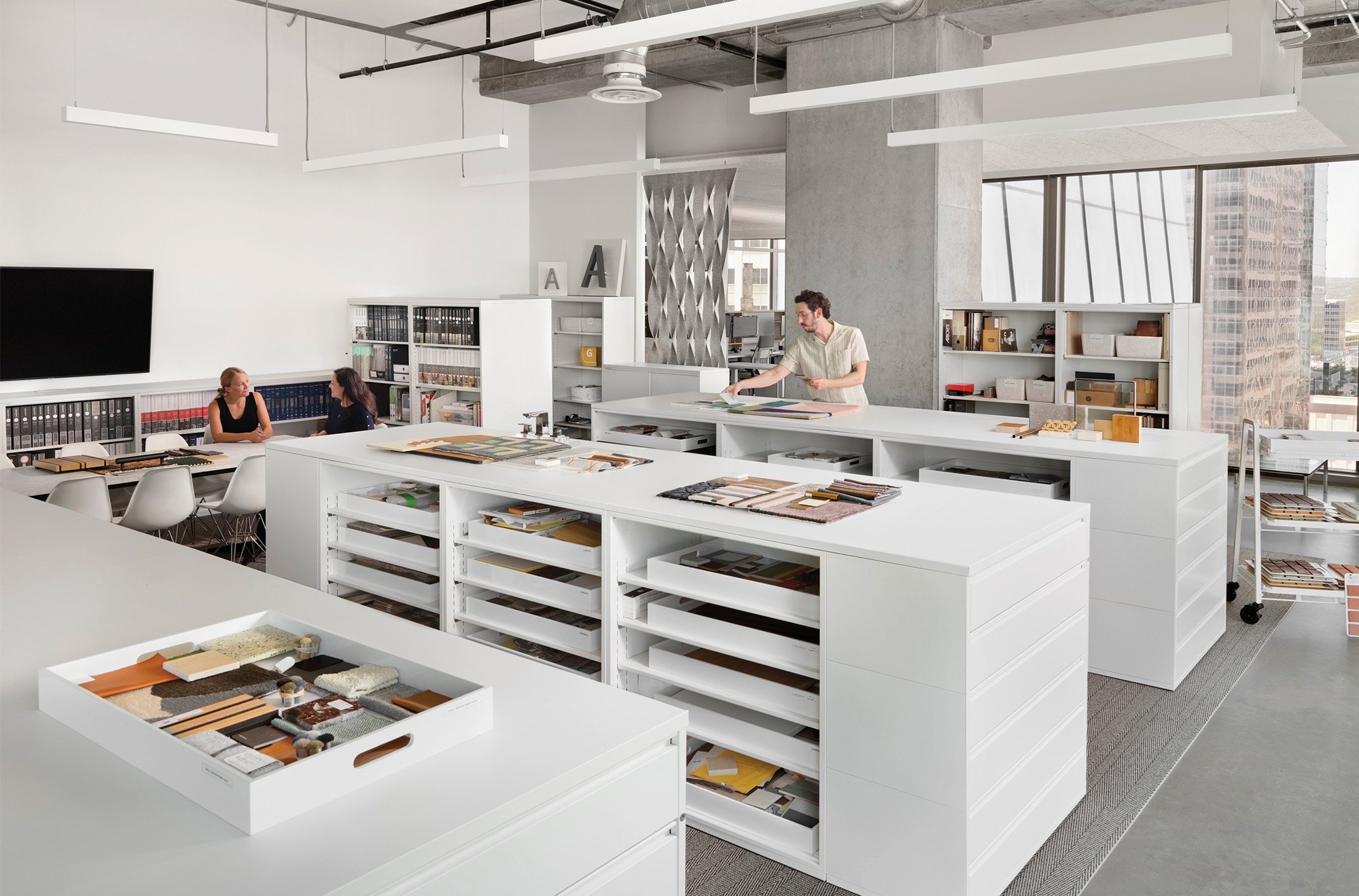
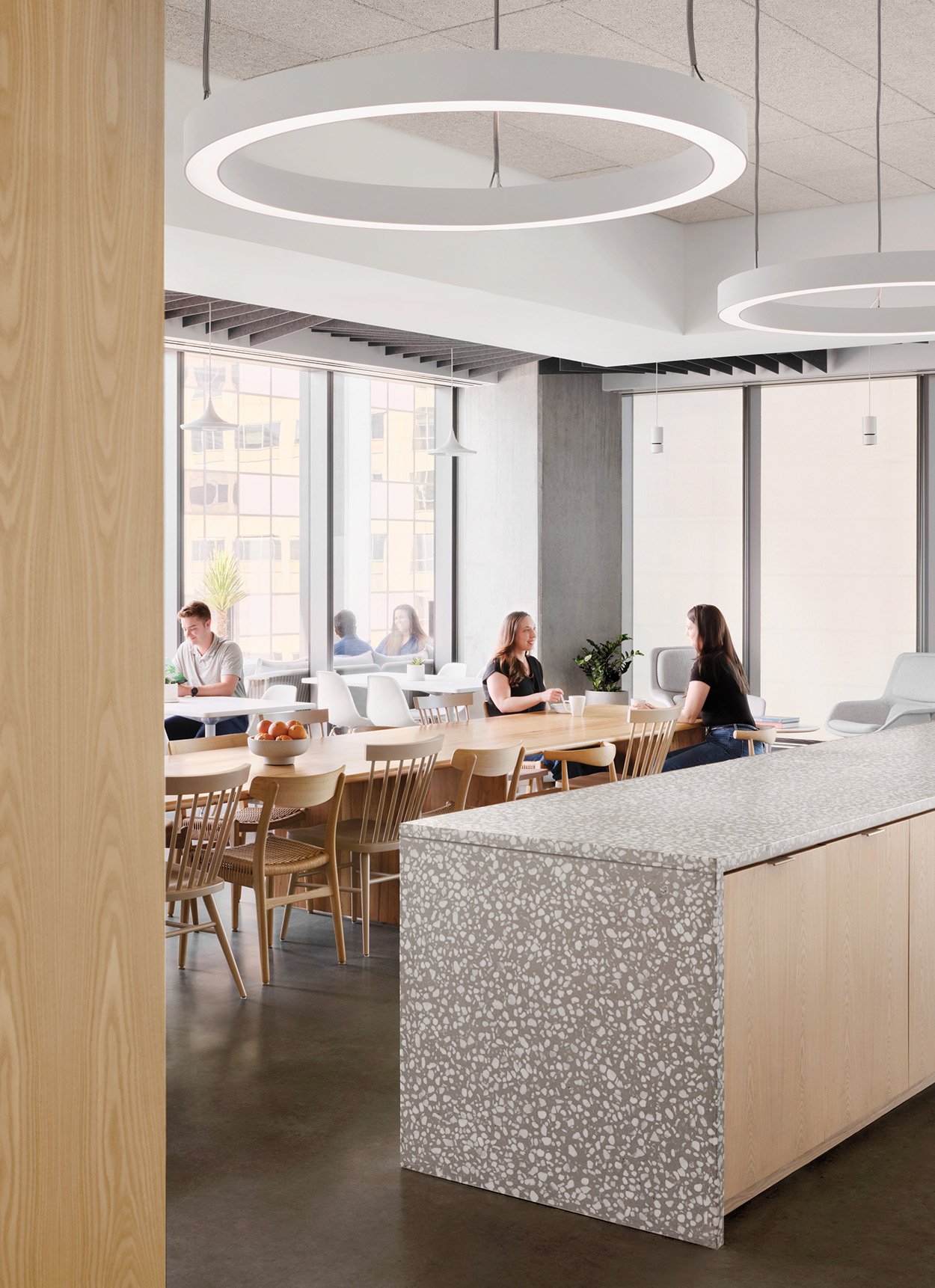
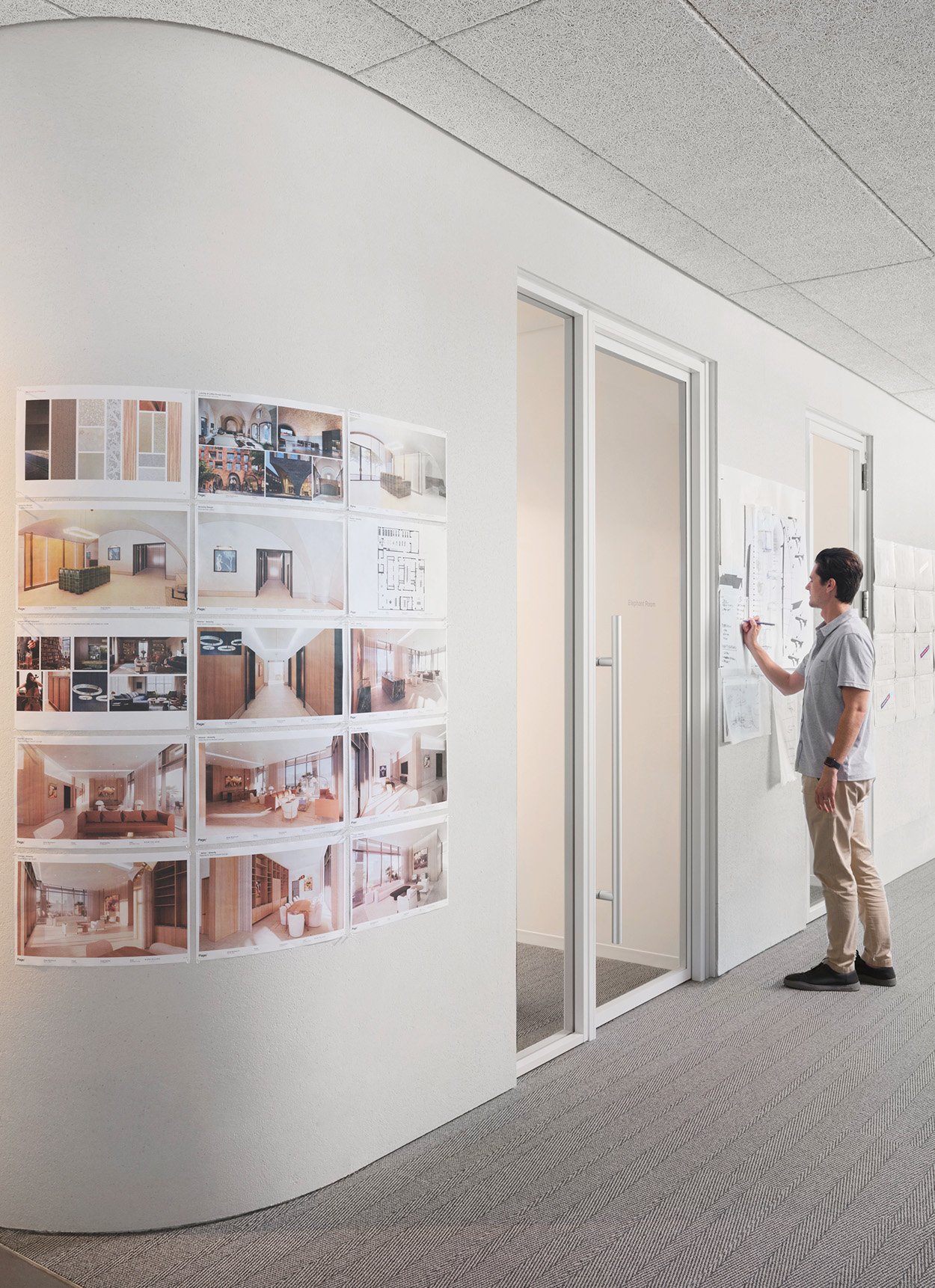
Page conducted a carbon assessment of the project, with preliminary data suggesting that its furniture selections would have a ten-times greater impact on embodied carbon than all other interior finishes combined. “We were able to quantify that we saved eighty-three metric tons of carbon,” Brown adds.
Such considerations resulted in a 78 percent diversion of construction waste, not to mention a 16 percent decrease in embodied carbon emissions and a 17 percent energy cost savings. And what’s good for the planet is good for its people: “Delight and choice and human connection—it didn’t really cost more to do that,” Tita says. “It was just better planning.”
Relying on the Power of Nature, Lord Abbett HQ, HLW
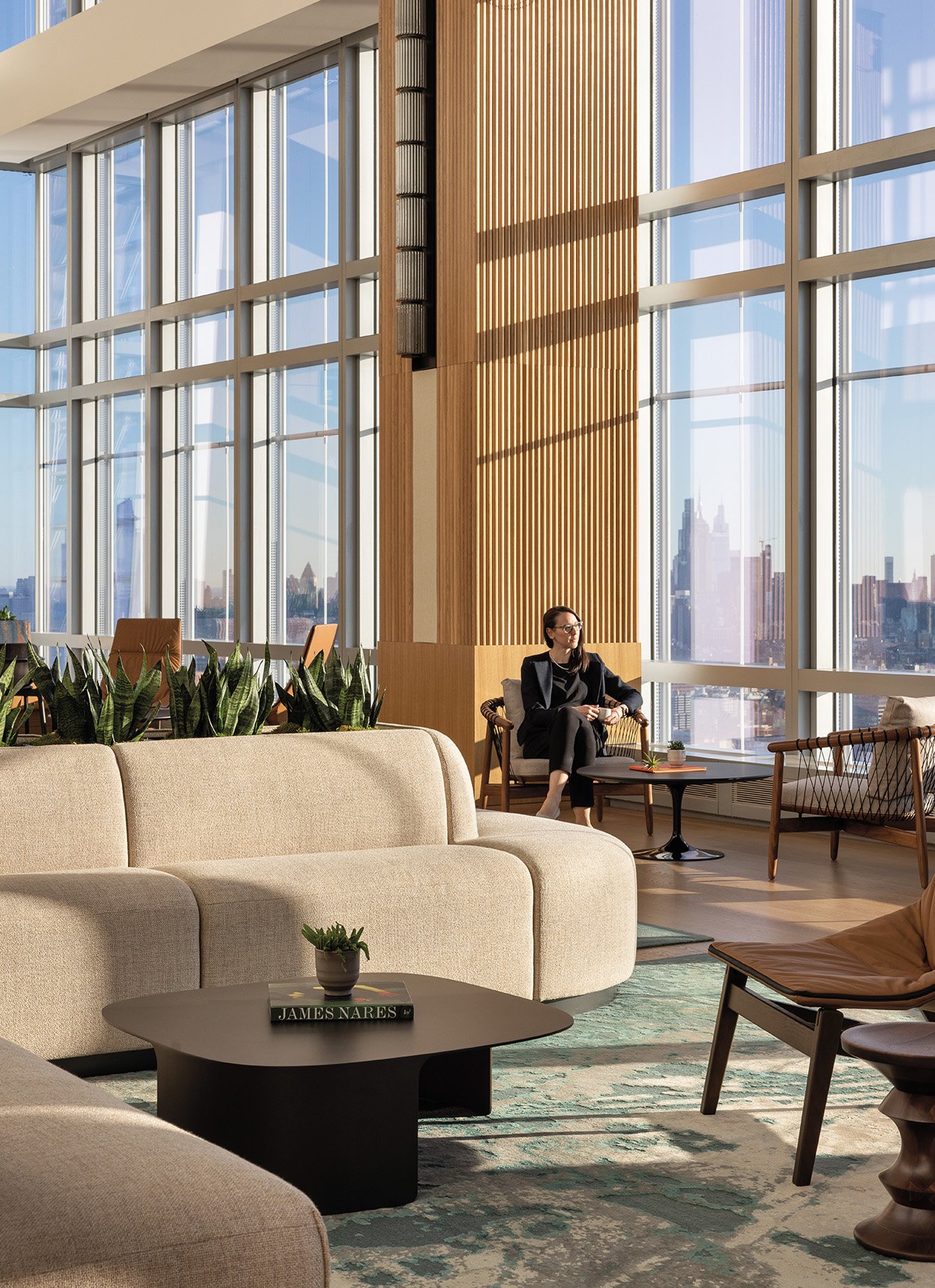
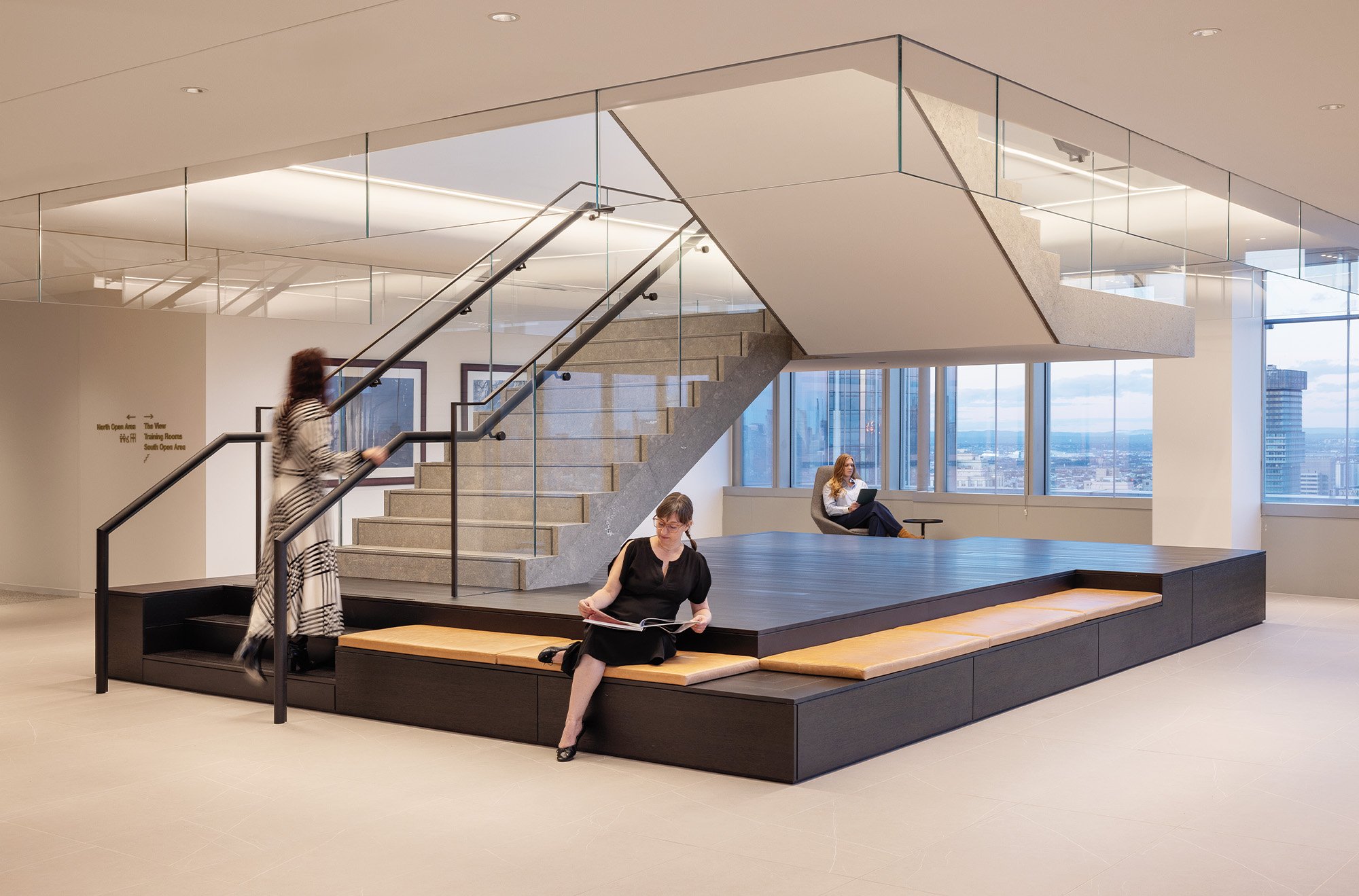
The investment management firm Lord Abbett tapped HLW to realize a modern workplace inside the Goldman Sachs Tower in Jersey City, New Jersey, centered on wellness and transparency. With support from sustainability consultancy BEYOND, the firm conceived of a biophilic office design predicated on circadian lighting, air quality, and employee comfort that is already paying dividends. “We also had a really big focus on decarbonization, especially focused on embodied carbon,” says HLW principal and global director of sustainability and wellness Jonce Walker. “The original target was ten percent reduction, and we’re trending to thirty to thirty-five percent, which is pretty high for a project like this.”
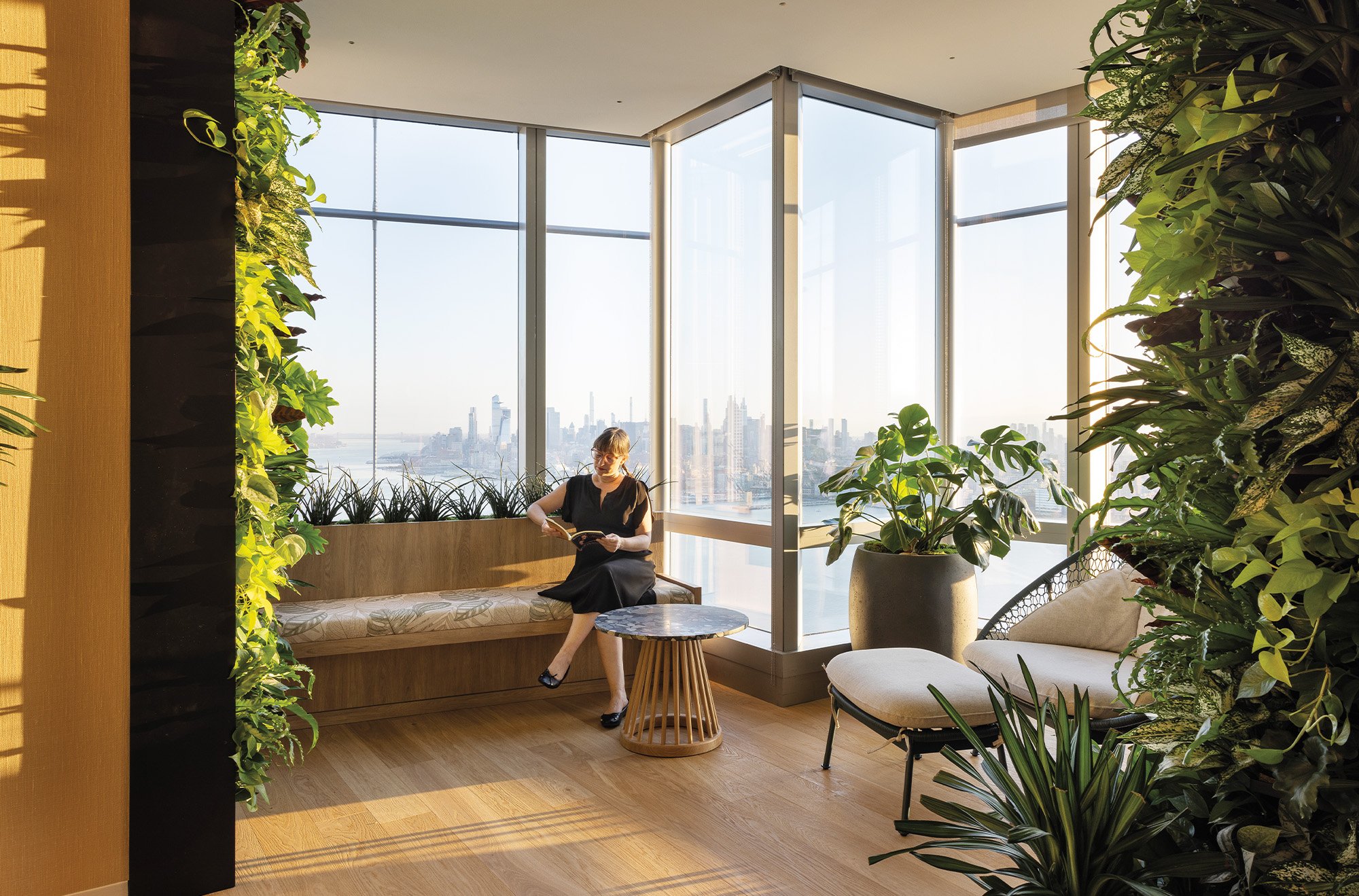
Across 178,000 square feet, a palette of natural materials yields sumptuous, sun-drenched interiors. Drop ceilings and flooring were reused, while low-carbon carpet and chipboard complement the airy space. Alongside collaboration spaces and versatile nooks, “serenity rooms” offer employees reprieve through meditative bonding with plants. The plentiful greenery underscores a 34 percent reduction in embodied carbon—the equivalent of planting 24,000 trees and nurturing them for a full decade. The LEED Platinum design reduces water use by 40 percent and energy consumption by 20 percent as well.
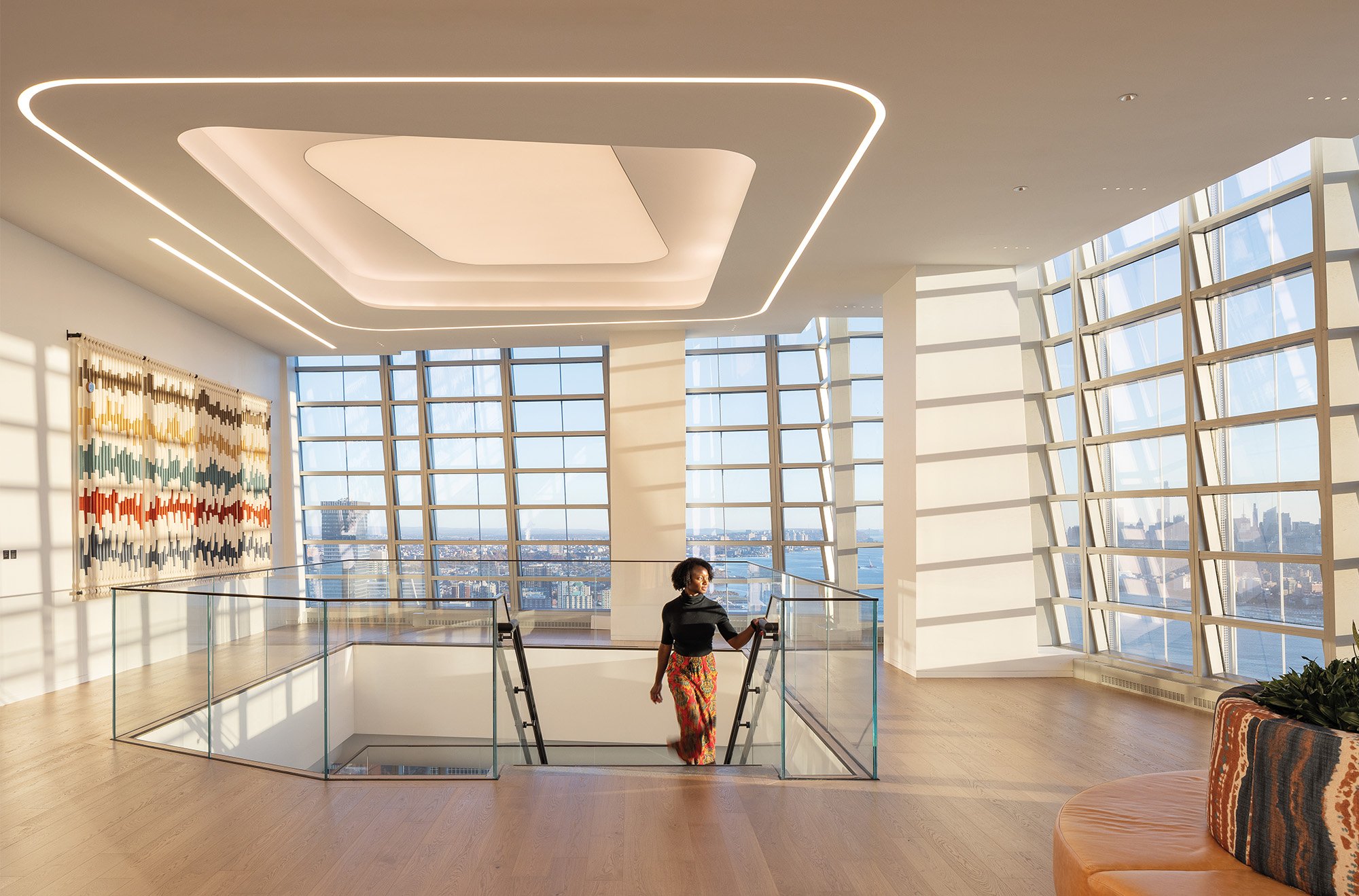
HLW’s space planning also reduced Lord Abbett’s dependence on artificial lighting, with 60 percent of regularly occupied spaces enjoying natural illumination. Accessed via the prime staircase, an upper level amenities suite beckons with even more daylight and a backdrop of sprawling vistas. “It ties back to Lord Abbett’s goals,” says Melissa Strickland, HLW principal and managing director, “and what they wanted to give to their employees.”
Would you like to comment on this article? Send your thoughts to: [email protected]
Latest
Projects
Inside and Outside Johns Hopkins’ New Bloomberg Student Center
Inside the New BIG and Rockwell’s Bloomberg Student Center At Johns Hopkins, a new student center reconnects the university to Baltimore and redefines how students gather, collaborate, and unwind.
Viewpoints
Archtober and the AIA Center for Architects Invites You to Share Space
Archtober 2025: Sharing Spaces, The 15th edition brings together architects, artists, and the public for a month of events exploring how New Yorkers share and shape their city.